Solar energy: Is it enough for proper heating?
Hello everyone, it’s Benjamin. Solar heating can cover a significant share of your needs, but it rarely works on its own all year round: plan for a backup system and a well-insulated home. The collectors capture the sun’s heat, then transfer it to your heating system and sometimes to your hot water. The right goal isn’t to rely entirely on the sun, but to use it where it makes sense, with a system suited to your home.
WHAT TO DO FIRST
- Reduce heat loss: insulation comes before adding collectors.
- Check your roof’s orientation, pitch, and shaded areas.
- Compare solar thermal panels with photovoltaic panels based on your needs.
- Plan for a backup heating system for cold or overcast periods.
- Ask a qualified professional to assess the system size you need.
Can solar heating warm an entire home?
In a detached house, a combined solar system can often cover a substantial share of heating and hot water needs. A figure in the range of 40 to 60% of annual heating needs is sometimes cited, depending on the region, insulation, collector area, and system installed. This is not a promise that applies to every home.
The mismatch between sunlight and demand remains the main challenge. Heat is abundant in summer, while heating is mostly needed in winter. A tank can store heat in the short term, but it generally cannot preserve summer solar energy until the coldest days.
In short, solar heating works mainly as an effective supplement. A boiler, heat pump, or other appliance takes over when the weather doesn’t cooperate. To compare the options, you can also explore three solar-related heating methods.
How do solar thermal panels work?
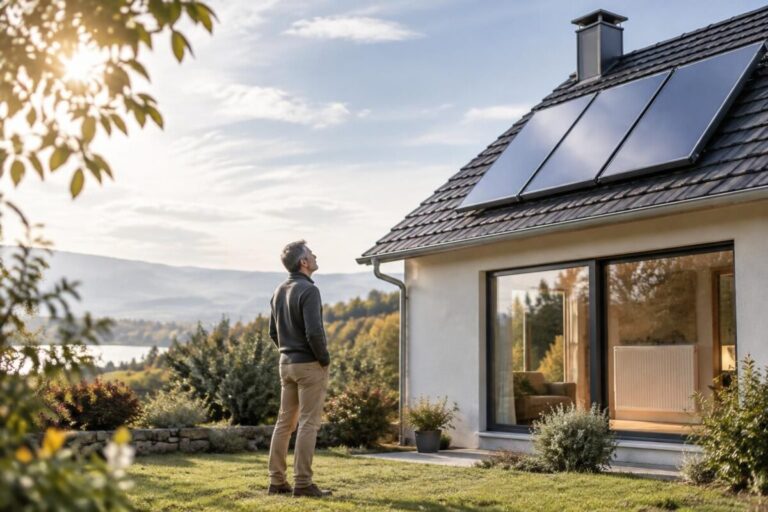
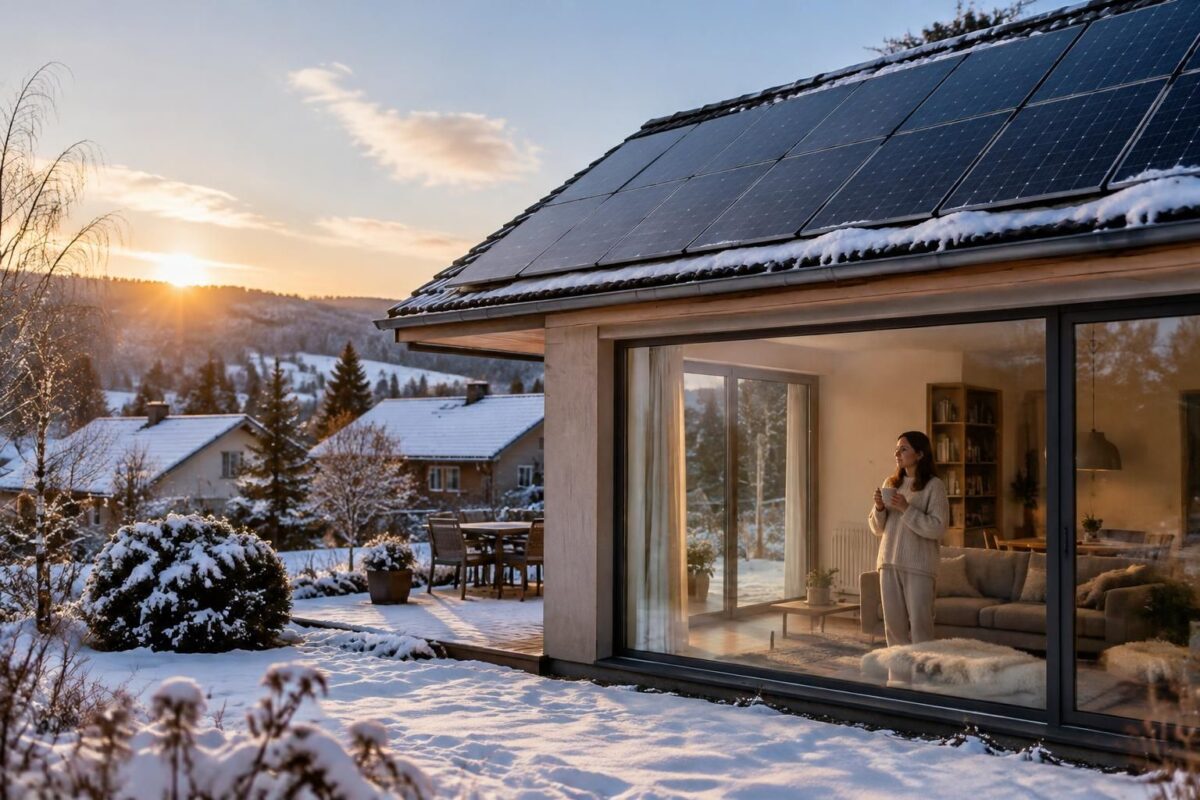
Solar thermal panels capture radiation and heat a heat-transfer fluid. The fluid circulates to a tank or heating circuit, where the heat is transferred to the water used in the home. A combined solar system can therefore contribute to home heating and domestic hot water.
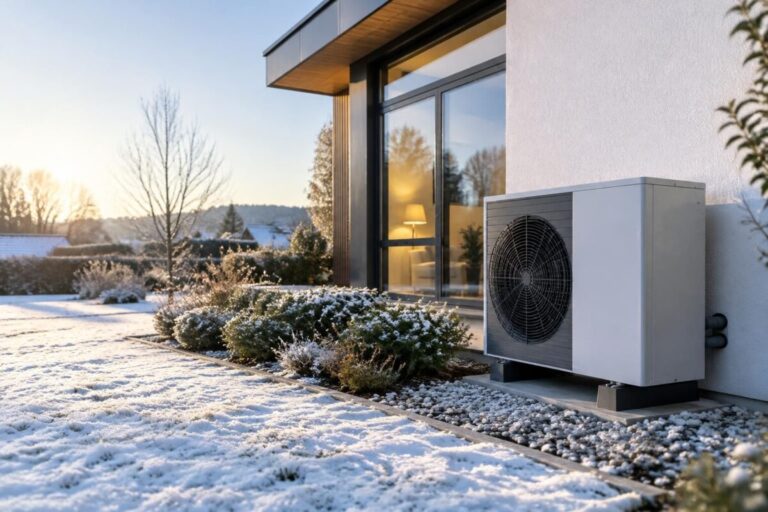
Photovoltaic panels, on the other hand, generate electricity. This energy can power certain appliances, such as a heat pump, but the results depend on generation, consumption, and system controls. Hybrid panels combine electricity generation with heat recovery, with performance varying by model.
For hot water, the annual solar contribution can be around 50 to 80%, depending on the region and the installation. During very sunny periods, the system can meet a large share of current needs. In winter, a backup system is often still necessary.
What determines the system’s energy efficiency?
A south-facing roof is often ideal, but a southeast or southwest orientation can also work. The tilt depends on the site and on whether winter heating is the priority. A pitch close to 60 degrees can improve heat capture in winter in some configurations, but the system size must be calculated on site.
The collector area shouldn’t be chosen according to a general rule such as “10 m² for a 100 m² house.” You need to take heat loss, occupants, the local climate, and heat emitters into account. Underfloor heating operates at a low temperature and is often a better match for solar thermal production than an older, high-temperature heating system.
A common mistake is installing too many collectors to compensate for poor insulation. In summer, the surplus can be difficult to manage, while bills remain high in winter. To avoid this pitfall, read what to check before choosing an oversized solar system.
| What to check | Why it matters | Practical guideline |
|---|---|---|
| Insulation | It reduces heating needs even before solar energy is generated. | Address the main sources of heat loss first. |
| Roof | Orientation, pitch, and shading affect heat capture. | Have the actual conditions checked on site. |
| Storage | The tank supplies heat when sunlight decreases. | Choose its capacity to suit household usage. |
| Backup system | It maintains comfort during cold periods. | Include it in the project calculations. |
Choosing the right solution for your home
If your home is well insulated and has underfloor heating, a combined solar system can make a worthwhile contribution. Its low operating temperature helps make good use of the captured heat, while the backup system takes over when production falls.
If your home is poorly insulated or has radiators that require very hot water, start by reducing heat loss and assessing whether your heating system needs upgrading. Installing collectors without addressing these issues could be costly for limited gains.
A combined solar system can cost tens of thousands of euros, with prices often quoted at around €15,000 to €20,000, depending on the model, size, and work required. Grants and regulations change: check your eligibility with France Rénov’ and request a detailed quote from an RGE-certified professional before signing.
Three steps to prepare your solar project
- Step 1 – Assess your home. Review the insulation, heating consumption, hot water needs, and equipment already in place. A reliable estimate starts with your actual needs, not the number of panels.
- Step 2 – Compare options. Ask for several proposals that specify the technology, expected output, storage, and backup system. Also check the total cost, planned maintenance, and weather assumptions used.
- Step 3 – Check grants and installation. Look into the schemes available when the work is carried out and confirm the company’s qualifications. Good controls and careful commissioning matter just as much as the collectors.
The control system prioritizes available solar heat before calling on the backup system. It can also make use of the thermal mass of an underfloor heating system or thick walls to smooth out temperature fluctuations. This often-overlooked but essential adjustment is what turns a decent installation into a comfortable system.
To assess the expected benefits without confusing potential savings with promises, also read this overview of what solar energy can really contribute to heating. Energy independence improves most when generation, insulation, and usage are considered together.
Questions to ask before installing solar heating
Is solar heating enough in winter?
Rarely on its own. Production often falls just as demand increases, so most homes still need a backup system.
Does solar thermal work in cloudy weather?
Yes, collectors can capture some diffuse radiation, but their output is generally lower than in full sun. The backup system then makes up for the shortfall in heat.
Should I choose thermal or photovoltaic panels?
Thermal panels produce heat directly, particularly for hot water and heating. Photovoltaic panels generate electricity, which can power equipment such as a heat pump. The right choice depends on your usage and the overall project.
Can solar heating be installed in an older home?
Yes, but the insulation, heat emitters, and available space for the tank need to be assessed. A preliminary assessment can confirm whether the system will be a good fit.
Thanks for being here until the end; Benjamin