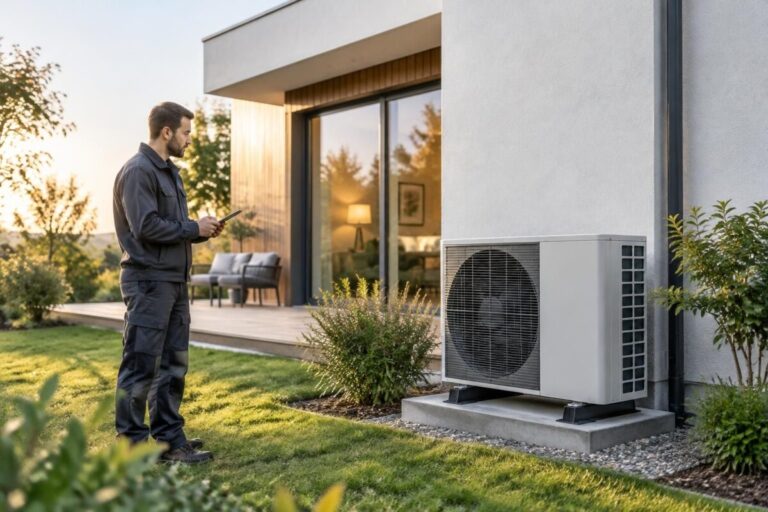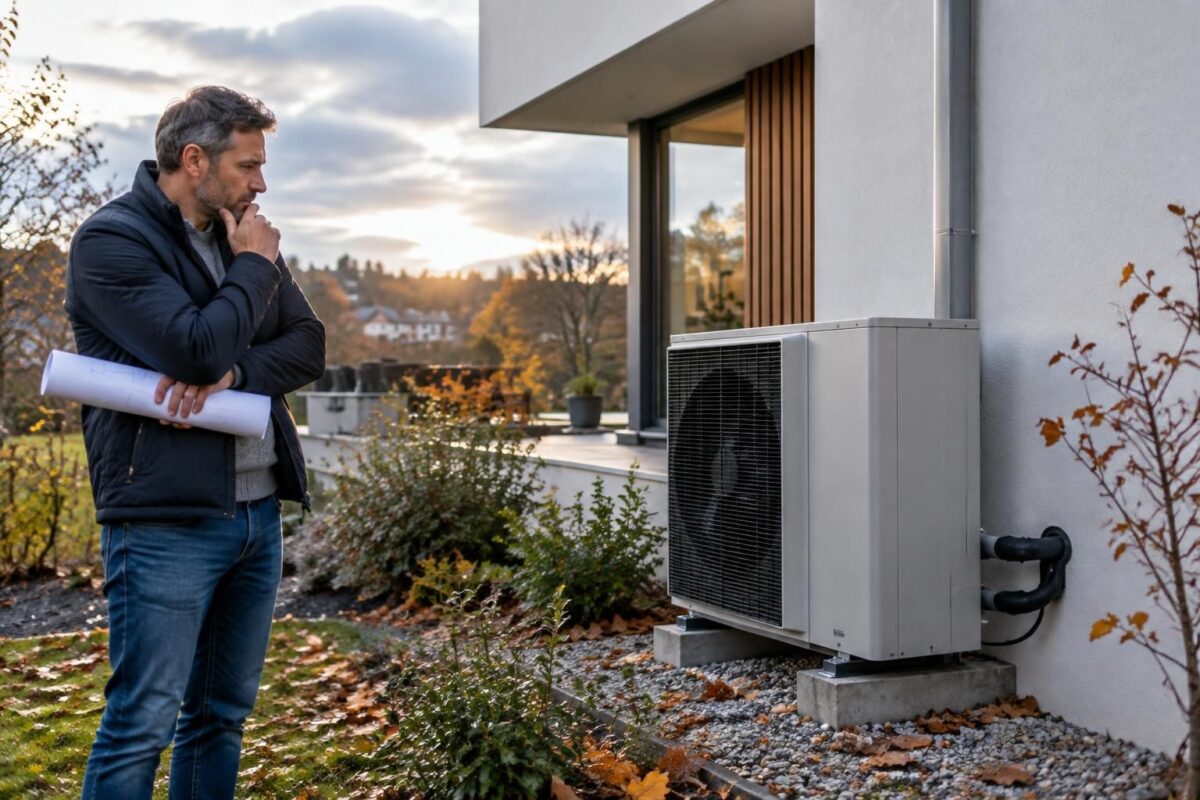
Heat pump: should you wait or take the plunge?
Hi everyone, it’s Benjamin. Waiting isn’t always the best choice: go ahead if your home is well insulated, the system is suitable, and financial assistance is confirmed before work begins. However, if your house loses a lot of heat, start by addressing the insulation. The right timing depends mainly on your current heating system, your budget, and the quality of the quote.
Heat pumps: what to check first
- Check the insulation in the attic, walls, and windows: a home that loses heat needs more heating capacity.
- Identify your current heating system and annual expenses so you can compare them with a realistic scenario.
- Request a sizing assessment, not just a price calculated based on floor area.
- Compare several quotes, checking the model, SCOP, included work, and warranties.
- Check what financial assistance is available before signing: requirements change, and you often need to apply before work begins.
A heat pump can reduce heating consumption in many homes, but the result depends on insulation, climate, settings, and the system being replaced. To avoid an unpleasant surprise, also take the time to find a reliable installer.
When to go ahead with a heat pump installation
You can move ahead without waiting if your boiler is nearing the end of its life, your bills are high, and your home can accommodate a properly sized heat pump. Spring and summer are often convenient times to schedule the work before the cold season, but the right time is when you’ve compared the offers and confirmed the financing.
Installation costs vary depending on the type of unit, its capacity, and the modifications required. As a rough guide, an installed air-to-water heat pump can cost around 10,000 to 20,000 euros before financial assistance, depending on the home and equipment. Financial assistance can reduce the amount you pay out of pocket, but the amount depends on your household, the work, and the rules in effect: don’t base your budget on a verbal estimate.
Choosing the model matters just as much as timing. An air-to-water heat pump is often suitable for a home with radiators or underfloor heating; an air-to-air heat pump may be a simpler option for replacing electric convectors in some rooms, but it does not produce domestic hot water. To understand the most common mistakes when choosing a system, see this guide to choosing the right heat pump model.
| Your situation | The most useful decision | Why |
|---|---|---|
| Boiler broken or very old, home already insulated | Explore installation options soon | You can compare options before the heating season and avoid making a decision in a hurry. |
| Poorly insulated home, high bills | Address heat loss first | A heat pump in a poorly insulated home may have to work harder and deliver less energy savings. |
| Recent gas boiler, reliable operation | Compare costs before replacing it | The financial benefits may take longer to materialize than with an old electric or oil heating system. |
| Apartment or condominium | Check the rules and required approvals | The outdoor unit may require approval from the condominium association and a prior declaration. |
Waiting may make sense if the insulation still needs improvement
A poorly insulated home needs more heat. The heat pump may then be oversized or frequently rely on its electric backup, reducing its expected energy efficiency. If work is planned, it’s worth considering the order: improving insulation before installing a heat pump can help you choose a more appropriate capacity.
In an energy-efficiency renovation, heating shouldn’t be considered in isolation. A simple measure, such as adjusting the radiators properly or improving airtightness, can also change a home’s heating needs. The goal isn’t to put off the project at all costs, but to avoid replacing a unit before understanding where the home is losing heat.
A three-step approach to deciding without rushing
- Step 1: Assess your home. Note the type of heating system, your energy use over a year, the rooms that are difficult to heat, and any insulation work already completed.
- Step 2: Compare complete solutions. Request at least two detailed quotes. Check the proposed capacity, SCOP, outdoor unit noise, maintenance, and any additional work.
- Step 3: Secure the budget and the installation. Confirm your eligibility for financial assistance, the administrative requirements, and the schedule before signing. Set aside a contingency for unexpected modifications.
One often-overlooked detail: the outdoor unit shouldn’t be placed solely wherever it’s easiest for the installer. Its location can affect how much noise is heard in a bedroom or by a neighbor. Make sure this is discussed during the site visit, before the final quote.
The real calculation: energy savings, comfort, and energy prices
A well-chosen heat pump transfers heat rather than generating it directly. Under good conditions, it provides several units of heat for each unit of electricity consumed; however, its actual efficiency drops when outdoor temperatures fall or the water in the radiators needs to be very hot. The seasonal SCOP is therefore more useful than a single performance figure.
To find out whether the project makes financial sense, compare your current annual expenses with an estimate tailored to your home, not with a general promise of savings. Energy prices, heating habits, maintenance, and installation costs all affect the payback period. A heat pump can be an eco-friendly heating option and contribute to the energy transition, but it is not automatically cost-effective in every situation.
If your oil boiler is old and your home is properly insulated, requesting quotes now may make sense: potential savings and financial assistance could make replacing it worthwhile. If your gas boiler is recent and insulation is poor, start with a whole-home assessment; taking time to plan the work can help you avoid an underperforming installation.
Questions to settle before signing
Should I wait until summer to install a heat pump?
Not necessarily. Warmer weather often makes scheduling easier, but there is no ideal season for everyone. Above all, plan ahead for quotes, financial assistance, and any required approvals to avoid making a decision in a hurry.
Will a heat pump work in a poorly insulated home?
It can work, but energy use and comfort may not meet expectations. An assessment of heat loss and insulation work can help determine the right order of work and the appropriate capacity.
What budget should I plan for an air-to-water heat pump?
The cost varies depending on the capacity, equipment, and modifications to the heating circuit. A typical rough estimate is around 10,000 to 20,000 euros installed before financial assistance, to be confirmed with a quote and a site visit.
Is financial assistance guaranteed?
No. It depends on the rules in effect, your income, your home, and the equipment. Check the requirements and complete the necessary steps before work begins.
Thanks for being here until the end; Benjamin