Budget heating: why the cheapest option is misleading
Hello everyone, it’s Benjamin. To avoid the “cheapest” heating trap, compare the purchase price, installation cost, energy consumption and maintenance over several years.
An appliance that is inexpensive to install can drive up your heating bill if it uses a lot of energy or isn’t suited to your home. Conversely, an efficient system may require a higher upfront budget, but can reduce energy costs over time. The right choice depends mainly on your home’s thermal insulation, the climate, your existing equipment and your habits.
FIRST THINGS TO DO
- Look for drafts and rooms that cool down quickly.
- Check the age and condition of your current heating system.
- Compare annual expenses, not just the advertised price.
- Ask for a quote that breaks down heating installation and maintenance costs.
- Check which grants are available before signing.
Economical heating: why the purchase price isn’t enough
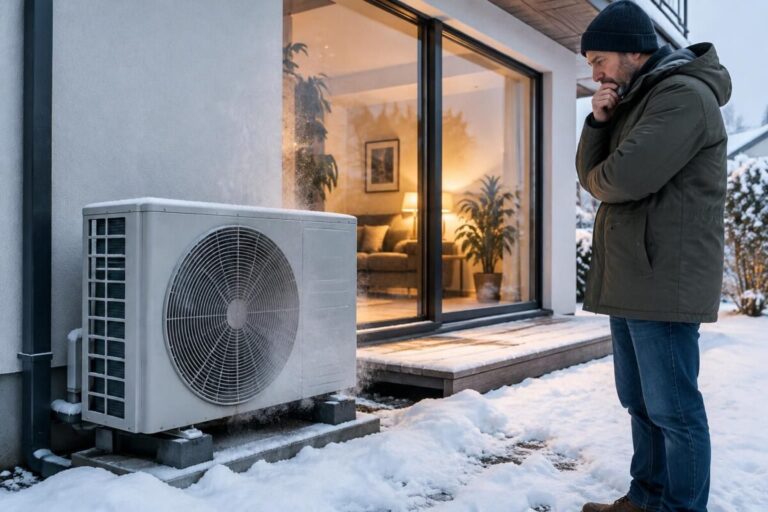
A conventional electric radiator often costs less to install than a heat pump or a biomass boiler. But if the home is poorly insulated, energy consumption can quickly drive up the bill. The price of energy and the appliance’s energy efficiency matter just as much as its installation cost.
Wood can offer an attractive fuel cost, but you also need to factor in the appliance, flue, storage space and handling. A heat pump, on the other hand, can limit running costs, provided it is correctly sized and installed in a suitable home. So the cheapest quote isn’t always the most economical option in the long run.
Compare expenses over several years
To compare two options, add up the purchase price, installation cost, energy consumed and maintenance. Also factor in any insulation work: a powerful appliance can’t make up for an attic or walls that let heat escape.
Costs vary significantly depending on the size, region and condition of the home. For a house of around 100 m², some estimates put annual running costs at around €800 to €1,200 for a suitably sized air-to-water heat pump, and €500 to €800 for a pellet boiler, depending on the model and situation. These aren’t guaranteed prices: a cold winter, poor controls or inadequate insulation can change the result.
| Option | Main advantage | What to check |
|---|---|---|
| Air-to-water heat pump | Good energy efficiency in a suitable home | System sizing, insulation and installation cost |
| Wood boiler or stove | Fuel is often competitively priced | Storage, supply and maintenance |
| Direct electric heating | Simple, space-saving installation | Potentially high bills if the home loses heat |
| Existing gas boiler | Familiar comfort and an existing gas connection | Gas prices, emissions and the cost of a future replacement |
Thermal insulation: the factor that changes the calculation
Before replacing your equipment, check where heat is escaping. The attic, walls and windows are often to blame. Reducing heat loss lets you choose a less powerful system and limit consumption, whatever energy source you use.
One practical step: set the temperature in each room according to how you use it, and avoid leaving windows ajar all day. A brief airing followed by closing the windows refreshes the air without unnecessarily cooling the walls.
If your home is poorly insulated, start by looking at priority improvements and options that still make sense for its condition: choosing a heating system despite poor insulation. To compare options more effectively without relying on a single price tag, also see this comparison of economical heating systems.
Choose economical heating for your home
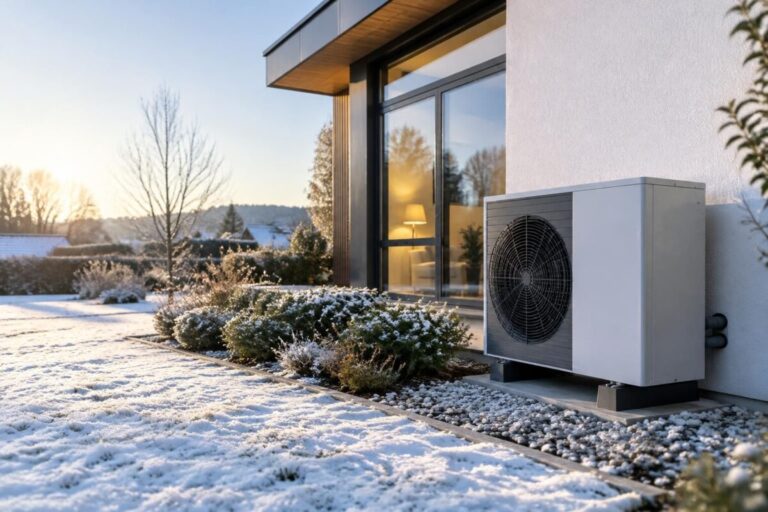
A heat pump can be a good option if the insulation is adequate and the heat emitters are suitable. It runs on electricity, but also captures heat from the air or ground. Its actual efficiency depends in particular on the outdoor temperature and the quality of the installation.
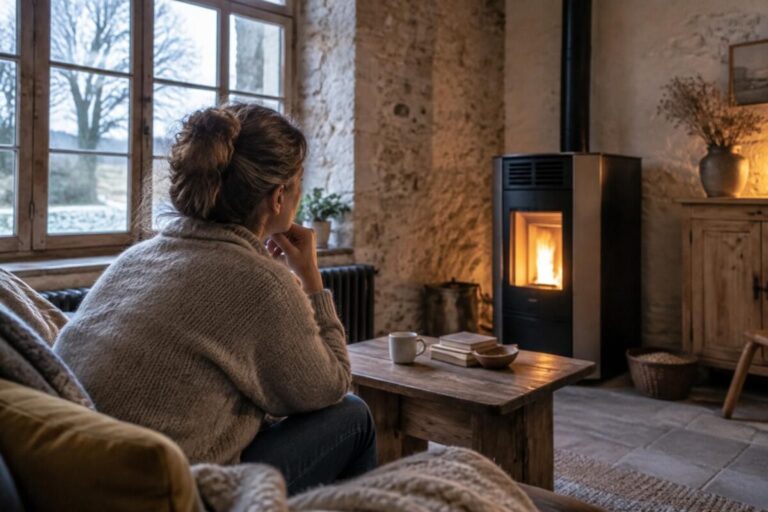
Wood may be a good option if you have dry storage space and regular access to fuel. However, it requires some organization: sourcing fuel, cleaning and maintenance all form part of the true cost. Direct electric heating can still be practical in a small, well-insulated home or one that is used occasionally, but it often becomes expensive when heating a large house all day.
Two quick scenarios to help you avoid the wrong choice
If you have an old, poorly insulated house, address heat loss first and have a professional assess your needs. Installing an oversized heat pump without improving the insulation can lead to high energy consumption in cold weather.
If your home is already well insulated, compare a heat pump, a wood stove or your existing system based on how you use the home and any space constraints. Supplemental heating may be enough if you only use part of the home.
Your neighbor’s home isn’t necessarily a good example: two houses of the same size can have very different heating needs. To refine your choice, you can also read the criteria for choosing a heating system that suits your home.
A simple three-step method
- Step 1: Note the floor area, region, existing equipment and energy expenses from recent seasons. Also make a note of rooms that are difficult to heat.
- Step 2: Have the insulation assessed and request comparable quotes. Each quote should specify the equipment, installation, settings, maintenance and estimated savings, including the assumptions behind them.
- Step 3: Check which grants you may be eligible for, then compare the amount you’ll have to pay and the expected annual expenses. Have the work done by a qualified professional when required to qualify for grants.
Don’t treat estimated savings as a promise: they depend on your old system, how you use it and the weather. The best decision is the one based on clear, verifiable assumptions.
Grants reduce the budget, not your home’s heating needs
Depending on the work and your circumstances, schemes such as MaPrimeRénov’, energy grants, the éco-PTZ or a reduced VAT rate may lower the cost of the project. Conditions and amounts change: check the current rules before signing a quote, and don’t base your budget on a grant that hasn’t been confirmed.
A grant makes equipment more affordable, but it won’t fix incorrect system sizing or inadequate insulation. To make real savings over the long term, start by comparing the total cost and ask for an assessment tailored to your home.
Which economical heating system costs the least to run?
Wood and heat pumps can offer attractive running costs, depending on the home, local energy prices and the efficiency of the installation. You should also factor in maintenance and any storage requirements.
Is a heat pump always cost-effective?
No. It can be cost-effective if it is correctly sized and installed in a suitable home. Poor insulation, incompatible heat emitters or incorrect installation can reduce its performance.
Should you insulate before replacing your heating system?
This is often the right priority if the home loses a lot of heat. Insulation reduces heating needs and makes it possible to size the new equipment more accurately.
How do you compare two heating quotes?
Compare the equipment price, installation, estimated energy costs, maintenance, warranties and confirmed grants. Check that the quotes are based on the same assumptions about floor area and usage.
Thanks for staying with me until now; Benjamin