Solar energy: real help or gimmick for heating
Hello everyone, it’s Benjamin. Yes, solar energy can really help with heating, especially in a well-insulated home, but it generally does not replace supplementary heating in winter. The right choice depends on your home: thermal collectors to produce heat, or photovoltaic panels paired with a heat pump. Before investing, check the insulation, roof orientation, and the actual cost after financial incentives.
WHAT TO DO FIRST
- Check the insulation: reducing heat loss should come before adding collectors.
- Check for shade on the roof: trees, chimneys, or nearby buildings can reduce production.
- Define your needs: hot water only, heating and hot water, or electricity for a heat pump.
- Keep supplementary heating: it will be useful during cold, cloudy periods.
- Get several detailed quotes from qualified professionals and check which incentives you may be eligible for before signing.
Solar heating: a real helping hand, not a miracle heating system
Solar heating reduces the amount of energy you need to buy, but production varies with the season and the weather. In winter, when the home needs the most heat, days are short and sunshine is less abundant, so a backup system is still necessary in most homes.
It is also important to distinguish between heating and domestic hot water. A solar water heater can cover a significant share of annual hot water needs. To heat rooms, you need a more complete installation, such as a solar combisystem (SSC) or photovoltaic panels paired with a heat pump.
Solar energy is therefore a practical solution when it is part of a well-planned project. To compare the options, you can consult these solar heating methods.
Solar thermal or photovoltaic panels: what’s the difference?
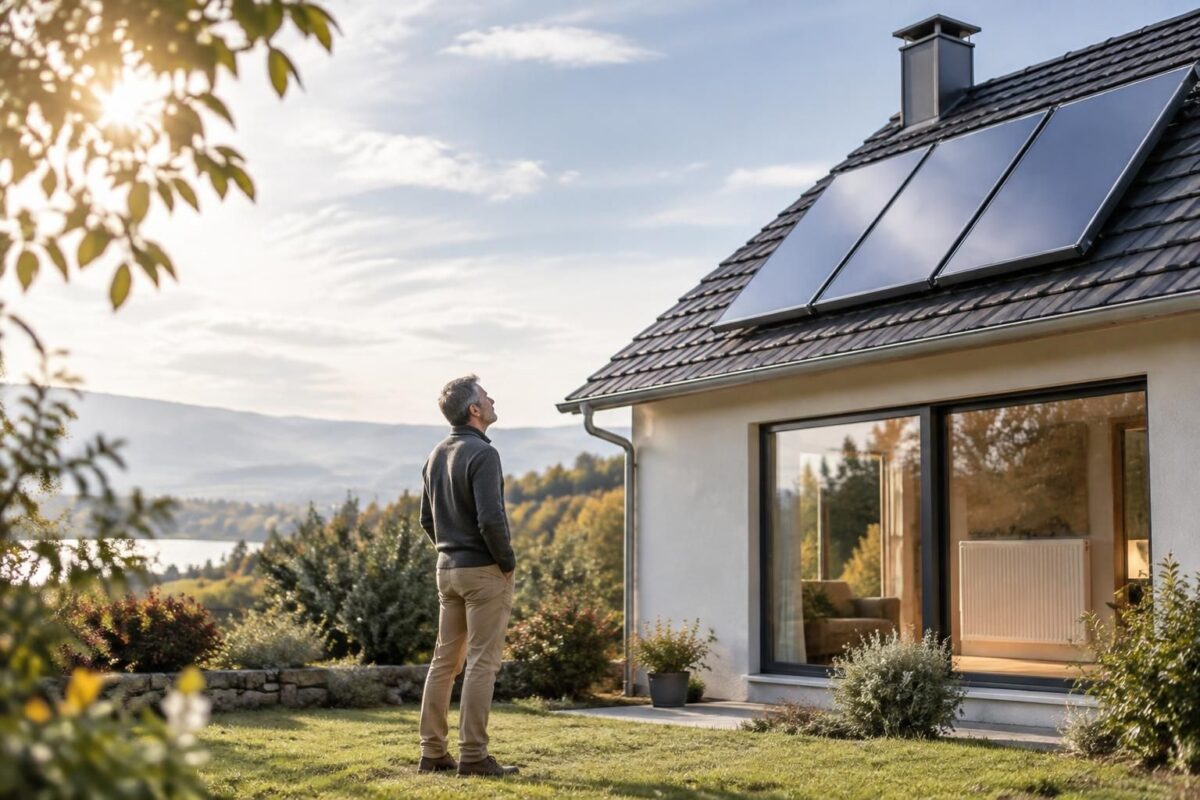
Solar thermal panels capture the sun’s heat to warm a fluid. This heat can supply a hot water tank or, with an SSC, contribute to heating the home.
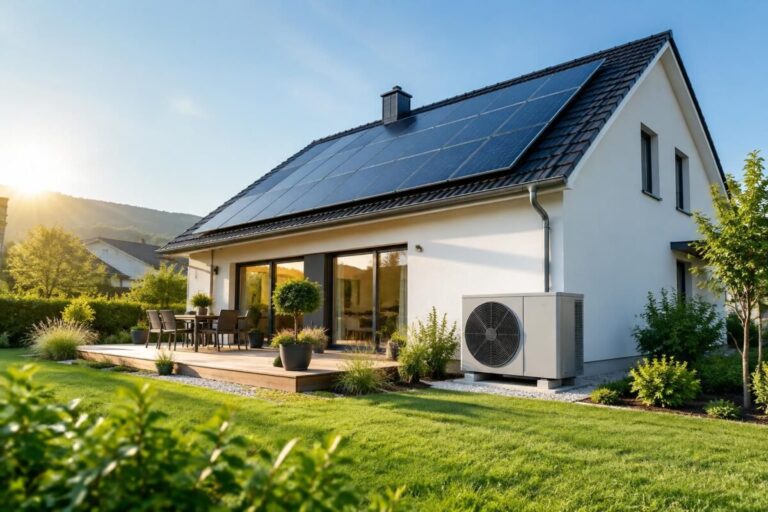
Photovoltaic panels generate electricity. This can power household equipment, including a heat pump (HP). A heat pump often delivers several units of heat for each unit of electricity consumed, but its actual performance depends on the climate, heating temperature, and the equipment selected.
| Solution | Main use | Key point |
|---|---|---|
| Individual solar water heater | Domestic hot water | Relatively simple installation, with backup for periods of limited sunshine. |
| Solar combisystem | Heating and hot water | Requires precise sizing and storage space. |
| Photovoltaics with a heat pump | Heating and electrical uses | A versatile solution, but solar production does not always coincide with heating needs. |
| Photovoltaic panels alone | Electricity generation | They do not directly heat the home without suitable equipment. |
For direct heat, solar thermal is often the most suitable option. For generating electricity that can be used throughout the home, photovoltaics offer greater flexibility.
What share of your needs can solar heating cover?
There is no percentage that applies to every home. A properly sized installation can cover a significant share of annual needs, especially for hot water and during the shoulder seasons. In the middle of winter, its contribution often decreases and backup heating takes over.
As a rough guide, an SSC can cover around 40 to 60% of annual needs in some suitable configurations. This is not a guarantee: insulation, region, orientation, storage, and the type of heat emitters can all significantly affect the result.
If your home is well insulated and has underfloor heating or low-temperature radiators, an SSC may be a good fit. If your home is poorly insulated, start by reducing heat loss instead: a large collector area will not make up for walls or a roof that let heat escape.
A common pitfall is sizing the installation solely according to the available roof area. Too many collectors can create excess heat in summer without solving the lack of sunshine in winter. This is explained in detail in this guide to the risks of an oversized solar system.
Budget, financial incentives, and solar payback
The budget depends on the technology, the size of the installation, and the work required. As a rough estimate, an installed solar water heater often costs a few thousand euros, while a solar combisystem or a photovoltaic system with a heat pump can cost several thousand to more than ten thousand euros.
Financial incentives may reduce the out-of-pocket cost, particularly for certain solar thermal systems or heat pumps. Amounts and eligibility criteria change: they vary according to income, the work involved, the home, and the schemes currently available. Check the official requirements before including an incentive in your calculations, and ask whether the company must hold RGE certification.
Solar payback depends mainly on the energy being replaced, the installation cost after incentives, and the amount of energy used on-site. A quote should itemize the equipment, installation, hot water tank, heating system modifications, and maintenance. To better assess the impact on your bill, also consult this analysis of the costs that solar energy actually reduces.
Energy savings are often easier to achieve when the control system prioritizes solar heat or electricity generated on-site. A well-adjusted tank can store the available energy instead of calling on backup heating too soon.
The conditions that make a difference in practice
A south-facing roof is ideal, but a southeast or southwest orientation can also work. The absence of shade is important: a tree that blocks the collectors when sunshine is available can have a greater impact than a moderate deviation from south-facing.
The home must also have room for the storage tank and its connections. For a thermal system, plan for an accessible and suitable utility room. Before starting work, check with your local town hall about planning regulations, especially if the building is in a protected area.
A home heated at low temperatures often makes better use of solar heat than one that requires very hot water in its radiators. That is why the building’s energy efficiency matters just as much as the efficiency rating shown on the technical specification sheet.
A simple way to move forward without making a mistake
- Step 1: establish your needs. Gather your bills, identify the share used for heating and hot water, then have the home’s insulation assessed.
- Step 2: compare the options. Request a solar thermal scenario and, if appropriate, a photovoltaic system with a heat pump. Ask for production and coverage estimates tailored to your address.
- Step 3: check the project before signing. Check the incentives, the installer’s qualifications, backup heating, the warranty, maintenance, and administrative requirements.
This approach helps you avoid choosing equipment that looks appealing on paper but is poorly suited to your home. The right system is one that improves comfort without relying on unrealistic solar production.
Solar energy: a sound choice for the energy transition
Solar heating is neither a gimmick nor a stand-alone solution in every case. It can reduce gas, oil, or electricity consumption, provided you keep suitable backup heating and do not neglect insulation.
For a suitably prepared home and a well-calculated project, it is an eco-friendly heating option that contributes to the energy transition. The key is to aim for realistic coverage rather than the promise of free heating all year round.
Can solar heating replace a boiler?
In most homes, no. It reduces energy needs, but backup heating is generally still necessary during cold, cloudy periods.
Which solar solution should I choose for hot water?
An individual solar water heater is designed to produce domestic hot water. It operates with backup heating when there is not enough sunshine.
Can photovoltaics heat a home?
Yes, if the electricity generated powers a heating system, often a heat pump. The results depend on solar production, the heating system, and the ability to use the electricity on-site.
Should you insulate before installing solar panels?
This is generally preferable. Better insulation reduces heating needs and makes it possible to size a solar installation more accurately.
Thanks for staying with me until the end; Benjamin