Energy savings: this poor heat pump choice is holding you back
Hello everyone, it’s Benjamin. To avoid a poor heat pump choice undermining your energy savings, first have the insulation, radiators, climate and total project cost assessed. A heat pump can reduce heating costs, but its energy efficiency depends heavily on your home and how you use it. The right approach: compare options after an assessment, without signing a quote based solely on the promise of cutting your bill by two-thirds.
WHAT TO DO FIRST
- Check the EPC rating and identify priority insulation work.
- Ask what water temperature your radiators need on cold days.
- Have the heat pump sizing confirmed based on your home’s heat loss.
- Compare installation costs, maintenance and estimated electricity consumption.
- If you live in an apartment, check the condominium rules before requesting a quote.
When a heat pump choice can undermine energy savings
A heat pump is not automatically cost-effective in every home. An incorrectly sized unit, a radiator system that requires very hot water, or a house that loses a lot of heat can reduce its efficiency.
The COP advertised by a manufacturer is based on test conditions. To compare consumption over a season, look instead at the SCOP and ask for an estimate tailored to your region and habits. To better understand the gap between theoretical figures and real-world use, see this article on the real-world consumption of a heat pump.
Poorly insulated home: address heat loss before heating
In a home with an F or G rating, heat escapes quickly through the roof, walls or windows. The heat pump then has to provide more energy, and the electric backup may run frequently during cold spells.
As a rough guide, a very poorly insulated 100 m² home may require a unit of around 12 to 14 kW, compared with 6 to 8 kW in a better-insulated home, depending on the region and layout. Insulating the attic is often a useful first step: it reduces heating demand and may allow you to choose a less powerful system later.
If your home is an energy sieve, address the building envelope first. The right order for the work is explained in this guide to insulation or a heat pump.
Cold region or high-temperature radiators: check efficiency
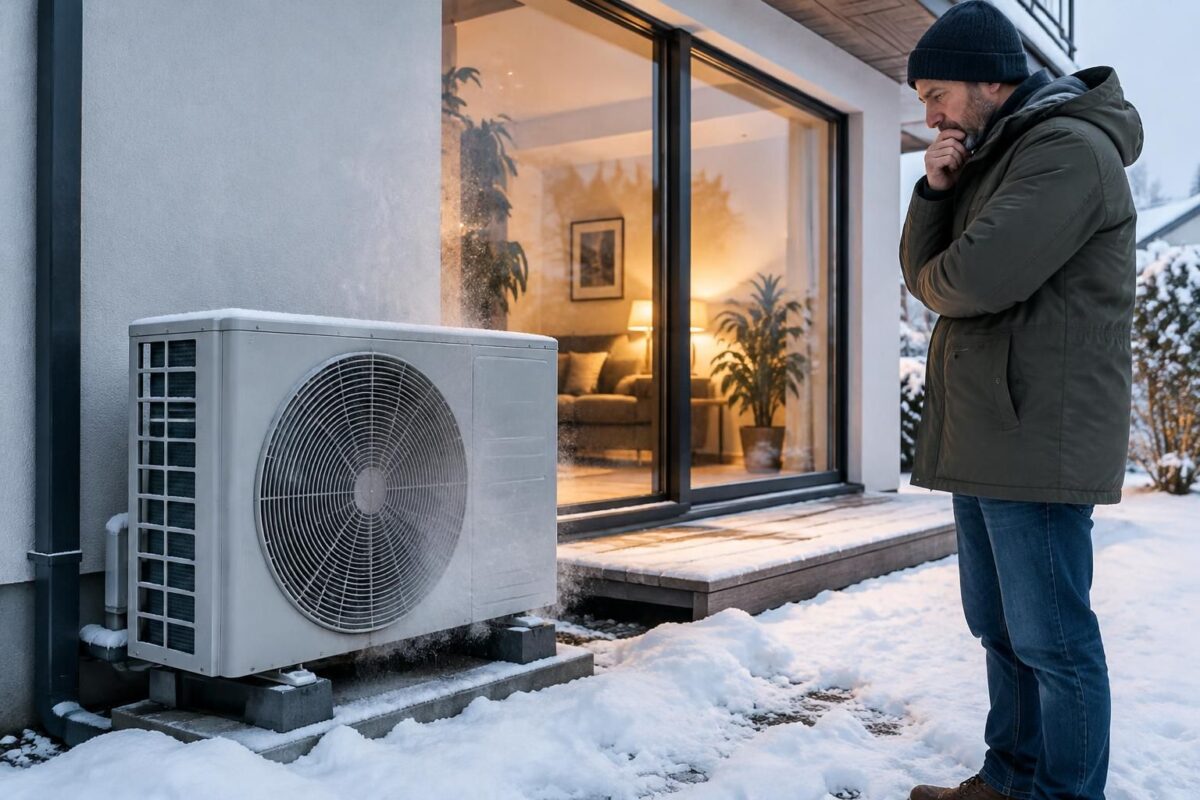
In areas where temperatures regularly fall below -7 °C, an air-to-water heat pump may become less efficient and rely more heavily on its backup system. Depending on the model and circumstances, this backup can account for around 15 to 25% of annual consumption in very cold climates.
Older radiators may also need water above 55 °C to heat your home properly. In that case, energy efficiency may fall. Ask for a performance calculation for cold weather, not just an estimate based on mild outdoor temperatures.
If you live in a cold region, a geothermal heat pump may be worth considering if your land allows it, but installation often costs more. A pellet boiler or a hybrid heat pump that retains an efficient gas boiler can also be compared on a case-by-case basis.
Six situations where a heat pump deserves closer scrutiny
Your home, how it is occupied and installation constraints all affect the calculation. Here are the situations where it is best to compare several options before committing.
| Situation | What can undermine the savings | Option to consider |
|---|---|---|
| Home with an F or G rating | High heat loss and frequent use of backup heating | Insulate before sizing the heat pump |
| Very cold region | Reduced efficiency during freezing spells | Consider geothermal, pellets or a hybrid system |
| Apartment without central heating | No water circuit for an air-to-water heat pump | Compare an air-to-air heat pump with more extensive renovations |
| Holiday home occupied infrequently | Long payback period | Choose a system suited to how often the property is occupied |
| Restrictive condominium rules | Outdoor unit refused or unsuitable location | Get approval before requesting a final quote |
| Budget too tight | Remaining costs difficult to finance | Prioritize the work and phase the project |
Apartments, holiday homes and condominiums
Without central heating, an air-to-water heat pump cannot connect to an existing water circuit. An air-to-air heat pump can heat and cool, but it does not produce domestic hot water. Available grants vary depending on the system and the scheme: check the current rules before including a grant in your budget.
In a home occupied for only a few months a year, the low number of heating hours can significantly lengthen the payback period. An appropriately sized air-to-air heat pump, modern electric heaters or a stove may sometimes be better suited to this pattern of use.
In a condominium, the outdoor unit may require approval from the general meeting and a check of local regulations, particularly in a protected area. Do not have the system installed before you have written authorization.
Limited budget: compare the total cost, not just the grants
Grants can reduce the amount you have to pay, but they do not automatically make the project affordable. Depending on your income, the equipment and the applicable rules, several thousand euros may still need to be financed. Include maintenance, electricity consumption and the future replacement of the unit in your calculations.
An installed pellet stove often costs around €4,000 to €8,000, depending on the model and the work involved. A pellet boiler with a storage silo requires a larger investment, often in the range of €15,000 to €25,000. These estimates vary depending on the circumstances and are no substitute for comparing like-for-like quotes.
To avoid installation mistakes and unsuitable quotes, use this guide to choosing a reliable installer to identify what to check.
A simple method for choosing the right solution
- Step 1 — Assess your needs. Have the insulation, heat loss, required radiator temperature and heating bills reviewed. An independent assessment is useful if the project is substantial or involves several planned renovations.
- Step 2 — Compare systems using the same scenario. Ask for several proposals specifying the planned capacity, estimated SCOP, any backup heating, additional work and maintenance. Compare the total cost over several years, not just the purchase price.
- Step 3 — Check the constraints before signing. Confirm which grants you may be eligible for, any condominium approvals and whether installation is feasible. Installation errors or incorrect settings can reduce performance, even with suitable equipment.
One often-overlooked detail: radiators set too high or a poorly adjusted heating curve can drive up electricity consumption. After commissioning, ask the installer to explain the settings and check how they are working during the first few weeks of heating.
To compare options without relying solely on sales promises, you can also read this article on choosing the right heat pump model. A successful installation starts with a clear understanding of your home and heating system.
Useful questions to ask before choosing a heat pump
Is a heat pump unsuitable for a home with an F or G rating?
Not necessarily, but it is often best to reduce heat loss first. In a poorly insulated home, the required capacity and use of backup heating can increase consumption.
Can an air-to-water heat pump work in a cold region?
Yes, but its efficiency may fall during spells of extreme cold, and the electric backup may be used more. Have the system sizing checked and, depending on your land and budget, compare geothermal energy or other systems.
Is a heat pump cost-effective in a holiday home?
It depends on how often the property is occupied, the climate and the cost of other options. For a home used for only a few months a year, a smaller system may sometimes better match actual needs.
What should I do if the condominium refuses the outdoor unit?
Check the condominium rules and obtain the necessary approvals before starting the work. Without formal approval, you may have to modify or remove the installation at your own expense.
Thanks for staying with me until the end; Benjamin