Insulation or Heat Pump: The Right Order
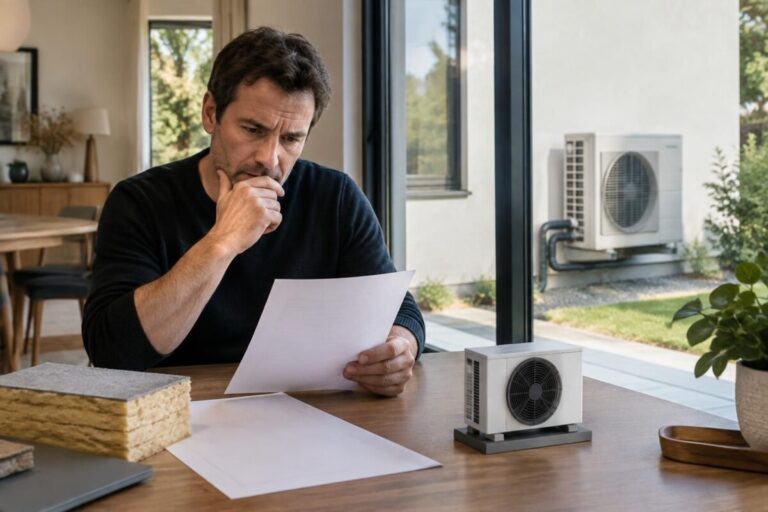
Hello everyone, it’s Benjamin. In most poorly insulated homes, start with thermal insulation, then have the heat pump sized according to the home’s actual needs. This order limits heat loss and prevents you from choosing equipment that is too powerful. However, if the heating system has broken down or the home is already well insulated, priorities may change.
WHAT TO DO FIRST
- Have an energy assessment carried out to identify the main sources of heat loss.
- Check the condition of the attic, walls, windows and ground floor.
- Address the most significant weak points before choosing the heat pump’s capacity.
- Ask for a quote that takes the planned insulation work into account.
- Check what grants are available with a France Rénov’ advisor before signing.
Insulation or a heat pump: why the order of work matters
Insulation and the heating system do different jobs. Insulation reduces heat requirements, while the heat pump produces heat using electricity.
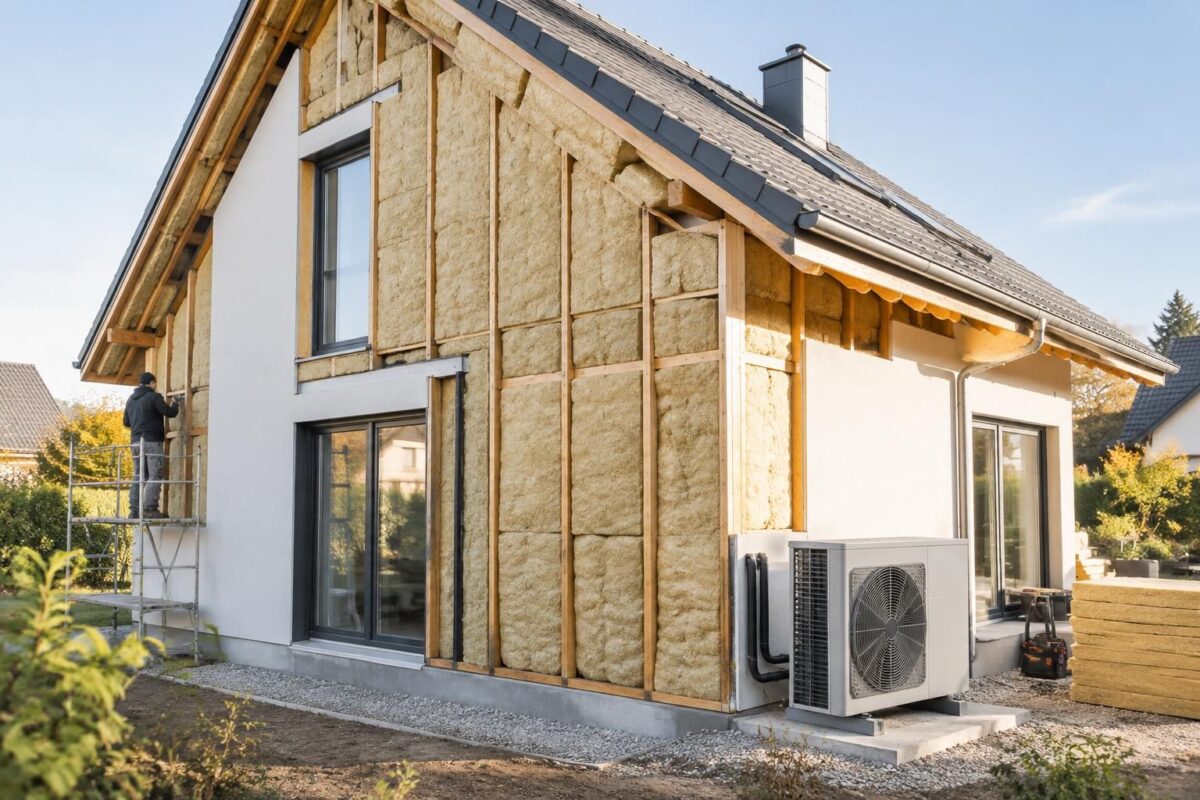
In a poorly insulated home, a heat pump has to compensate for heat loss through the roof, walls, windows or floor. It may then run for longer and use more energy, without solving the feeling of cold walls. To learn more, also see the effects of inadequate insulation on heat pump operation.
Insulating first generally makes it possible to calculate the equipment’s capacity based on the needs after the work is completed. A home that needs much less heating can often use a less powerful machine, which may cost less depending on the model and configuration.
Thermal comfort depends on more than just the thermostat
Setting the air temperature to 21 °C is not always enough to make a room comfortable. If a wall stays cold, your body feels the difference and thermal comfort suffers, even when the heating is running.
Insulation addresses the cause of this discomfort. It can also make the temperature more consistent from room to room—a benefit that replacing the heating system alone does not always provide.
Compare the two sequences before committing your budget
Installing the heat pump first may seem simpler, especially if the old system is nearing the end of its life. But if major insulation work is planned afterward, the home’s heating needs will change. The capacity selected initially may no longer suit the renovated home.
An oversized heat pump may switch on and off frequently, depending on the equipment and its settings. By contrast, prioritizing insulation helps determine future heating needs. So choosing the right order is also a way to better manage the overall cost.
| Option | What it offers | Point to watch |
|---|---|---|
| Insulation before the heat pump | Capacity calculated according to needs after renovation, and more consistent comfort. | Arrange temporary heating if the work takes place during a cold period. |
| Heat pump before insulation | A possible solution if the heating system has broken down or urgent work is needed. | Tell the contractor about the insulation plans to avoid incorrect sizing. |
| Coordinated work | An overall view of needs, budget and potential grants. | An assessment and a realistic schedule are needed to organize the work. |
Costs vary considerably depending on the area, materials and building constraints. As a guide, attic insulation can cost a few dozen euros per square meter, while an air-to-water heat pump often costs several thousand euros and can exceed ten thousand, including installation, depending on the model and circumstances. Insulating beforehand may make it possible to choose a lower-capacity unit, but only a tailored quote can determine the difference in cost.
Exceptions: when the heat pump can come first
The general rule does not rule out practical choices. If the boiler breaks down in the middle of winter, it may not be possible to wait until insulation work is finished. In that case, ask for the system to be sized with the planned work in mind, and compare several proposals.
If the home is rated F or G and the attic is still poorly insulated, it is generally best to start by assessing the building envelope. If the home is already adequately insulated, or if the heating has just failed, a heat pump can be installed first after checking the heat emitters and the home’s needs.
The type of technology also matters. An air-to-water heat pump must be suitable for the existing radiators or underfloor heating, while an air-to-air heat pump serves different needs. Older buildings require a specific assessment of their constraints: here are some pointers on heat pumps in older homes.
Plan your energy renovation in three steps
- Step 1 — Get an assessment. Request an energy assessment or an audit if your project requires one. It helps identify the most significant heat losses and compare different scenarios, rather than choosing work at random.
- Step 2 — Address the main sources of heat loss. The attic is often a good place to start, but every home has its own weak points. Also have the ventilation checked: insulating without managing air renewal can encourage damp.
- Step 3 — Size and then install the heat pump. Taking the planned work into account, a professional assesses the required capacity and checks compatibility with the heating system. Ask for the quote to specify the settings and commissioning.
Before committing, check the current grant rules: eligibility criteria and amounts may vary depending on the home, income and type of project. To avoid scheduling or paperwork mistakes, you can also read about common mistakes to avoid before installing a heat pump.
Energy savings start with the right assessment
An air-to-water heat pump can deliver several units of heat for every unit of electricity under favorable conditions. However, its actual efficiency depends on the outdoor temperature, settings, heat emitters and the home’s needs. Insulation helps reduce those needs: when properly coordinated, the two improvements reinforce each other.
So the best decision is not necessarily the most visible or fastest project. It is the one that takes the condition of the building, the budget and the schedule into account, to improve energy performance over the long term without oversizing the heating system.
Useful questions before choosing the order
Should you always insulate before installing a heat pump?
In a poorly insulated home, it is generally preferable, because insulation reduces heating needs and makes it easier to size the heat pump. An urgent breakdown or a home that is already well insulated may justify a different order.
Which insulation work should be done first?
The attic is often a good priority, but the home assessment should guide the decision. Depending on the home, walls, windows, floors and ventilation may also be important factors.
Can you install a heat pump before insulation work?
Yes, particularly if the heating system has broken down. In that case, tell the installer about the planned work so the sizing and settings take the home’s expected changes into account.
How can you avoid an oversized heat pump?
Have the heating needs assessed after taking the planned insulation work into account. A professional should consider the building, climate zone and heat emitters—not just the floor area.
Thanks for staying with me until the end; Benjamin