Heat pump: should we still believe in it?
Hi, it’s Benjamin.
Yes, a heat pump remains a viable option, provided it is adapted to the home and the costs are checked beyond the promised savings.
In 2026, a new integrated offer may make installation easier for some low-income households. But a substantial subsidy or an attractive monthly payment alone does not guarantee that the project will be cost-effective.
What to do before choosing a heat pump
- Have your home assessed and its heating needs evaluated before choosing a model.
- Check that the heat pump is correctly sized and compatible with your radiators or underfloor heating.
- Compare the total cost: installation, financing, maintenance, and electricity consumption.
- Look into the financial assistance you may be eligible for and the rules for combining it with other aid.
- Ask for several detailed quotes before signing, even if an offer is presented as turnkey.
To put your options into perspective, you can also compare a heat pump with wood heating and review the items that can affect your bill in this article about the sometimes less visible costs of a heat pump.
Heat pumps: useful technology, not a universal promise
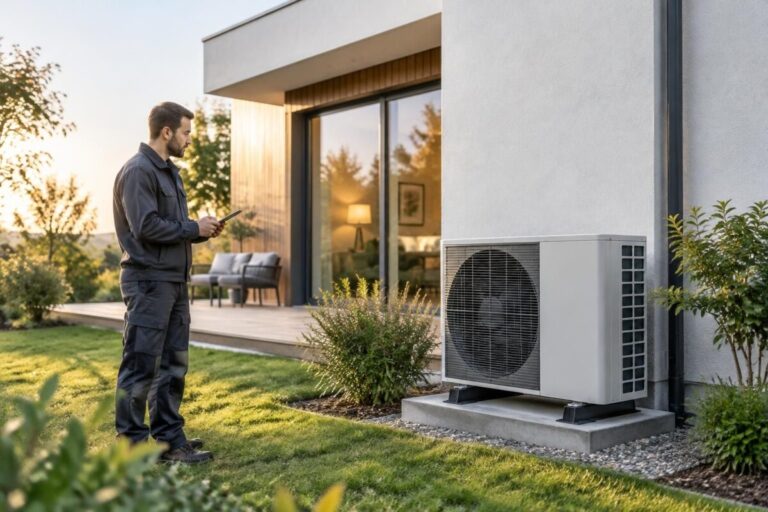
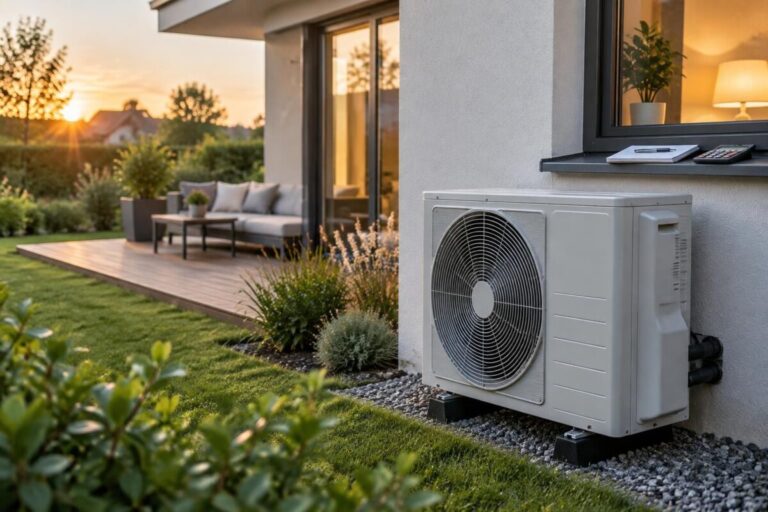
A heat pump captures heat from the air, ground, or water to warm your home. An air-to-water heat pump can supply radiators or underfloor heating, while an air-to-air model heats the indoor air directly.
Its effectiveness depends mainly on the home’s energy efficiency and the temperatures required for heating. A correctly sized unit can provide several kilowatt-hours of heat for each kilowatt-hour of electricity consumed, but its actual efficiency varies depending on the climate, installation, and settings.
Energy savings are therefore possible, particularly when replacing an oil or gas boiler, but they will not be the same from one home to another. Insulation, energy prices, and heating habits directly affect the results.
The pitfall: confusing advertised savings with guaranteed cost-effectiveness
A performance figure does not tell you the actual annual cost. You also need to factor in electricity consumption, maintenance and any repairs, as well as the installation cost and financing fees.
For example, two homes heated with gas may receive similar offers, but the better-insulated home with suitable radiators will often have different heating needs. That is why a reliable estimate is based on the home, not just on the heat pump’s output.
Reliability matters just as much as the promised savings: ask for the equipment specifications, warranties, details of the maintenance contract, and the installer’s qualifications. A well-designed installation is the best starting point for maintaining comfort and cost-effectiveness.
Integrated heat pump offer in 2026: who is eligible?
Since October 1, 2026, some owners of single-family homes with low or very low incomes have been able to pre-order an air-to-water heat pump through an offer supported by the government. The scheme is aimed in particular at replacing gas or oil heating and plans an initial rollout of 55,000 installations.
The offer may include the equipment, installation, a dedicated subsidy funded by energy savings certificates, three years of maintenance, and financing for the remaining balance. A fixed-price electricity plan for three years and a control system are also included, but the electricity contract is optional.
| What to check | What the scheme provides |
|---|---|
| Who is eligible | Owners of single-family homes with low or very low incomes, based on Anah income thresholds. |
| Advertised subsidy | An average of around €9,800, although this amount is not guaranteed for every project. |
| Combining subsidies | The dedicated subsidy cannot be combined with MaPrimeRénov’ for the same work. |
| Repayment of the remaining balance | Usually spread over three years, with a term of up to five years depending on the circumstances. |
| Associated electricity plan | A fixed-price plan offered for three years, which the household is free to decline or cancel. |
Repayment over three years does not mean that every heat pump pays for itself through energy savings in three years. It is a financing target: depending on the situation assessed, monthly expenses after the work — repayments, electricity, and maintenance — are expected to be no higher than previous energy expenses.
Before choosing this option, compare it with the other financial assistance available. The amount of the subsidy, the balance to pay, the loan term, and the total installation cost matter more than the advertised monthly payment alone.
How to compare an offer without focusing on the monthly payment
A low monthly payment may conceal a longer financing term or additional fees. Likewise, a fixed electricity price offers predictability, but does not necessarily mean that the price per kilowatt-hour is the lowest available.
The scheme also has to meet certain conditions: the home must be suitable for an air-to-water heat pump, and the unit must be sized to meet its needs. For the integrated offer, income is assessed according to the relevant thresholds, and a household that has already applied for MaPrimeRénov’ for the same work cannot choose this option.
Three steps to making an informed decision
- Check your eligibility and whether the project is feasible. Check the income thresholds, your existing heating system, and whether your home is suitable for an air-to-water heat pump.
- Compare written proposals. Review the model, output, total cost, subsidies deducted, financing, maintenance, and warranties.
- Decide after calculating the actual costs. Compare estimated electricity consumption and monthly payments with your current bills, then assess the electricity plan separately.
This approach helps you avoid confusing easy financing with a good deal. A well-chosen heat pump can reduce heating costs and environmental impact, but the decision should be based on the characteristics of your home.
Frequently asked questions about heat pumps
Is a heat pump suitable for every home?
No. Its effectiveness depends in particular on insulation, climate, the existing heating system, and correct sizing. An assessment of the home can determine whether it is suitable.
Does the integrated offer guarantee that a heat pump will pay for itself in three years?
No. The remaining balance is usually scheduled to be repaid over three years, but actual cost-effectiveness depends on previous expenses, energy prices, and the system’s performance.
Can the integrated offer subsidy be combined with MaPrimeRénov’?
No. The integrated offer’s dedicated subsidy cannot be combined with MaPrimeRénov’ for the same work. You should compare the options before applying.
Do you have to sign up for the electricity plan offered with the heat pump?
No. The associated electricity contract is optional. Compare the price per kilowatt-hour, the standing charge, and the contract terms, and remember that you can choose another supplier.
Thanks for reading! Feel free to share your thoughts in the comments. — Benjamin