7 Eco-Heating Mistakes That Drain Your Budget
Hi, it’s Benjamin. To stop energy-efficient heating from draining your budget, start by correcting the settings, heat loss and maintenance before replacing your equipment. A few heating mistakes are enough to send your energy bill soaring, even with a recent appliance.
The good news: simple steps can limit wasted energy without sacrificing comfort. Here are the most common pitfalls and a way to take back control.
What to do now
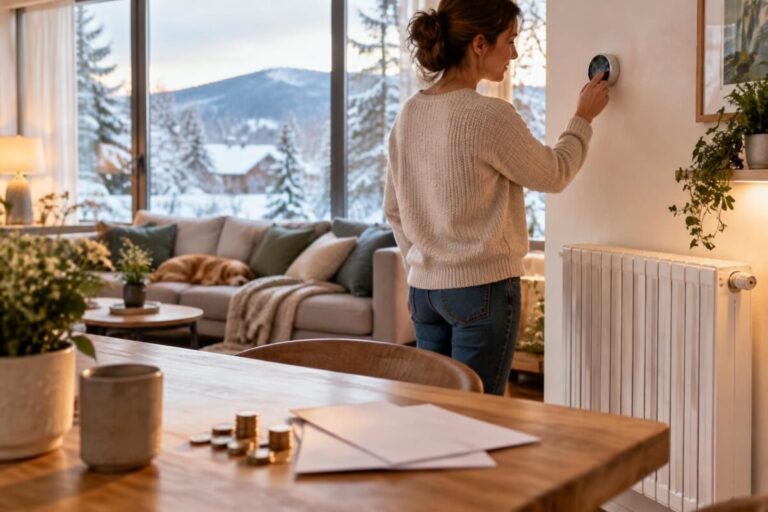
- Set the thermostat to around 19 °C in living areas, then adjust it to suit your comfort.
- Clear the radiators and check that no furniture or curtains are blocking the heat.
- Look for drafts around windows, doors and hatches.
- Schedule boiler maintenance if your system needs it or if it has been a long time since its last check.
- Compare your energy use before and after each change, rather than changing several settings at once.
To choose the right approach, first compare energy-efficient heating and insulation, then find out which heating system preserves comfort.
Heating mistakes that send your bill soaring
Economical heating depends on more than just the appliance. Settings, the condition of your home and everyday habits can lead to excessive energy use without you realizing it.
In Léa’s case, the living room was heated to 22 °C, the radiators were partly hidden, and a window was letting in cold air. By addressing these three issues, she improved her comfort before even considering new equipment.
1. Leaving the thermostat incorrectly set
An incorrectly set thermostat often leads you to heat more than necessary. A set temperature that is too high increases heating demand; in many homes, lowering it by one degree can reduce heating consumption by a few percent, depending on insulation and the system.
Also avoid placing the thermostat behind a curtain, near a heat source or in a draft. It would measure a temperature that does not reflect the temperature of the room.
2. Heating every room the same way
A bedroom that is unoccupied all day does not necessarily need the same setting as the living room. Adjusting the temperature to how each room is used can reduce costs, provided you do not let spaces become persistently cold or damp.
Closing doors helps keep heat where you need it. The best approach is to program temperatures that fit your routine, rather than heating the whole house to the maximum.
3. Blocking radiators
Radiators that are not working efficiently are not always faulty: they may be obstructed by a sofa, furniture or long curtains. Heat then circulates less effectively, and you may turn up the thermostat to compensate.
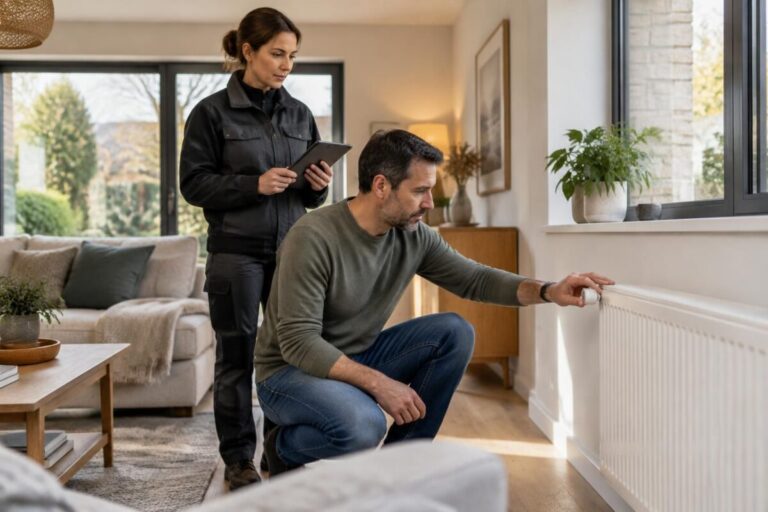
Clear the space around the appliances and dust them regularly. If a radiator remains partly cold or does not heat properly despite these steps, it may need adjusting or the system may need checking.
4. Putting off boiler maintenance
Neglecting boiler maintenance can reduce performance and prevent problems from being spotted in time. Regular checks also help verify that the system is working properly and safely; follow the requirements and recommendations that apply to your equipment.
Maintenance will not make up for poor insulation, but it helps prevent a poorly adjusted appliance from having to provide more heat than it should. It is a predictable expense, unlike a breakdown in the middle of a cold spell.
5. Ignoring poor insulation
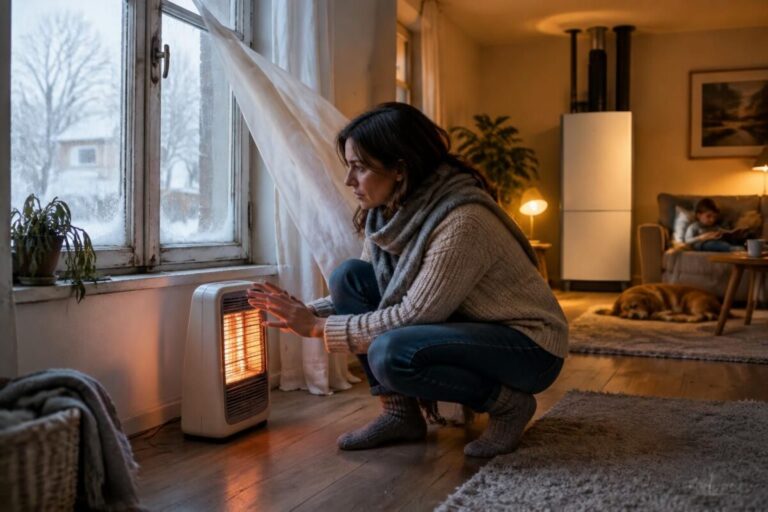
Poor insulation lets heat escape through the attic, walls, windows or floors. In that case, replacing only the heating system may improve the appliance’s efficiency without addressing the main cause of heat loss.
Start by identifying cold spots and air leaks. A room that cools quickly after the heating is turned off may indicate heat loss, although a full assessment is still needed to identify its cause.
6. Choosing an appliance without considering your home
Equipment marketed as economical is not automatically right for your home. The size of the property, insulation, local climate and existing heat emitters all affect real-world performance.
For example, a heat pump may be a good option, but its sizing and compatibility with your radiators matter just as much as its energy label. Compare the total cost, necessary work and intended use before making a decision.
7. Changing settings without checking the results
Repeatedly turning the temperature up and down, or switching the heating off completely for long periods, can affect comfort and make energy use harder to manage. The effects vary depending on the home, the weather and the system installed.
Make one change at a time and monitor the temperature and energy use over several days. This approach helps you distinguish a real improvement from a mere impression.
Compare common mistakes and useful steps
This table summarizes the signs to watch for and the first step to take. It is not a substitute for a professional assessment, but it can help you target the simplest actions.
| Common mistake | Possible effect | First step |
|---|---|---|
| Set temperature too high | Heating runs longer and bills increase | Gradually lower the temperature |
| Obstructed radiator | Heat is distributed poorly | Clear the space around the appliance |
| Drafts | Heat loss and discomfort | Find the air leaks |
| Maintenance postponed | Adjustment issue or fault goes undetected | Schedule the appropriate check |
| Wrong equipment choice | Investment that does not pay off | Assess the home before buying |
Reduce excessive energy use in three steps
- Assess your home. Note which rooms are too hot or too cold, where there are drafts and which radiators are not distributing heat well. Also check your meter readings to identify periods of high energy use.
- Adjust the settings and address easy-to-fix heat loss. Adjust the thermostat, clear the appliances and improve the seals around openings where appropriate. A small, targeted fix is better than raising the temperature throughout the home.
- Assess any work before replacing the system. If heat loss remains significant, get advice tailored to your home and compare your options. The goal is to reduce heating demand, then choose equipment that meets it effectively.
This approach helps you avoid paying for a more powerful appliance to compensate for a poorly insulated building envelope. The most lasting heating savings often start with understanding your actual needs.
Helpful questions about economical heating
What temperature should I set in a living area?
A setting close to 19 °C is often a good starting point for living areas. Adjust it to suit your comfort, the activity in the room and the characteristics of your home.
Does a programmable thermostat always reduce the bill?
It can help match heating to occupancy schedules, but savings depend on the settings, the home and your habits. A suitable program is essential.
Should I replace a boiler before insulating?
Not necessarily. It is useful to assess heat loss and the condition of the system before deciding. The order of work depends on the home and the existing system.
Why is a radiator not heating properly?
It may be obstructed, incorrectly adjusted or need the system checked. Clear it first and, if the problem persists, have a professional inspect the system.
Thanks for reading! Feel free to share your observations in the comments. — Benjamin