Heat Pump: Champion or Hidden Cost
Hello, Benjamin here.
A heat pump can significantly reduce your heating bill, but its cost-effectiveness depends mainly on the home, the sizing and the quality of the installation.
ADEME measurements show an average efficiency of around 2.9 kWh of heat delivered for every 1 kWh of electricity used. This encouraging result does not erase the installation and maintenance costs, or the differences between a well-adjusted heat pump and an unsuitable installation.
Good habits to adopt
- Compare the total cost: request several detailed quotes, with grants listed separately.
- Check the sizing: it should match the home’s heat loss and heat emitters.
- Check the SCOP in heating mode: it gives a better indication of seasonal performance than a single figure.
- Plan for electricity costs: check the price per kWh, the standing charge and the required meter capacity.
- Ask how the heat pump will be set up: the installer should explain the heating curve, flow temperatures and how the system operates in cold weather.
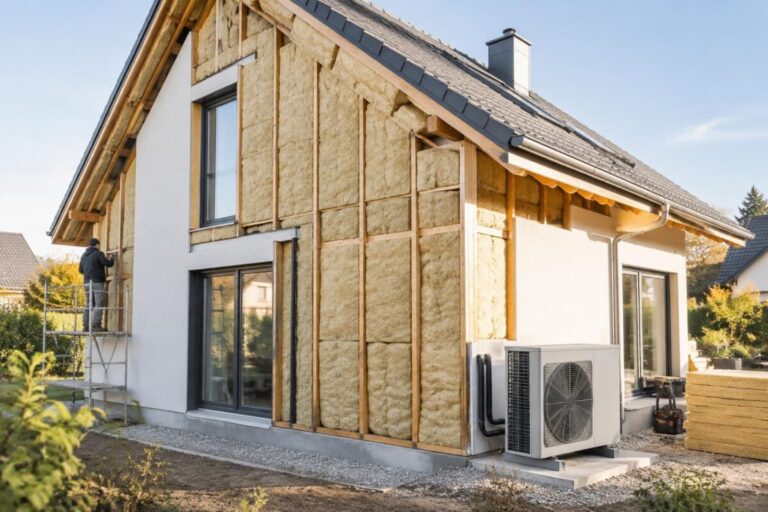
To find out whether the project is right for your home, start by comparing the criteria for going ahead with a heat pump and the work that can improve insulation before installing a heat pump.
Heat pumps: real savings or hidden costs?
A heat pump does not produce heat from nothing: it draws heat from the air, ground or water, then transfers it into the home with the help of an electric compressor. Its coefficient of performance indicates how much heat it supplies for each kilowatt-hour of electricity consumed.
In a study published in 2025, ADEME monitored 100 installations over a heating season. The average coefficient observed was around 2.9, with results ranging from 1.8 to over 4 depending on the equipment and how it was installed. In other words, the technology can be highly efficient, but installation and settings have a major impact.
| Configuration studied | Coefficient used | Annual electricity use for 10,000 kWh of heat | Indicative cost at the Base rate |
|---|---|---|---|
| Low performance | 1.8 | About 5,556 kWh | About €1,112 |
| Average result observed | 2.9 | About 3,448 kWh | About €690 |
| Well-adjusted installation | 4 | About 2,500 kWh | About €500 |
These estimates use a price of €0.2001 per kWh on the Base option, excluding the standing charge. Your household’s result will depend on the climate, heating temperature, electricity contract and lifestyle.
Compare with a boiler without forgetting additional costs
For an annual heating requirement of 10,000 kWh, the example estimates the cost of gas at around €1,582 with a condensing boiler, plus the gas standing charge. Direct electric radiators would cost around €2,001 at the Base rate. Against these benchmarks, a heat pump with average efficiency can reduce the energy bill, but it will not pay for itself on its own.
Installation costs are often high and depend on the type of unit, the modifications required and the work involved. ADEME indicates that the investment is around twice that of a conventional boiler; cost-effectiveness then depends on financial incentives, energy prices and the starting situation.
Maintenance costs also need to be included in the calculation: ADEME recommends professional servicing every two years and regulatory checks of refrigerants where required. A stated lifespan does not, by itself, guarantee reliability: usage, maintenance and the availability of after-sales service also play a key role.
Air-to-water, air-to-air or geothermal: choose based on your home
An air-to-water heat pump heats the water in a radiator network or underfloor heating system. It is often suitable for replacing a boiler, and some models can also produce domestic hot water.
An air-to-air heat pump blows warm air directly into rooms. It can replace electric convectors without installing a hydronic system, but it does not provide domestic hot water. A geothermal heat pump draws heat from the ground or an aquifer: its efficiency is less affected by changes in outdoor temperature, but it involves more extensive work and requires a suitable plot.
Cold weather and radiators can change the picture
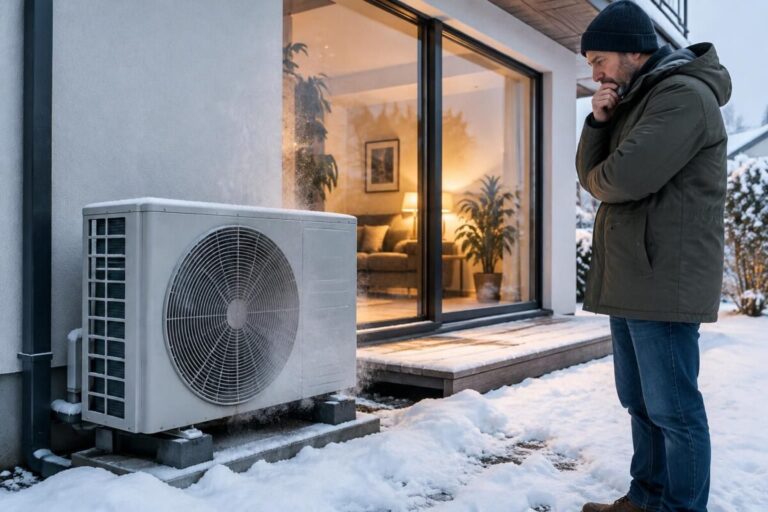
Air-source models become less efficient when the outdoor air gets very cold. An electric backup heater can then take over; a hybrid system can instead switch to a boiler during the coldest spells.
Energy performance does not depend solely on insulation, but the radiators must be large enough to heat the home with low-temperature water. If the system constantly requires very hot water, efficiency may fall. An assessment of the heat emitters and heat loss can help you avoid discovering this limitation after the work is done.
The classic pitfall: choosing a brand before checking the installation
A model with an excellent SCOP on its technical specifications will not necessarily deliver the same performance in your home. Incorrect sizing, an unsuitable heating curve or overly frequent operating cycles can widen the gap between the stated efficiency and actual energy use.
For example, in a home with older radiators, replacing the boiler without checking whether they can operate at low temperatures may result in greater reliance on the backup heater. The right approach is to have the planned temperatures and settings specified in the quote, not just the brand and output.
- The heating curve adjusts radiator water temperature according to the weather; a range of 35 to 45 °C is often the goal when the home and heat emitters allow it.
- Suitable radiators or underfloor heating make it possible to heat with cooler water.
- Precise settings limit repeated starts and, where possible, favour heating during the milder daytime hours.
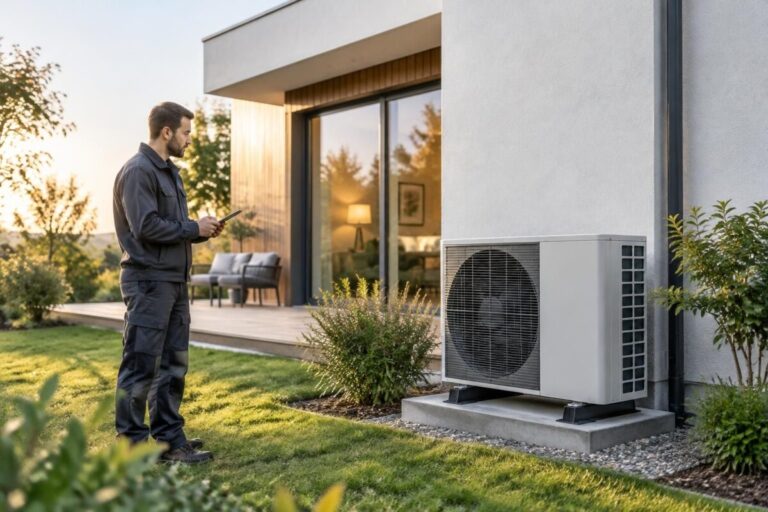
- A clear outdoor unit, free of leaves and dust, helps it operate effectively.
In its recommendations, ADEME notes that lowering the water temperature by 10 °C can improve the coefficient by about one point, if the system allows it. The installer should therefore explain the heating curve and how to adjust it, rather than overlooking this setting.
A three-step process for assessing cost-effectiveness
- Estimate your heating needs. Start with your previous gas or oil consumption and account for the efficiency of the boiler being replaced to estimate the heat actually delivered.
- Calculate the expected electricity use. Divide your annual heating requirement by the heat pump’s seasonal performance, then apply the price per kWh and add the relevant standing charge.
- Compare the full costs. Weigh the quotes, available financial incentives, maintenance costs and expected savings against one another. France Rénov’ can provide free guidance on grants and the renovation process.
In 2026, MaPrimeRénov’ grants for individual measures may be available for air-to-water and geothermal heat pumps for some households, subject to income conditions and use of an RGE-certified company. Air-to-air heat pumps are not eligible for this individual-measure scheme; energy savings certificates (CEE), the zero-interest eco-loan, reduced VAT or certain local grants may also be included in the financing plan, depending on the project.
Your electricity contract is also worth checking. At the rates shown, the Tempo option can be expensive during peak hours on red days if the heat pump is running without another heating source: it is best to model the contract using your household’s actual usage.
The verdict: a winner when the project is well planned
A well-configured heat pump can cut heating bills in half on average compared with the boiler it replaces, according to ADEME observations; the best-performing cases can achieve even greater reductions. The environmental impact of heating can also be significantly reduced, especially compared with oil, but the final result depends on the electricity consumed and the quality of the installation.
A heat pump is therefore neither a guaranteed way to save nor an inevitable trap. It becomes a compelling solution when the home, heat emitters, sizing, grants and electricity price are considered together.
Frequently asked questions about heat pumps
Does a heat pump always cut the bill in half?
No. ADEME observes an average halving of heating bills for a well-configured heat pump replacing a boiler, but savings vary depending on the installation, climate, energy prices and settings.
Which efficiency rating should I look at when comparing models?
Compare the SCOP in heating mode, which better reflects performance over a season than the COP measured under a specific set of conditions. Actual results also depend on sizing and the required water temperature.
Can a heat pump work with older radiators?
It may be possible if the radiators are powerful enough to heat the home using moderately warm water. A professional should check their capacity and the home’s heating requirements before recommending the equipment.
What financial incentives can reduce the installation cost?
Depending on the type of heat pump and the household’s circumstances, incentives may include MaPrimeRénov’, energy savings certificates, the zero-interest eco-loan, reduced VAT or local grants. France Rénov’ can help check the applicable conditions.
Thanks for reading! Feel free to share your thoughts in the comments. — Benjamin