Solar energy: should it be paired with a heat pump?
Hi everyone, it’s Benjamin.
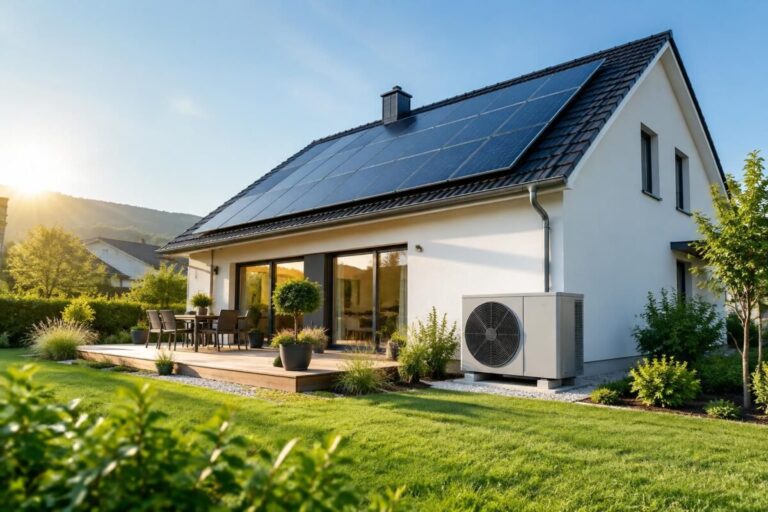
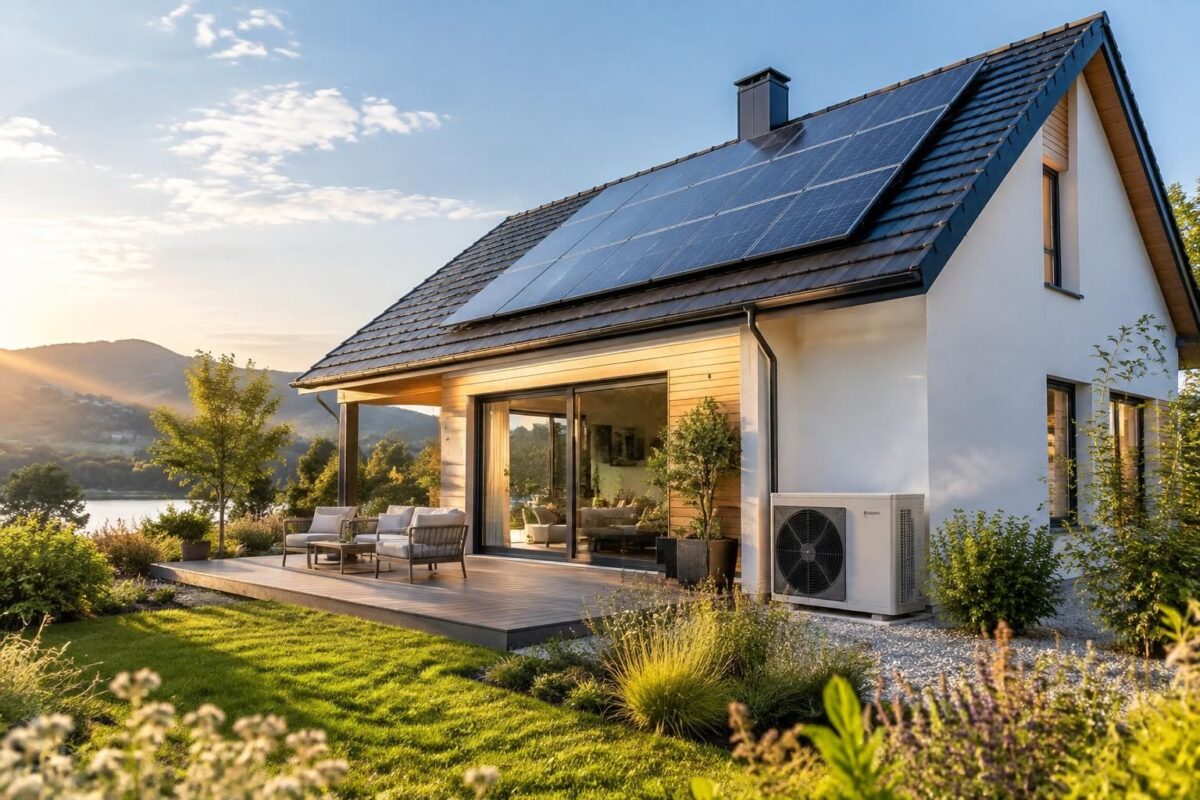
Yes, pairing a heat pump with solar panels is often worthwhile, especially if you can use the solar electricity during the day.
The two can reduce your bill, but they won’t make your home self-sufficient in winter: the heat pump works harder when the panels produce less. Insulation, sizing and control therefore make all the difference.
WHAT TO DO FIRST
- Check the insulation and heating requirements before choosing the heat pump’s capacity.
- Check the roof’s orientation, shading and available surface area.
- Ask for an estimate of solar production tailored to your region.
- Plan to control the hot water tank and heat pump during sunny hours.
- Compare the total cost, available grants and expected savings with a qualified professional.
Why combine solar energy and a heat pump?
The heat pump extracts heat from the air or ground to heat your home and water. Photovoltaic panels produce electricity, which can power the heat pump and other household appliances.
The mismatch between production and demand is the key thing to understand. In summer, the panels produce a lot while the heating runs very little; in winter, the heat pump is used more while the days are short. The system therefore helps reduce annual energy consumption, without eliminating the need to buy electricity from the grid.
To improve self-consumption, schedule the hot water tank to run during the day and, if the system allows, use a little extra heat in the home when solar production exceeds immediate needs. This form of thermal energy storage is often simpler than using a battery.
You can also check out these guidelines on the cost-effectiveness of a heat pump with solar energy and the factors that influence the return on investment of combining the two.
Photovoltaics or solar heating: which solution should you choose?
Photovoltaics is often the most versatile choice. The electricity can be used to power the heat pump, lighting and household appliances; depending on the contract and installation, surplus electricity can be fed into the grid.
Solar thermal heating directly heats a fluid or the water in a tank. It may suit a household with high hot water consumption, such as a large family, or a home with a swimming pool. However, it requires a dedicated hydraulic circuit and regular maintenance.
| Solution | Main advantage | Things to consider |
|---|---|---|
| Photovoltaic panels | Electricity production for multiple uses | Production does not always coincide with heating demand |
| Solar thermal collectors | Direct heat for hot water and sometimes heating | Hydraulic installation and maintenance need to be planned |
| Photovoltaics with a battery | Solar electricity available later | The cost of the battery should be compared with the potential savings |
For most homes, photovoltaics offers welcome flexibility. However, solar thermal is worth considering if hot water needs are high or if the home’s layout is particularly well suited to it.
Two scenarios to help you decide faster
If your home is well insulated and you can shift some energy use to different times: a heat pump combined with photovoltaics can improve the overall system’s energy efficiency, especially with suitable controls.
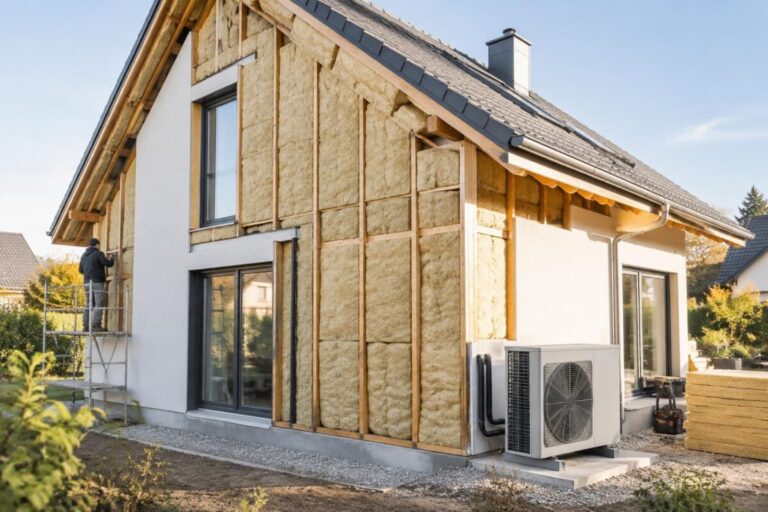
If your home is poorly insulated: address heat loss first. The heat pump will then need to run more, which may reduce the financial benefits of solar. These tips on a heat pump in a poorly insulated home can help you ask the right questions.
How can you size the system without overspending?
The right capacity depends on the home’s size and insulation, the climate zone, the occupants and the electrical appliances. An installation of a few kilowatt-peak may suit a house, but this is only a guide, not a substitute for an assessment: a shaded roof or one facing east will not produce the same results as a roof with good sun exposure.
Be careful not to confuse thermal power with electrical power. A heat pump rated at several kilowatts of heating output does not necessarily continuously consume the same amount of electrical power. Ask for an estimate based on its annual consumption and seasonal performance, rather than relying on a single marketing figure.
- Step 1: have the home’s heat loss assessed and check that the heat pump is suitable for the existing heat emitters, such as radiators or underfloor heating.
- Step 2: request a solar simulation that takes into account the roof’s orientation, shading and your actual energy use, particularly for the heat pump and hot water.
- Step 3: compare several detailed quotes that include controls, installation, maintenance and grants confirmed for your situation.
A common mistake is to size the panels to theoretically cover the heat pump’s entire annual consumption. But producing that much over the year does not mean producing it when the heating needs it. Adjusting the hot water tank to heat during the day may be more useful than investing in an oversized system.
Cost-effectiveness, batteries and the energy transition
Savings come from solar electricity used on site, but the amount varies depending on electricity prices, the weather, household habits and the cost of the work. Compare the complete scenario with your current solution, rather than relying on a promise of the same savings for every home.
A battery can increase self-consumption, but it adds an upfront cost and is not automatically worthwhile. Before installing one, check whether controlling the heat pump and hot water tank can already shift some energy use to the hours when solar power is being produced.
A well-designed combined system contributes to the energy transition and can reduce the share of energy purchased from the grid. To keep the project on track, start by improving the home’s energy efficiency, then choose suitable equipment rather than the most powerful system.
Useful questions to ask before you get started
Can photovoltaic panels power a heat pump in winter?
They can provide some of the electricity, but production often falls in winter, when heating needs increase. The grid generally supplies the rest.
Should I add a battery?
Not necessarily. Controlling the heat pump and hot water tank during the day can increase self-consumption without a battery. Compare the cost of storage with the expected savings.
Is solar thermal better than photovoltaics?
It may be worthwhile if hot water needs are high. Photovoltaics is often more versatile, as its electricity can power several household appliances.
What should I check first?
Check the insulation, heating requirements and compatibility of the heat pump with the existing equipment before sizing the panels.
Thanks for staying with me until the end; Benjamin