
Insulation: What affordable heating option won’t compromise on comfort?
Hi, it’s Benjamin.
To stay comfortable without sending your bills soaring, start by improving insulation, then choose heating suited to your home and your needs.
An efficient heating system can’t make up for cold walls or draughts. Doing the work in the right order helps maintain thermal comfort and achieve real energy savings.
Things to do right away
- Identify where heat is escaping around windows, doors and the attic.
- Seal unwanted draughts, without blocking ventilation grilles.
- Set a suitable temperature for each room instead of overheating the whole home.
- Compare running and installation costs before choosing an economical heating system.
- Have a qualified professional check the system’s sizing.
To compare options, also check out this guide to suitable heating without major renovations and these tips for quickly reducing your heating bill.
Thermal insulation and economical heating: why the order matters
When heat escapes through the roof, walls or windows, the heating system has to work harder to maintain the indoor temperature. The result: higher bills, while cold surfaces can make a room uncomfortable even when the thermometer shows a comfortable temperature.
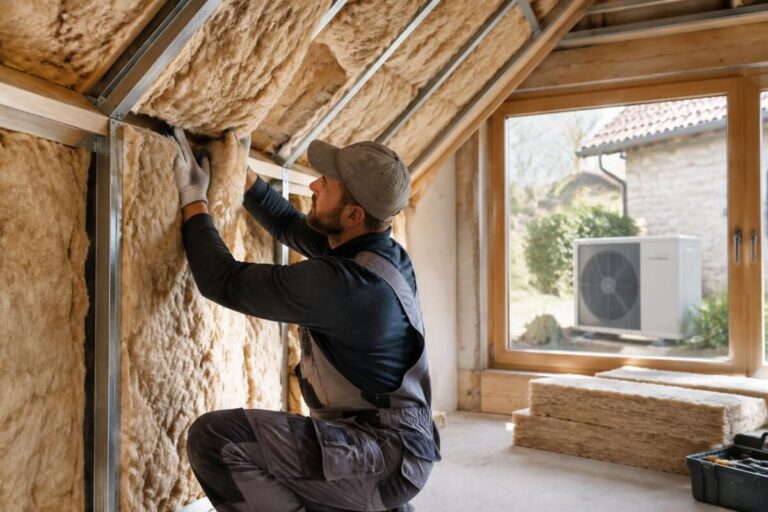
Well-planned thermal insulation limits these heat losses and then makes it possible to choose a less powerful system. This is often the most sensible energy renovation approach: address the home’s needs before replacing its heating system.
Which system should you choose for your home?
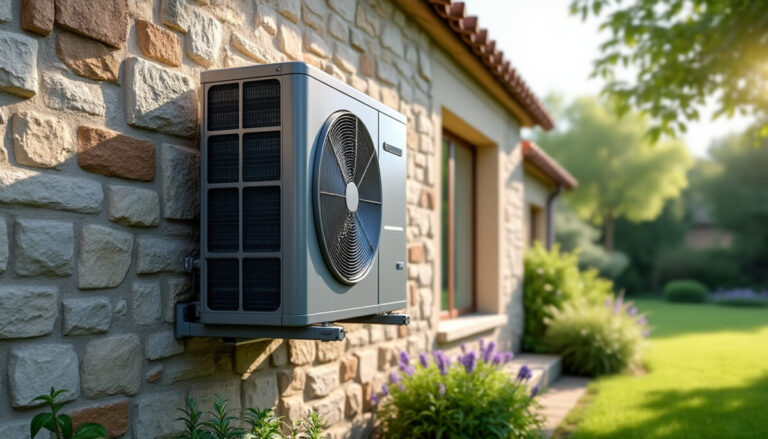
A heat pump can offer good energy efficiency in a properly insulated home, with compatible heat emitters and a correctly sized installation. However, it isn’t a one-size-fits-all solution: the climate, the condition of the building and the existing system all affect its performance.
Energy-efficient radiators may be suitable for certain rooms or a home that is only used occasionally. The name alone doesn’t guarantee a low bill: energy use depends above all on heat loss, settings and operating time. The environmental impact of a heating system also depends on the energy source and the installation as a whole.
| Option | Main advantage | What to check |
|---|---|---|
| Heat pump | Can provide heating efficiently in a suitable home | Insulation, sizing, heat emitters and installation cost |
| Energy-efficient radiators | Often easy to install, room by room | Required output and actual running costs |
| Optimised existing boiler | Can help avoid a hasty replacement | Maintenance, controls and condition of the equipment |
Thermal comfort: avoid setting mistakes
A common mistake is to turn the thermostat all the way up to warm a room faster. This doesn’t necessarily heat the room more quickly, but it can keep the system running longer and cause uncomfortable temperature fluctuations.
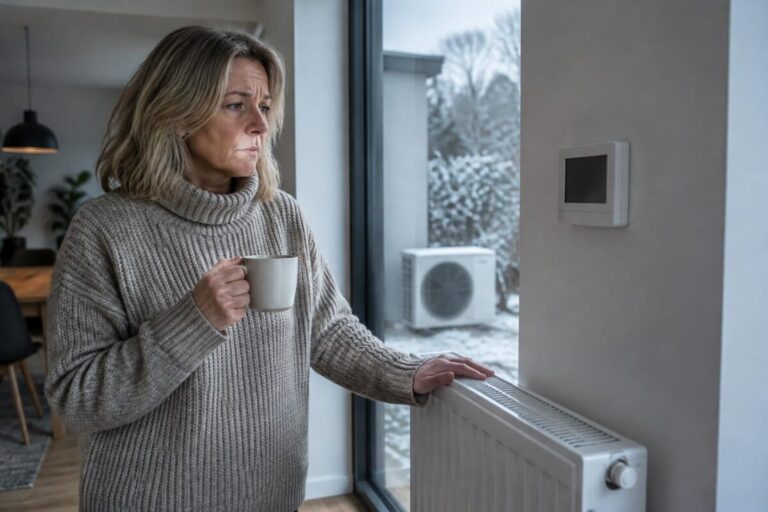
In an older house, take Léa’s situation: her living room stays cold despite having a powerful radiator. After addressing draughts and adjusting the heating schedule, she gets more consistent warmth without immediately replacing her system. Comfort comes as much from steady warmth as from the heating system’s output.
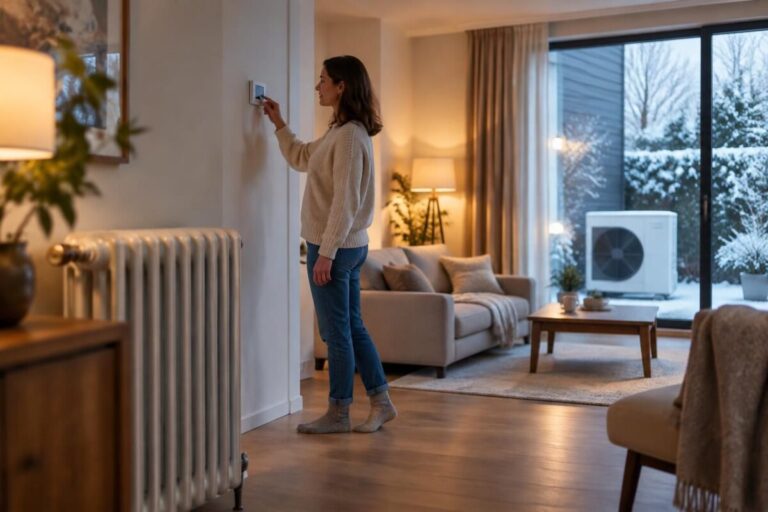
Start by aiming for around 19°C in living areas while you’re using them, then adjust according to how you feel and your habits. At night or when you’re away, a moderate reduction can lower your heating needs, as long as you don’t let the home get so cold that it’s difficult to warm up again.
How to choose eco-friendly heating in three steps
- Reduce heat loss. Check the attic, windows, doors and the most exposed walls first. Targeted improvements can already reduce the sensation of cold walls.
- Assess your remaining needs. Take into account the floor area, how each room is used, ventilation and the temperature you want. Ask for a heating-output calculation rather than choosing based solely on floor area.
- Compare complete solutions. Weigh up the purchase price, installation, maintenance and expected energy use. For a heat pump, also check that it is compatible with your radiators and suitable for your operating conditions.
This approach helps you avoid paying for an oversized or unsuitable system. It also lets you schedule improvements according to their impact: first reduce your heating needs, then upgrade the heating system.
Questions to ask before replacing your heating system
Should you insulate before changing your heating system?
It is generally preferable. Improved insulation reduces heating needs and makes it easier to choose a correctly sized system.
Is a heat pump suitable for a poorly insulated house?
It can work, but high heat losses may reduce comfort and efficiency. An assessment of the home and professional sizing are essential.
Do energy-efficient radiators always save money?
No. Their energy use depends in particular on insulation, settings and how long they are used. The product name alone is no guarantee of savings.
What indoor temperature should you choose for comfort?
Around 19°C in an occupied living area is a common guideline. Adjust it according to how you feel, your activity and the characteristics of your home.
I hope you found these tips helpful. See you soon! — Benjamin