10 energy-saving heating tips to pay less, faster
Hello, Benjamin here. To lower your heating bill, set the temperature more carefully, heat only the rooms you need, and limit heat loss.
Energy-efficient heating doesn’t rely on a single device: a few simple adjustments can already improve comfort without wasting energy. Here are ten practical tips you can put to use at home.
Things to do right away
- Set the thermostat to around 19 °C in occupied rooms.
- Turn down the heating at night and when you’re away.
- Keep radiators clear so heat can circulate.
- Close shutters and curtains as soon as it gets dark.
- Check the schedule on your programmable thermostat.
Before changing your equipment, compare energy-efficient heating options suited to costly winters and check whether an economical heating system still makes sense with poor insulation.
10 energy-efficient heating tips to lower your bill
Energy savings often come from a combination of small changes. Keeping temperatures under control, using efficient radiators, and having good thermal insulation all work together: no single adjustment can make up for major heat loss.
1. Choose a suitable temperature for each room
Aim for around 19 °C in occupied living areas, then turn down the heating in bedrooms, which are often comfortable at around 16 to 17 °C. However, the ideal temperature depends on the occupants’ activities, age, and health.
There’s no need to overheat the whole house just to stay warm in the living room. One degree less can mean around 7% savings on heating consumption, depending on the home and habits.
2. Schedule heating periods
A programmable thermostat lets you heat your home before you wake up or return, then lower the temperature while you’re away. Set realistic schedules rather than leaving the heating at the same level all day.
In a home with a regular occupancy schedule, this adjustment avoids heating empty rooms. The device should be installed and configured according to the manufacturer’s instructions.
3. Close shutters and curtains in the evening
Windows are a common source of heat loss. Closing the shutters and drawing thick curtains in the evening creates an extra barrier without blocking the radiators.
During the day, open the curtains when the sun naturally warms the room. This simple habit lets in free heat before you keep it in during the evening.
4. Keep the area around radiators clear
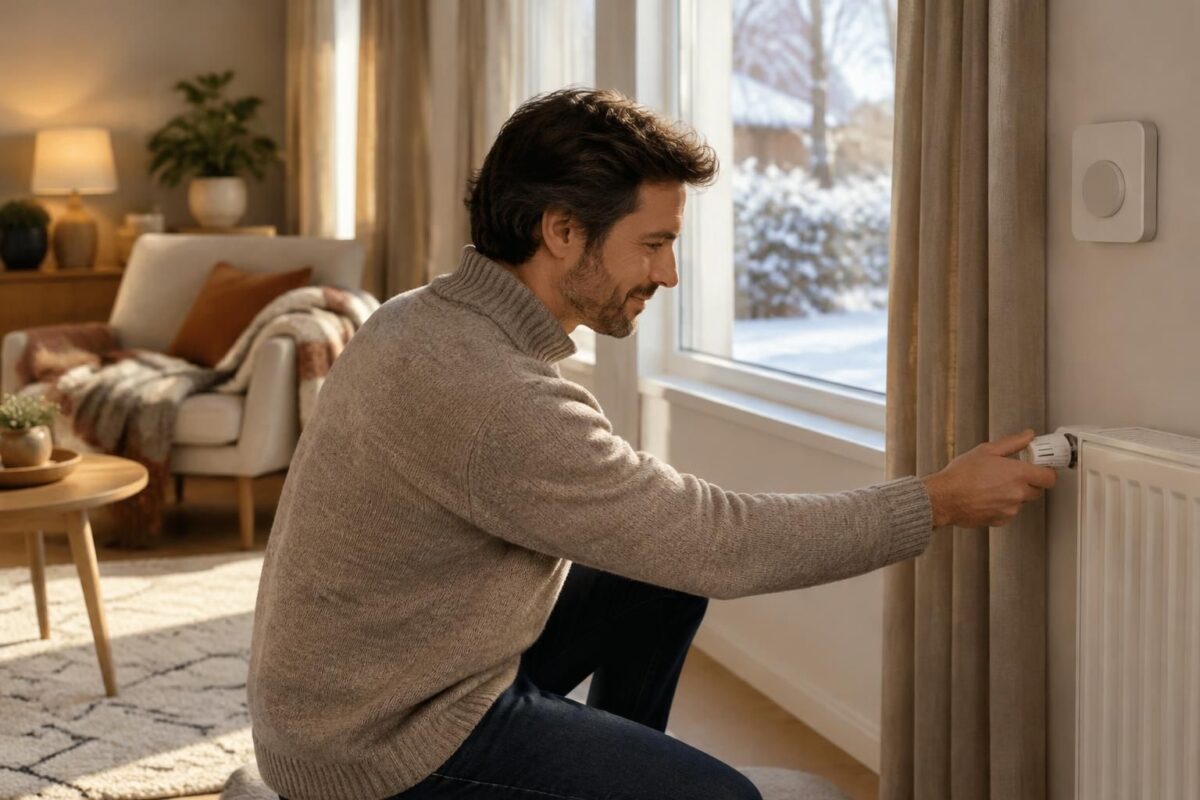
Furniture placed right next to a radiator or a curtain covering it will hinder heat distribution. Keep the space in front of the unit clear and dust it regularly.
If a hot-water radiator isn’t heating properly or is cold at the top, it may need bleeding. Follow the instructions for your system or ask a professional for help if you’re unsure how to do it.
5. Identify drafts
Check the seals around windows and doors, as well as the bottom of doors leading to a cold area. Suitable seals or a door draft stopper can limit drafts without major work.
Never block ventilation grilles: they are essential for air circulation. The goal is to eliminate unwanted drafts, not to stop your home from breathing.
6. Improve thermal insulation in stages
Poorly insulated attics or old windows can increase heating needs. Start by identifying cold surfaces and areas where heat seems to escape, then prioritize improvements based on their impact and your budget.
For example, a family that feels cold near the windows could first address the seals and curtains, then request an assessment before considering replacing them. Reducing heat loss means you can use less heating to get the same level of comfort.
7. Maintain your boiler
Boiler maintenance helps keep it working properly and identify certain issues. For an individual boiler in France that is subject to mandatory maintenance, the inspection must be carried out every year by a qualified professional.
Keep the certificate and ask the technician whether the settings are right for your home. A well-maintained unit is more reliable, but its efficiency also depends on insulation and temperature control.
8. Avoid using space heaters continuously
A space heater can help in a pinch, but prolonged use may increase your bill. It doesn’t replace a heating solution suited to your home’s needs.
Follow the safety instructions and never use a device designed for outdoor use in an enclosed room. When comparing options, look at running costs, not just the purchase price.
9. Air out your home briefly but effectively
Open the windows wide for a few minutes rather than leaving them ajar for a long time. This refreshes the air without allowing the walls and furniture to cool down for long.
Turn off or turn down the heating while airing out the room, then close the windows. It’s a small eco-friendly habit that also improves indoor air quality.
10. Track your consumption every month
Record your meter readings or check your supplier’s online account to compare heating periods. An unusual increase could point to an unsuitable setting, a lack of scheduling, or a technical problem.
A tracking spreadsheet helps you link changes to their effects. You can measure bill reductions over time, taking the weather and energy prices into account.
Which change should you make for the problem you’re experiencing?
| Situation | First step | Desired effect |
|---|---|---|
| The house is too warm | Lower the thermostat by one degree | Avoid heating beyond what you need |
| A room stays cold | Clear the radiator and check for drafts | Improve heat distribution |
| The home is empty during the day | Schedule a temperature setback | Reduce unnecessary heating |
| The bill is rising for no apparent reason | Compare meter readings and have the system checked | Identify a setting issue or a fault |
Here’s a practical example: Léa gets home every day at 6 p.m. and used to leave the heating on all day. By scheduling a temperature setback while she’s away and turning it back up before she returns, she can match the heating to her routine without making her living room feel cold.
A 3-step plan for more economical heating
- Assess your home: for a few days, note which rooms are too warm, where it’s cold, and when the rooms are occupied.
- Adjust the settings: set the thermostat, schedule heating periods, and clear the radiators.
- Address ongoing heat loss: have your equipment checked and ask for advice on insulation if comfort is still inadequate.
Start with the simplest adjustments, then move on to more substantial improvements. This approach helps you invest in the right areas and heat your home economically without sacrificing comfort.
Frequently asked questions about energy-efficient heating
What temperature should I choose for a living area?
Around 19 °C is a common guideline for an occupied room. Adjust the setting to suit the occupants’ comfort and the circumstances of the home.
Should I turn the heating off completely when I’m away?
For a short absence, a scheduled temperature setback is often more practical than turning the heating off completely. For a longer absence, adjust the setting and protect the home from freezing, depending on the conditions.
Can a programmable thermostat really save energy?
It helps you heat your home according to occupancy schedules and avoid unnecessary heating. Savings depend on the home, the settings, and your habits.
What’s the first thing to try to lower your bill?
Start by checking the thermostat setting and heating schedule, then make sure the radiators aren’t covered. These steps generally don’t require any work.
I hope you’ve found these tips helpful. See you soon! — Benjamin