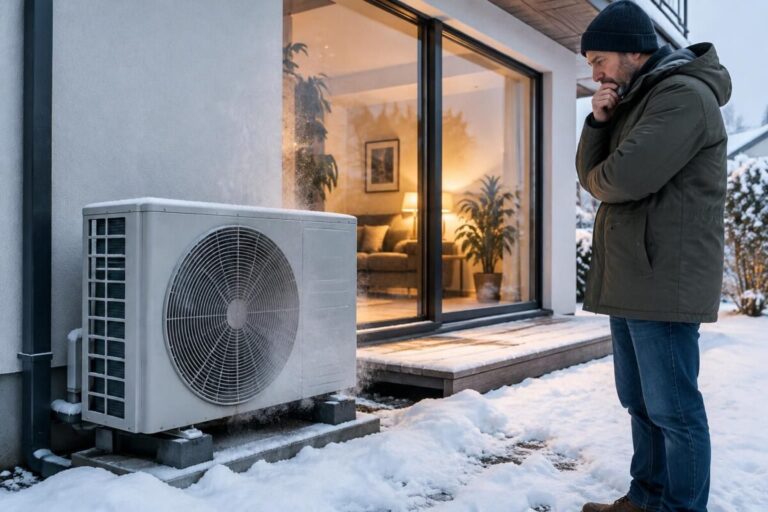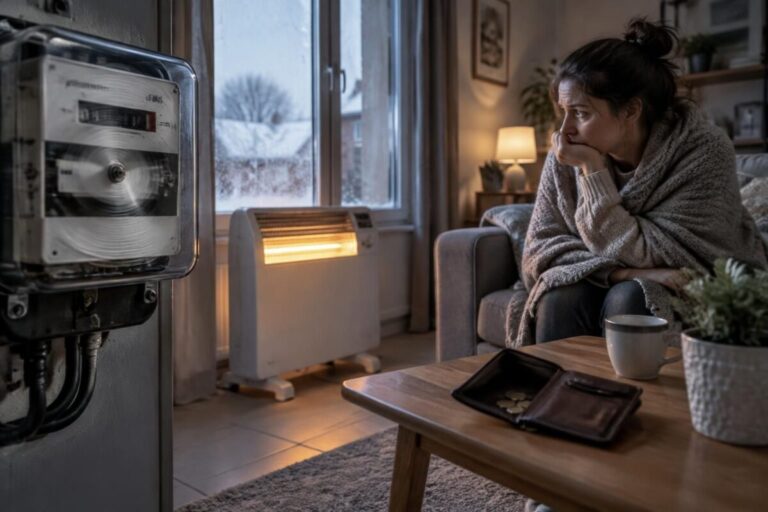
Eco-friendly heating: why some people regret their choice
Hi, Benjamin here. Some people regret their eco-friendly heating system because it was chosen without taking into account insulation, the local climate and the home’s actual energy consumption. Equipment that performs well on paper does not, on its own, guarantee energy savings or good thermal comfort. Before replacing a boiler or installing a heat pump, it’s best to look at the whole project: needs, installation cost, maintenance and environmental impact.
Good habits to avoid heating regrets
- Have heat loss assessed before choosing equipment.
- Ask for an estimate of annual costs, not just the purchase price.
- Check that the system is suitable for your home and the temperatures in your region.
- Plan for maintenance, storage and supplementary heating requirements.
- Find out about financial incentives before signing a quote.
The most common pitfall is choosing a technology before defining the home’s needs. To compare options without focusing solely on the advertised price, also see this comparison of eco-friendly heating systems and the solutions suited to each type of home.
Why eco-friendly heating can disappoint
A system can be energy-efficient and perform well under the right conditions, but still be unsuitable for a poorly insulated house or a particular lifestyle. A heat pump, for example, works less efficiently if it has to make up for significant heat loss or if it is not compatible with the existing heat emitters.
Capacity matters too. An undersized unit struggles to heat some rooms during cold spells; an oversized unit may cycle more frequently and reduce comfort. In both cases, the result falls short of the expected savings.
A technology chosen without assessing the home
Imagine Léa and Marc installing a heat pump in a house with a poorly insulated attic. Their system provides heat, but runs for long periods and is not always enough during cold snaps: supplementary heating is still needed.
The problem does not necessarily lie with the technology. Energy performance depends on how the unit, insulation, radiators and settings work together. An assessment beforehand prevents the heating system from having to compensate for shortcomings throughout the house.
Running costs and requirements that are underestimated
Installation costs often get the most attention, while future bills are harder to predict. Yet energy prices, seasonal efficiency and maintenance all affect the budget over several years.
Wood can be a competitively priced fuel, but it requires storage space and regular planning. A heat pump avoids this handling, but needs to be correctly sized and properly maintained. Comfort also depends on these day-to-day requirements, not just on the stated efficiency.
| Solution | Potential benefit | What to check before choosing |
|---|---|---|
| Air-to-water heat pump | Can reduce energy consumption in a suitable home | Insulation, heat emitters, climate and maintenance costs |
| Wood heating | Sometimes affordable fuel and a renewable resource | Storage, supply, handling and maintenance |
| Electric heating | Simple installation, particularly in smaller spaces | Actual consumption and the cost of electricity in winter |
| Solar thermal | Can meet some of the heating needs | Need for a backup system and roof configuration |
Results therefore depend on the home and how it is used. For an air-to-water heat pump, a COP of around 3 to 4 may be observed under suitable conditions, but this figure does not guarantee a particular bill: it varies according to the outdoor temperature, settings and installation.
Insulation and climate make a difference
A heating system cannot eliminate heat loss through walls, windows or the attic. If the house loses heat quickly, the system has to work harder to maintain the desired temperature. Insulation is therefore part of the heating project, not a secondary improvement.
Local conditions also weigh into the decision. Natural gas is not available everywhere, district heating networks serve mainly certain urban areas, and wood heating requires a suitable fuel supply and enough space. The most eco-friendly solution is the one that works reliably in the home’s actual conditions.
Compare the options without relying on a single promise
A heat pump may be suitable for a well-insulated house with compatible central heating. In a small, very well-insulated home, electric radiators may remain a simple option; in a house with storage space, a wood stove may meet some of the heating needs.
Financial incentives may help reduce the cost of some projects, subject to the current eligibility criteria and the characteristics of the work. Check the conditions before signing and request several detailed quotes: the amount of financial support does not replace a technical assessment or a comparison of long-term costs.
Three steps to choosing heating you won’t regret
- Assess the home. Have the insulation, heat loss and needs of each room evaluated. If building-envelope improvements are needed, include them in the schedule before sizing the heating system.
- Compare total costs. Consider installation costs, estimated consumption, maintenance and any associated work. Ask for the assumptions about temperatures and usage to be clearly stated.
- Confirm the installation and financial incentives. Choose a qualified professional, check the equipment specifications and confirm eligibility for financial incentives before work begins.
This approach helps you look beyond slogans such as “the most economical system” or “the ideal solution for everyone.” The right choice is the one that balances bills, thermal comfort, everyday requirements and environmental impact, without relying on theoretical performance that cannot be achieved in your own home.
Frequently asked questions about regrets over eco-friendly heating
Why do some people regret getting a heat pump?
Disappointment often stems from incorrect sizing, insufficient insulation, incompatible heat emitters or overly optimistic expectations about savings. Assessing the home and ensuring a careful installation reduce these risks.
Should you insulate before changing your heating system?
This is often a good idea if the home loses a lot of heat. Improving insulation can reduce heating needs and allow you to choose a less powerful system, but the order of work depends on the condition of the building and the project.
Which eco-friendly heating system costs the least to run?
There is no answer that applies to every home. Costs depend in particular on insulation, local energy prices, efficiency, maintenance and the occupants’ habits.
What financial incentives can you apply for?
Financial incentives may be available depending on the system installed, the home, income and the rules in effect when the project takes place. Check the official criteria and whether the work is eligible before signing a quote.
Thanks for reading! Feel free to share your thoughts in the comments. — Benjamin