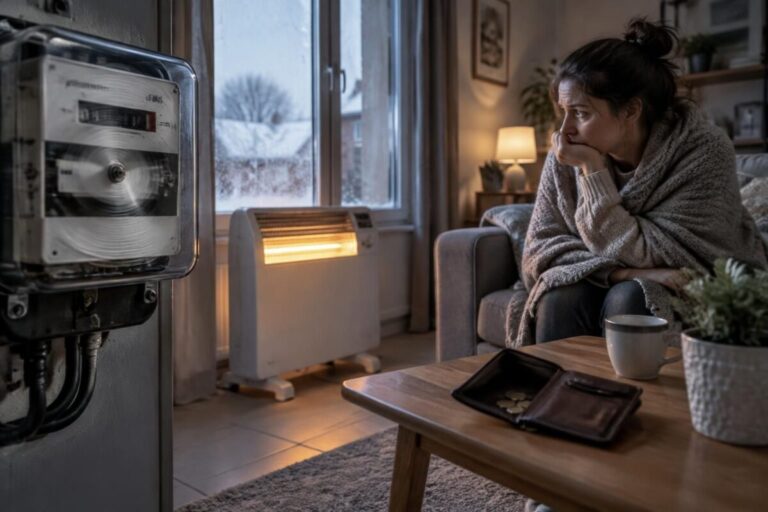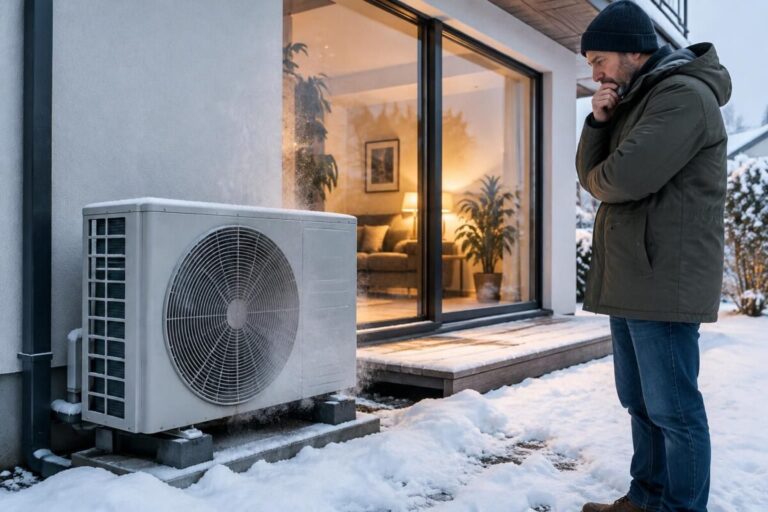
Affordable heating: the choice that takes the sting out of costly winters
Hello, it’s Benjamin. The most economical heating system is one that matches your home’s insulation and your actual needs. Efficient equipment isn’t enough if heat escapes through the walls or windows. To aim for a cheaper winter, compare installation costs, energy consumption, and thermal comfort.
What to do now to choose an economical heating system
- Check your current expenses: note your energy consumption and heating bill.
- Check the thermal insulation: start with drafts, the attic, and the windows.
- Compare several options: electric heating, a stove, or a heat pump, depending on your home.
- Request detailed quotes: distinguish between the cost of the equipment, installation, and maintenance.
- Check what financial assistance is available: the amount depends on the work, the home, and your circumstances.
To avoid rushing into a purchase, also discover the criteria for an eco-friendly heating comparison and the options that remain suitable with insulation that doesn’t require major work.
Compare systems before replacing your heating
Eco-friendly heating is not automatically the cheapest to buy. The right choice depends on the size of your home, the climate, the insulation, and the energy source already available in the home.
A heat pump can reduce energy consumption in a suitable home, but installation costs more than simply replacing radiators. Equipment that uses renewable energy can also be worthwhile, provided you check that it is compatible with the building.
| Option | Main advantage | What to check |
|---|---|---|
| Heat pump | Reduced consumption in a suitable home | Installation cost, climate, and sizing |
| Pellet stove | Pleasant heat and storable fuel | Pellet prices, maintenance, and available space |
| Modern electric radiators | Often easy to install | Running costs and insulation quality |
| High-efficiency boiler | May suit an existing heating system | Energy source and how costs may change |
These guidelines are no substitute for an estimate tailored to your home. To compare options properly, look at the total cost over several years, not just the price shown on the quote.
A practical example of how to assess costs
Imagine a 100 m² home heated by old electric convectors, with a poorly insulated attic. Replacing all the units right away may improve temperature control, but leaving the attic as it is could limit energy savings.
In this case, the homeowner can compare the cost of prioritizing insulation with the cost of changing the heating system. Improving the building envelope often reduces heating needs, making it possible to install less powerful equipment afterward.
The order of the work matters just as much as the choice of equipment. This makes an energy renovation more consistent and more cost-effective in the long term.
Avoid the pitfalls of choosing the wrong eco-friendly heating system
A common mistake is to rely solely on promises of savings or a stated output. Equipment that is incorrectly sized may operate under poor conditions, while an expensive system can be difficult to recoup in a home that is not well suited to it.
Another precaution: don’t compare quotes without checking what they include. Controls, commissioning, maintenance, and any electrical work can significantly change the final budget.
A three-step approach to making a decision
- Assess your home: identify heat loss and rooms that are difficult to heat. If necessary, request an assessment or professional advice.
- Compare scenarios: request several quotes and consider expected expenses, possible financial assistance, and maintenance costs.
- Plan the work: address major heat loss first, then choose a system suited to the size of your home and your household’s habits.
This approach helps you avoid paying for unnecessary capacity. It also helps maintain stable thermal comfort, rather than overheating a few rooms while leaving the rest of the home cold.
Questions to ask yourself before buying
Which heating system costs the least to run?
It depends on insulation, energy prices, the climate, and the equipment’s efficiency. Compare the total cost for your home rather than looking for a one-size-fits-all solution.
Should you insulate before changing your heating system?
Often, addressing the main sources of heat loss reduces heating needs and helps you size the future system more accurately. However, the precise order depends on the condition of the home.
Is a heat pump suitable for every home?
No. Its efficiency depends in particular on insulation, the heat distribution system, the climate, and the sizing. An assessment beforehand can help determine whether it is a suitable option.
How do you compare heating quotes?
Check the equipment, installation, controls, commissioning, maintenance, and any additional work. Ask for costs and stated performance figures to be clearly itemized.
Thanks for reading! If this topic resonates with you, share your experience in the comments. — Benjamin