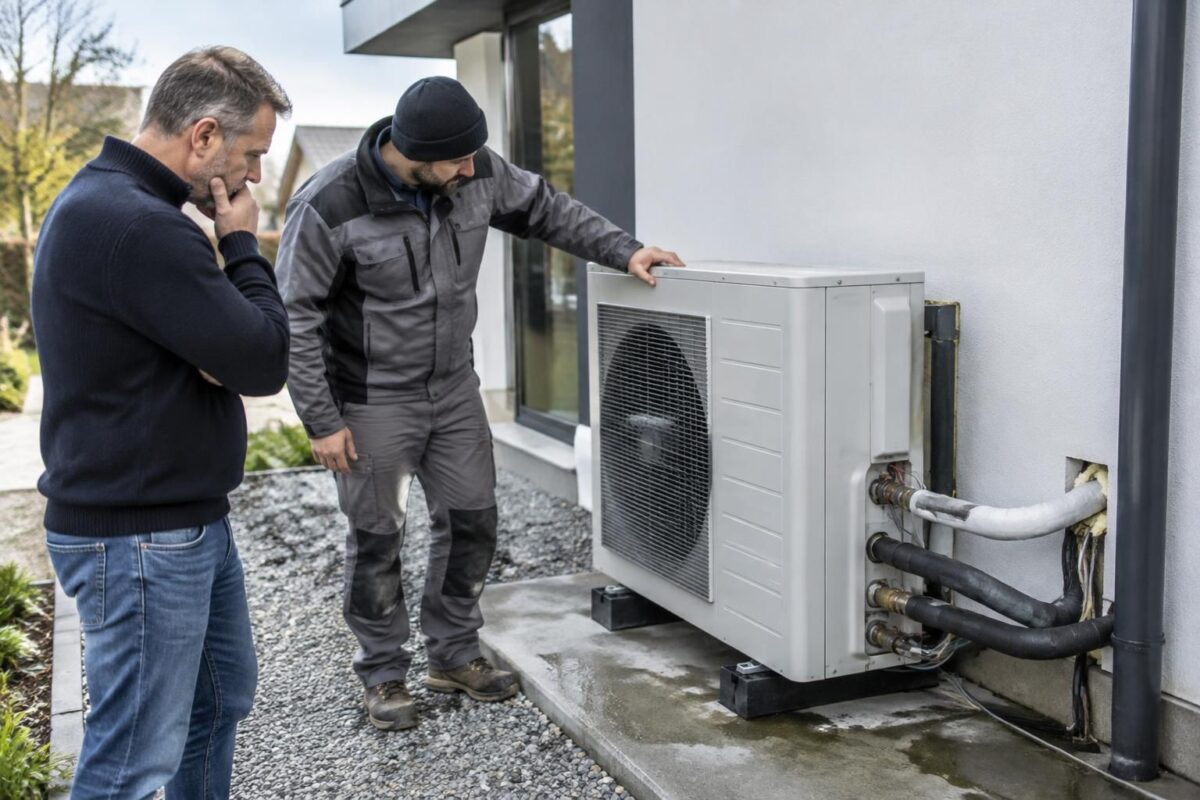
Eco-friendly heating: what are the risks of hiring a bad installer?
Hello, it’s Benjamin.
A bad installer can make your heating system dangerous, costly, and ineligible for financial assistance.
A successful installation depends on more than just the equipment you choose. The sizing, installation, and settings also determine comfort, energy consumption, and safety.
A few checks before you sign can help you avoid costly repairs and nasty surprises during the winter.
What to do right away
- Check the company’s qualifications and ask for proof relevant to the type of heating system being installed.
- Require a site visit before receiving a quote, including an inspection of your home and existing system.
- Compare detailed quotes: equipment, capacity, work, commissioning, and settings should all be clearly specified.
- Ask for proof of insurance and warranty terms in writing.
- Don’t pay the full price upfront and keep all documents, invoices, and correspondence.
To spot other pitfalls before replacing your system, check out these tips on heating mistakes that strain your budget and the limitations of a heat pump in a poorly insulated home.
The risks of a faulty heating system installation
A faulty installation can cause simple discomfort, but it can also create a hazard. A poorly connected or maintained combustion appliance, for example, can pose a risk of fire or carbon monoxide poisoning.
The problem may also be less obvious: incorrect sizing can lead to unsuitable operating cycles, excessive energy consumption, and sometimes frequent breakdowns. More powerful equipment isn’t necessarily more efficient; it may wear out faster and regulate the temperature less effectively.
Defects that can be costly
Installation that fails to follow the manufacturer’s instructions or applicable regulations can result in non-compliance with standards. If a problem occurs, this can complicate insurance claims and may lead to the warranty being voided.
Having financial assistance denied is another risk. If the program’s criteria aren’t met or the company doesn’t have the required qualification, the household may have to pay for some of the work itself. An attractive quote can’t make up for a poorly planned installation.
| Warning sign | Possible risk | Useful check |
|---|---|---|
| Capacity chosen without assessing the home | Poor comfort and excessive energy consumption | Ask for the sizing calculations |
| Poorly executed connection or exhaust system | Hazard, breakdown, or equipment damage | Require commissioning checks and documentation |
| Qualifications or insurance can’t be verified | Dispute, compromised warranty, or denied assistance | Check the supporting documents before signing |
| No settings or explanations provided | Excessive energy consumption and unsuitable use | Arrange a demonstration and walkthrough |
How to spot an unqualified installer
You can spot an unqualified installer by their approach, even before work begins. If they offer a fixed price without inspecting your home, ask no questions about insulation, or refuse to explain the work in detail, ask for clarification before proceeding.
Imagine Nadia, who wants to replace an old boiler with a heat pump. The first contractor quickly suggests a standard model without checking the radiators or assessing heat loss. A second contractor visits the house, checks the heat emitters, and explains the necessary settings: this approach makes it possible to compare proposals that are genuinely suited to the home.
Warning signs to take seriously
- A promise of substantial savings without an assessment or quantified assumptions.
- A vague quote that doesn’t specify equipment models or the work included.
- Pressure to sign immediately or pay a large amount upfront.
- Evasive answers about insurance, qualifications, or after-sales service.
- No completion report, documented settings, or explanations at the end of the work.
A reputable professional should be able to justify their choices and answer your questions clearly. Transparency is just as important an indicator as price.
Choose the right professional in three steps
To move forward without letting urgency dictate your decision, use a simple method. It will help you distinguish a well-prepared offer from one that leaves important questions unanswered.
- Check the company. Review its qualifications for the work, ask for a valid insurance certificate, and check the eligibility requirements for any assistance you plan to apply for.
- Compare proposals. Request at least two detailed quotes based on a site visit. Check the capacity, equipment models, included work, schedule, and warranties.
- Check the handover. At the end of the work, ask for the commissioning documents, test the equipment with the installer, and ask them to explain the settings and maintenance.
If you notice a problem after installation, keep the evidence and first contact the company in writing to request that it be addressed. If you smell burning, notice an electrical fault, or receive a carbon monoxide alarm, leave the area and contact the appropriate emergency services immediately.
Frequently asked questions about bad heating installers
How can you check a heating installer’s qualifications?
Ask for the certificate relevant to the work being considered and check its validity with the relevant organization. To qualify for financial assistance, also check the program’s requirements before signing.
Can incorrect sizing increase your energy bill?
Yes. Equipment that isn’t suited to the home and its heat emitters may operate inefficiently, reduce comfort, and increase energy consumption. Ask what data was used to calculate the required capacity.
What should you do if the installation has defects?
Take photos of the problems, keep the quotes and invoices, and then send the company a written request. If you identify an immediate danger, stop using the appliance and contact the appropriate services.
Can an installer cause you to be denied financial assistance?
Yes, if the eligibility criteria aren’t met, particularly those relating to the company or the work. Check the official requirements before work begins and keep all supporting documents.
Thanks for reading! I’d love to hear what you think in the comments. — Benjamin