Which insulation is most effective for a cold house
Hi everyone, it’s Benjamin. The best insulation against the cold is the one that achieves the required thermal resistance within the available thickness, while remaining suitable for the wall, roof or floor. Wood fiber and cellulose wadding are interesting options, but mineral wool and synthetic boards can also be suitable: no material is best for every home.
Improving thermal insulation is the key to turning a cold house into a warm, cozy home. Energy efficiency depends on using insulation materials suited to each area of the house: walls, attic or floors. The challenge is to minimize heat loss while avoiding thermal bridges. There is also the often legitimate desire to choose eco-friendly insulation, which can offer multiple benefits. So let’s talk about practical solutions that ensure genuine thermal comfort in winter and healthy indoor air.
WHAT TO DO FIRST
- First, assess the weak points in your home: walls, roof, floors.
- Check the condition of the existing insulation to decide whether it should be improved or replaced.
- Choose materials with low thermal conductivity to limit heat loss.
- Consider favoring bio-based or eco-friendly insulation to reduce environmental impact.
- Consult an expert to tailor your insulation choices to your home’s specific characteristics and local standards.
How do you choose the best thermal insulation for a cold house?
Look at two values: thermal conductivity lambda (λ), which is lower for a more insulating material at the same thickness, and thermal resistance R, which is higher when the material offers greater resistance to heat flow. The formula is R = thickness in meters ÷ λ. For example: 16 cm with λ = 0.040 gives R = 4 m²·K/W; with λ = 0.032, the same thickness gives R = 5. These values illustrate the calculation; they are not a universal target for every project.
If space is limited, a low-lambda board can help reduce the loss of usable space. If budget is your priority, compare mineral wool options too. To factor in environmental impact, examine the product data and how it is installed, rather than relying on the word “natural” alone. Ask for the certified R-value, installed thickness and compatibility with the substrate in each quote; subsidies are not automatically higher for bio-based insulation.
For uninhabited attics, check the allowable load in particular, as well as the thickness after settling if the installation method calls for it. For flooring, compressive strength and moisture resistance matter. In an older wall, have leaks, rising damp and ventilation problems identified before choosing the insulation assembly. These tips on preparing for a renovation and choosing materials complement this assessment of the building’s condition before installation.
An example of a simple 3-step process for effective insulation:
- Step 1: Assess your home to identify the coldest areas and thermal bridges.
- Step 2: Select insulation suited to each area, favoring materials with low thermal conductivity and environmental impact.
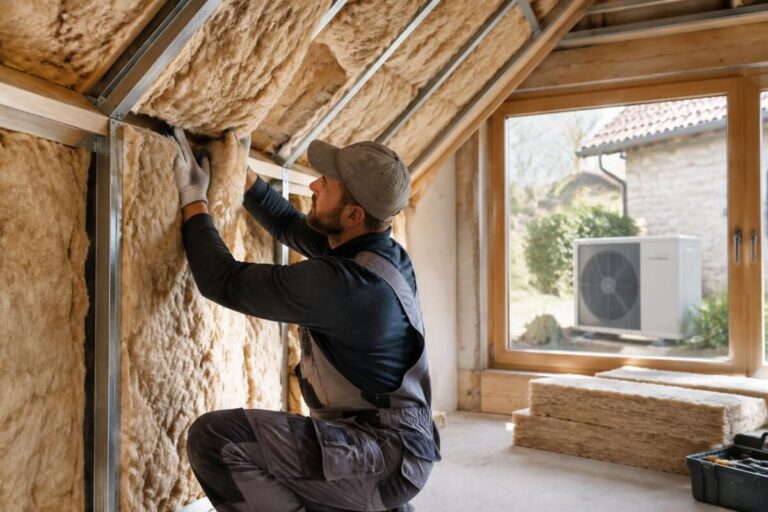
- Step 3: Hire a professional to ensure precise installation and avoid common mistakes such as thermal bridges or poor airtightness.
A closer look at high-performance eco-friendly insulation
Bio-based insulation can help meet environmental renovation goals, with properties that vary according to the product and its density. It will not fix a leak or a ventilation problem. Its long-term performance also depends on installation, protection from water and the design of the wall assembly.
Compare the cost of the complete installed system at equivalent performance: insulation, fasteners, any membranes, finishes and treatment of joints. The ADEME guide to insulating your home explains which indicators to ask for. The financial savings depend on the home’s initial condition and heating system; no short payback period is guaranteed.
Which insulation should you choose based on space, substrate and budget?
| Material category | Potential advantage | What to watch out for | What to ask for in the quote |
|---|---|---|---|
| Glass wool or rock wool | Common options for attics and walls | Product suited to the installation method, support and moisture protection | Certified R-value and final thickness |
| Wood fiber | Bio-based option available in several densities | Weight, thickness and exposure to water | Load and intended application |
| Cellulose wadding | Attic or cavity insulation, depending on the installation method | Density, settling and treatment of specific details | Thickness and resistance guaranteed after installation |
| Expanded polystyrene | Boards for certain wall or floor systems | System compatibility and fire protection | Product reference and performance of the assembly |
| Polyurethane or PIR | Thermal performance where thickness is limited | Fire behavior and compatibility with the wall assembly | Lambda and R-value of the exact product |
| Cork or sheep’s wool | Specific uses depending on the product | Cost, treatments and intended application | Certification and installation requirements |
Insulation materials and reducing heat loss
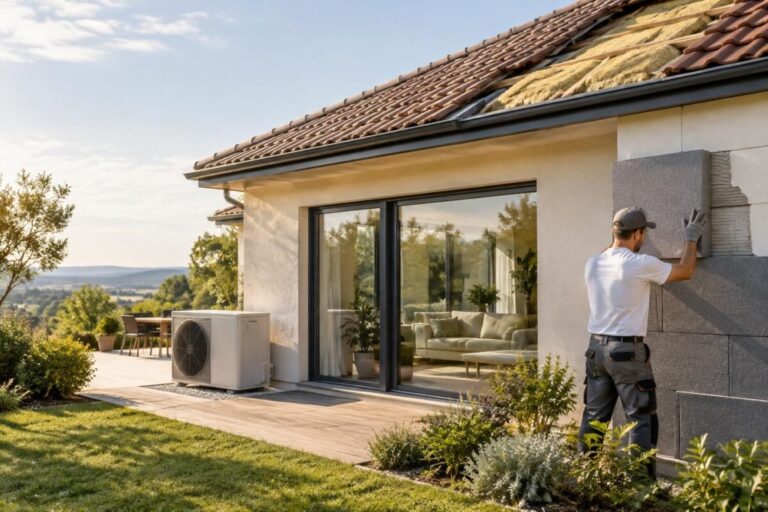
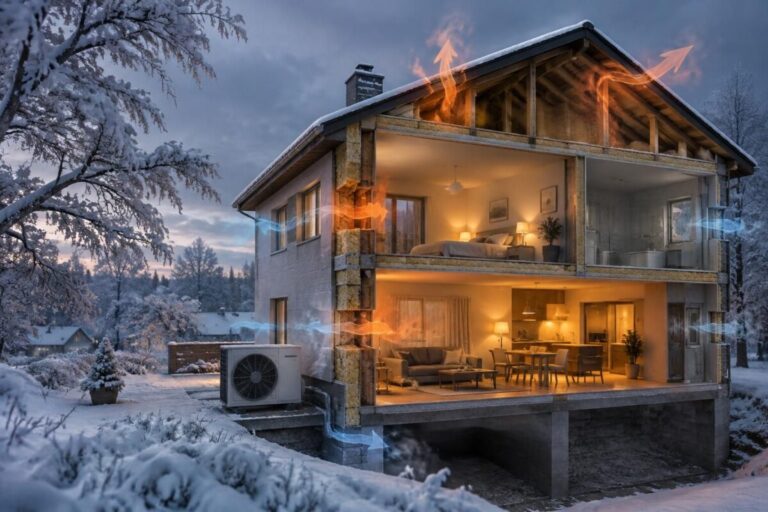
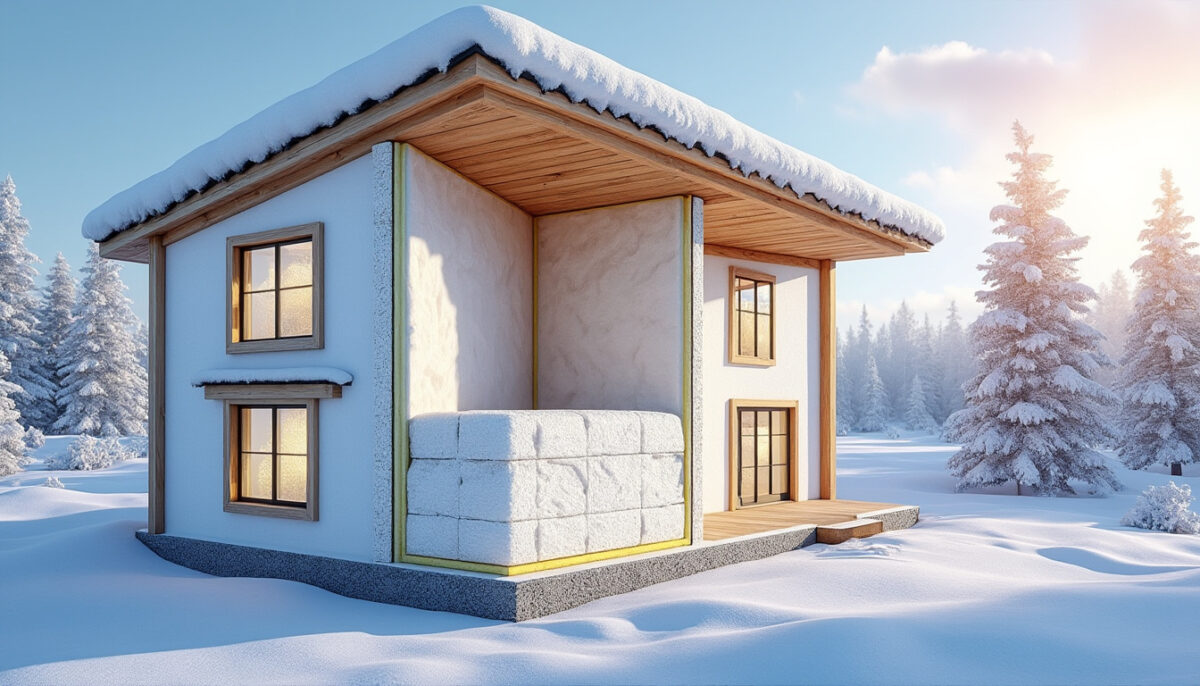
Properly insulating your home doesn’t just mean choosing a good insulation material. Thermal bridges are areas where heat passes through the wall more easily; air leaks are another issue to address. Careful installation, suitable substrates and airtightness all contribute to overall energy efficiency, just as much as the material itself.
In a cold house, every centimeter of insulation counts. Choosing high-performance insulation suited to the specific area (wall, floor or roof), and having it professionally installed, is the winning combination for lasting comfort.
What are the key criteria for choosing the right thermal insulation?
Compare the R-value achieved at the planned thickness, compatibility with the substrate, moisture resistance, fire behavior and installed price. A low lambda value alone does not guarantee sufficient insulation.
Why choose eco-friendly insulation for a cold house?
It can help meet environmental goals, but performance must be checked for each product. It does not replace fixing a water ingress problem or providing suitable ventilation.
How can you avoid thermal bridges when insulating?
Professional installation and particular attention to wall-to-roof or wall-to-floor junctions are essential to limit heat loss.
What is the difference between synthetic and natural insulation?
Synthetic materials such as polystyrene provide high thermal insulation but are less eco-friendly. Natural insulation materials prioritize sustainability and indoor well-being.
How long does it take for new insulation to pay for itself?
There is no universal timeframe. Divide the amount you pay out of pocket by the estimated annual savings, then test several energy-price scenarios. The added comfort matters too, but a quick financial return is not guaranteed.
To learn more, check out the advice and comparisons available from Que Choisir on high-performance insulation and on the Flam Energie website for a guide to the best thermal insulation.
Thanks for staying with me until the end; Benjamin