Energy savings: the heating system that disappoints the most
Hi, Benjamin here.
Electric resistance heating is often the biggest disappointment on the energy bill: it costs little to install, but uses more energy than a heat pump to produce the same amount of heat. However, the right choice depends on the floor area, insulation and how often it is used.
A high bill doesn’t necessarily mean your radiator is faulty. It may simply point to a home that loses heat or an appliance that isn’t suited to your needs.
Good habits to adopt
- Identify the rooms that use the most energy by comparing how they are used and their temperature.
- Set the thermostat to around 19 °C in occupied rooms, then lower the temperature at night or when you’re away.
- Check for heat loss around windows, doors and in the attic.
- Avoid replacing all your radiators in a hurry before comparing running and installation costs.
- Get several quotes if you’re considering a heat pump or insulation work.
To compare options for different rooms and budgets, also see this guide to heating systems suited to each room and the right order for insulation and heating replacement.
Why electric heating can disappoint
A common mistake is to judge a system solely by its purchase price. An electric radiator is easy to install and doesn’t require a central heating system, but it converts electricity into heat without multiplying the energy produced.
A heat pump, on the other hand, transfers heat from the air or ground. In good conditions, it can provide several kilowatt-hours of heat for every kilowatt-hour of electricity consumed. This difference in energy efficiency can have a significant impact on your energy bill throughout the winter.
Imagine a well-insulated 45 m² apartment that’s occupied mainly in the evenings: modern radiators may still be a reasonable option. In a poorly insulated 100 m² house heated all day, direct electric heating could cost much more. The same equipment therefore won’t deliver the same results in every home.
System comparison: purchase and running costs
The figures below are rough estimates for a home of around 100 m². Actual energy consumption varies depending on the climate, insulation, habits and energy prices.
| System | Estimated installation cost | Estimated annual cost | What to watch out for |
|---|---|---|---|
| Electric radiators | €500 to €2,500 | €1,200 to €2,500 | Often expensive to run in a poorly insulated home |
| Air-to-water heat pump | €8,000 to €15,000 | €600 to €1,200 | Sizing and compatibility with the heating circuit |
| Air-to-air heat pump | €3,000 to €7,000 | €400 to €900 | Does not produce domestic hot water |
| Pellet stove | €3,500 to €7,000 | €700 to €1,300 | Storage, maintenance and less even heat |
| Gas condensing boiler | €3,000 to €6,000 | €900 to €1,800 | Gas prices and more limited grants |
These estimates don’t guarantee a specific amount of savings. An efficient appliance can still disappoint if it’s oversized, poorly installed or used in a home that lets heat escape.
Thermal comfort also depends on insulation
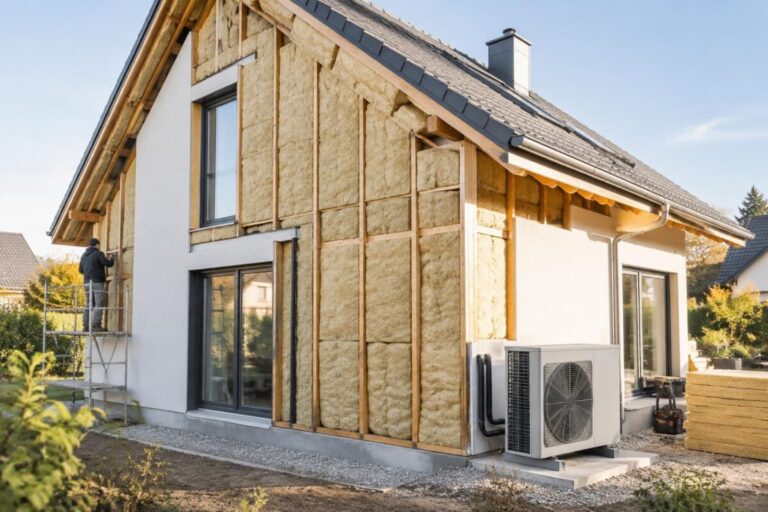
Poor insulation forces the heating system to compensate for heat loss continuously. The attic, walls, windows and ground floors should be checked before choosing new equipment. Reducing heat loss improves thermal performance and may make it possible to install a less powerful system.
The layout also matters. A stove placed in a central room can heat an open-plan area effectively, but may be less effective in separate bedrooms. An air-to-water heat pump is easier to integrate into a home with hydronic radiators or underfloor heating.
Heating grants to check in 2026
MaPrimeRénov’ rules have changed. Since September 1, 2026, the single-measure scheme has covered, among other things, air-to-water heat pumps, with grants of up to €5,000, and geothermal heat pumps, up to €11,000. Connecting to a district heating network, removing an oil tank and conducting an energy audit are also among the eligible measures listed.
Insulation, windows, stoves, water heaters, ventilation systems and air conditioning are no longer covered by this single-measure scheme, except as part of a major renovation. This applies to homes with an E, F or G energy rating that achieve an improvement of at least two rating bands: the eligible work-cost cap is between €30,000 and €40,000 excluding tax, and the reimbursement rate varies according to income.
CEE energy-saving certificates and the zero-interest eco-loan may also be worth looking into, subject to the criteria that apply to your project. Check the current conditions before signing a quote, and make sure the contractor has the RGE qualification required for the grants concerned.
A three-step approach to avoid making the wrong decision
- Assess your home’s needs. Note the floor area, rooms that are difficult to heat, recent energy bills and signs of heat loss. If insulation is poor, have it assessed before sizing a new appliance.
- Compare the total cost. Consider the installation price, estimated consumption, maintenance and grants you may qualify for. A solution that costs more upfront may be more worthwhile over several years.
- Check feasibility. Get several detailed quotes from qualified professionals. Compare the proposed output, additional work and warranties—not just the final price.
Electric heating isn’t always a bad choice: it can be useful in a small, well-insulated home or as supplementary heating. But in a home with high heating demands, its low installation cost can mask persistently high energy use. The greatest savings start with reducing your heating needs, then choosing a system that suits your home.
Frequently asked questions about the most disappointing heating systems
Which heating system is likely to cost the most to run?
Electric resistance heating can be expensive in a large or poorly insulated home because it uses more energy than a heat pump to produce a comparable amount of heat. However, it may still be an acceptable option in a small, well-insulated home.
Should you replace recently installed electric radiators?
Not necessarily. Start by checking your insulation, heating schedule and habits. Replacement may make sense if your heating needs are high and an alternative solution is technically suitable.
Is a heat pump always the most economical option?
No. Its efficiency depends on the climate, sizing, insulation and electricity costs. It is often a good option in a home with a suitable heating circuit, but the home still needs to be assessed.
Which MaPrimeRénov’ grant can help pay for heating in 2026?
Since September 1, 2026, the single-measure scheme has included, among other things, air-to-water heat pumps, with grants of up to €5,000, and geothermal heat pumps, up to €11,000. Amounts and conditions depend on the application; check the latest rules before starting work.
Thanks for reading! Feel free to share your thoughts in the comments. — Benjamin