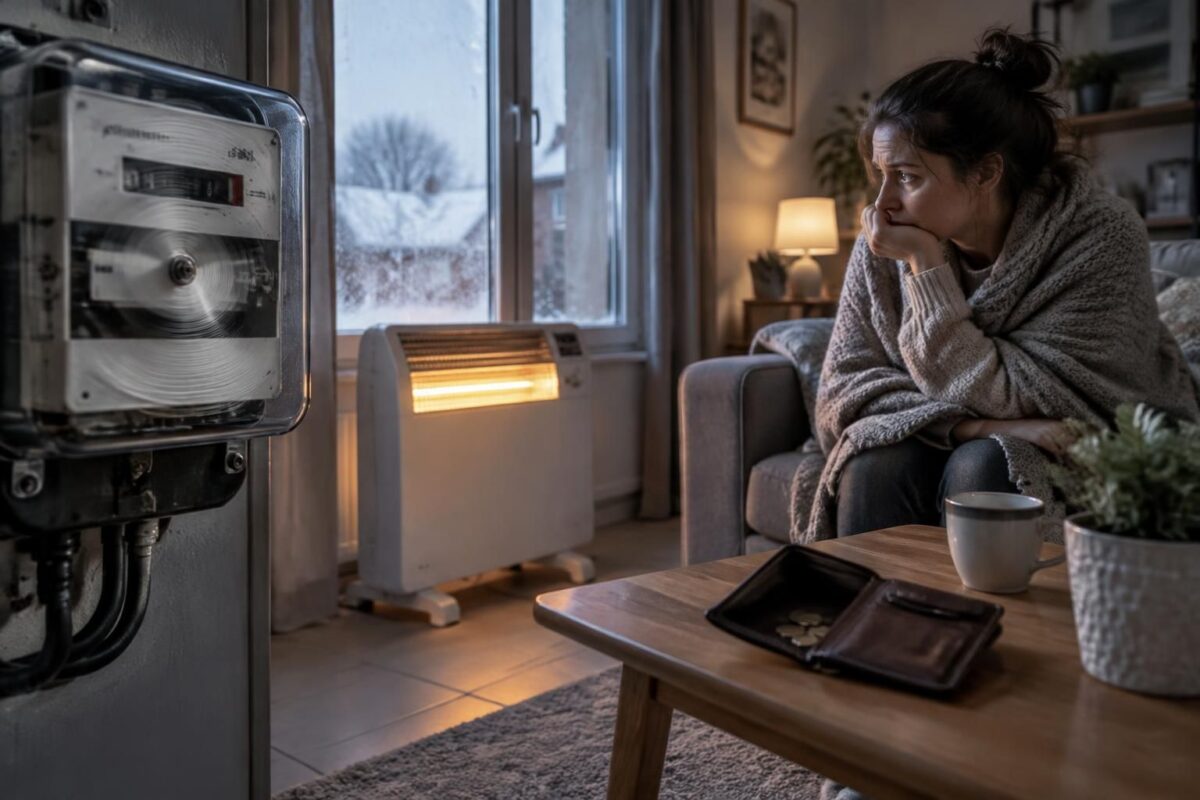
Eco heating: the electric option that isn’t such a good deal
Hello, I’m Benjamin. Electric heating isn’t automatically eco-friendly heating: without insulation or temperature controls, the low purchase price can hide high heating costs.
The right approach is to reduce your home’s heating needs before replacing appliances. An efficient radiator provides comfort, but it can’t make up for drafts or a poorly insulated roof.
What to do now
- Seal windows and doors to reduce drafts.
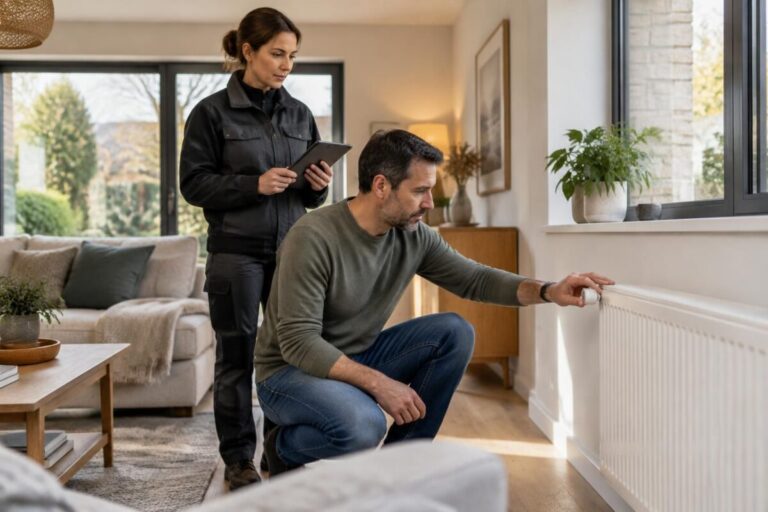
- Set living areas to around 19 °C and lower the temperature at night or when you’re away.
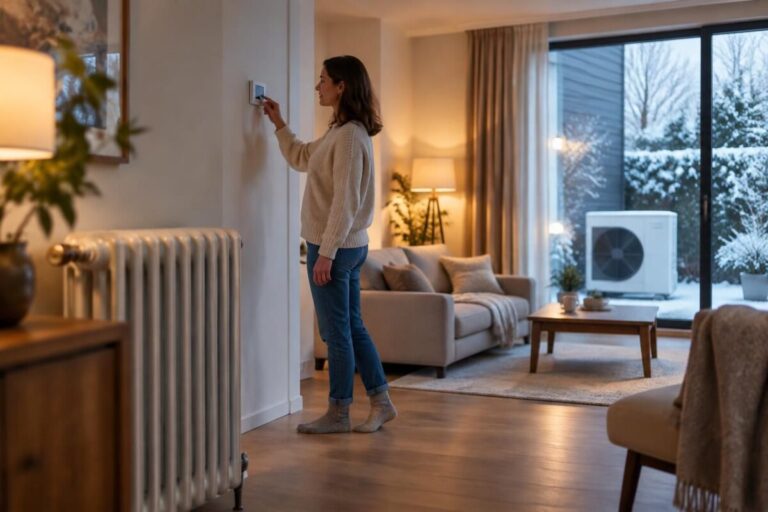
- Program the heating to match your schedule, room by room.
- Dust radiators and check the condition of outlets and cables.
- Before buying, compare the price, output, temperature controls, and insulation needs.
An inexpensive convector heater can cost more to run than a better-regulated appliance, especially in a home that loses heat quickly. To compare options without relying solely on the advertised price, also see this guide to the pitfalls of the cheapest eco-friendly heating and this article on saving energy when you’ve made the wrong heating choice.
Why electric heating can turn out to be a false economy
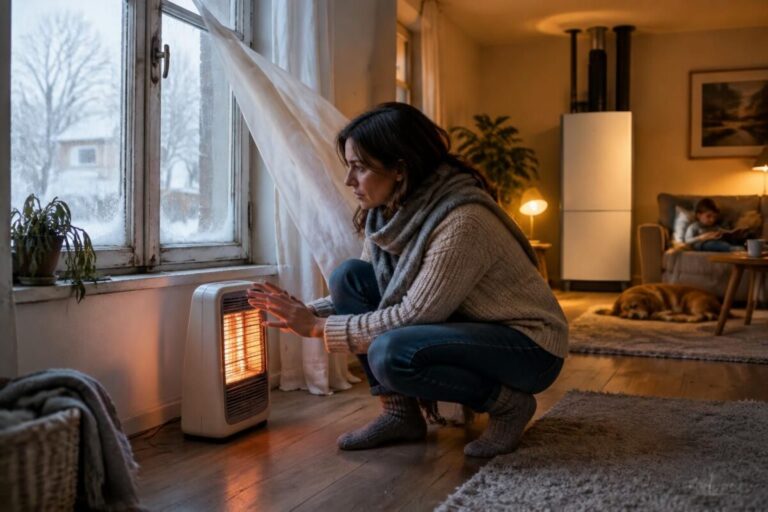
An electric resistance radiator converts electricity into heat, but it doesn’t produce more thermal energy than it consumes. In a poorly insulated home, the appliance has to run for a long time to make up for heat loss: electricity consumption rises, even if the radiator was affordable to buy.
Comfort matters too. An old convector heater mainly warms the air near the appliance, while a distant part of the room or a cold floor can still feel uncomfortable. As a result, people sometimes turn up the thermostat, even though each extra degree can increase heating consumption by around 7%, according to estimates commonly cited by ADEME.
So the problem isn’t electricity alone, but the combination of an energy-hungry home, unsuitable equipment, and inadequate temperature controls. The first lasting savings often come from reducing heat loss.
Electric radiators: compare price and comfort
Convector heaters are often the cheapest to buy, but their heat can be uneven. Radiant panels provide a more immediate feeling of warmth, while thermal inertia radiators distribute heat more evenly and make it easier to maintain a stable temperature.
Beware of a common misconception: at the same output and temperature, a thermal inertia radiator doesn’t magically convert less electricity into heat. Its main benefits are comfort, stability, and better control over heating periods, provided the thermostat and programming are used properly.
| Equipment | Comfort | What to know about cost | Suitable use |
|---|---|---|---|
| Convector heater | Fast heat, sometimes uneven | Low purchase price, but potentially high bills if used for long periods | Occasional supplemental heating |
| Radiant panel | Quickly noticeable warmth | Mid-range cost; check the temperature controls | Room used intermittently |
| Thermal inertia radiator | More stable heat | Higher upfront investment; comfort can make precise control easier | Living area heated regularly |
| Heat pump | Efficient heating if correctly sized | High installation cost; often uses less energy than direct electric heating | Project suited to the home and its insulation |
Prices vary depending on output, brand, and temperature-control features. For a second-hand appliance, check its condition, connections, and compliance with regulations; a low price never justifies taking an electrical safety risk.
Insulation and temperature settings: where savings start
A poorly insulated home loses heat through the roof, walls, windows, or floors. Window seals, thick curtains, and loft insulation can improve comfort, but the right improvements depend on the home’s actual condition.
In everyday use, keep the temperature reasonable, close the doors to rooms you rarely use, and air out your home briefly by opening the windows wide for a few minutes. During the day, sunlight can warm rooms; in the evening, closing the curtains helps reduce the feeling of cold walls.
Programming the heating room by room avoids unnecessary heating. To choose between different options while maintaining comfort, you can also find out which eco-friendly heating system keeps you comfortable.
An alternative to direct electric heating: when to consider a heat pump
A heat pump can provide several units of heat for each unit of electricity consumed, depending on operating conditions. Its coefficient of performance (COP) varies with the weather, the equipment, and the installation, so a figure advertised under laboratory conditions shouldn’t be treated as a guarantee that your bill will be reduced by the same proportion.
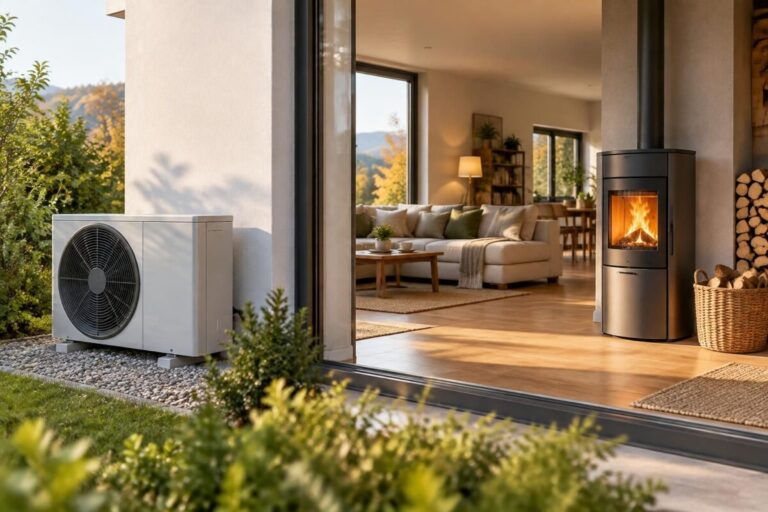
This alternative to direct electric heating requires an investment and an assessment of your home. A poorly sized heat pump, installed in a very poorly insulated house or used with unsuitable settings, may disappoint. Wood heating can also be suitable in some situations, provided you take into account fuel costs, maintenance, and air quality.
Financial incentives change depending on income, the work being done, and the rules in force. Support schemes more often help fund energy-efficiency renovations and high-performance systems than the simple purchase of an electric radiator; check the official requirements before signing a quote, and use an RGE-certified professional when required.
Three steps to avoid a bad investment
- Identify heat loss. Check for drafts, the condition of the loft, and cold walls. If your home is very energy-inefficient, prioritize an assessment and appropriate insulation work.
- Choose equipment to suit how you use the room. For a regularly occupied room, compare a thermal inertia radiator with a central heating solution. For a bathroom used briefly, a suitable supplemental heater may be enough, provided safety rules are followed.
- Adjust settings and monitor results. Program heating times, adjust the temperature, and track your electricity bill over several weeks. If consumption remains high, have the system and insulation checked before buying a new appliance.
Questions to ask before choosing eco-friendly heating
Does a thermal inertia radiator necessarily use less energy than a convector heater?
Not at the same temperature and with the same heating needs: both types of direct heating convert electricity into heat. Thermal inertia mainly improves comfort stability and can make more precise temperature control easier.
What temperature should you set in living areas?
A setting of around 19 °C is generally a reasonable guideline for occupied rooms. Adjust it to suit your comfort, activity level, and health recommendations, and avoid unnecessarily heating unoccupied rooms.
Do off-peak hours always make electric heating economical?
No. The tariff is worthwhile if the savings on electricity use you can shift to off-peak hours make up for its cost and the price of peak-hour electricity. Compare your habits with the rates on your plan.
Do you need to replace all your radiators to lower your bill?
Not necessarily. Start by reducing heat loss and improving your heating schedule. Replace appliances if their condition, safety, or comfort makes it necessary.
Thanks for reading! Feel free to share your thoughts in the comments. — Benjamin