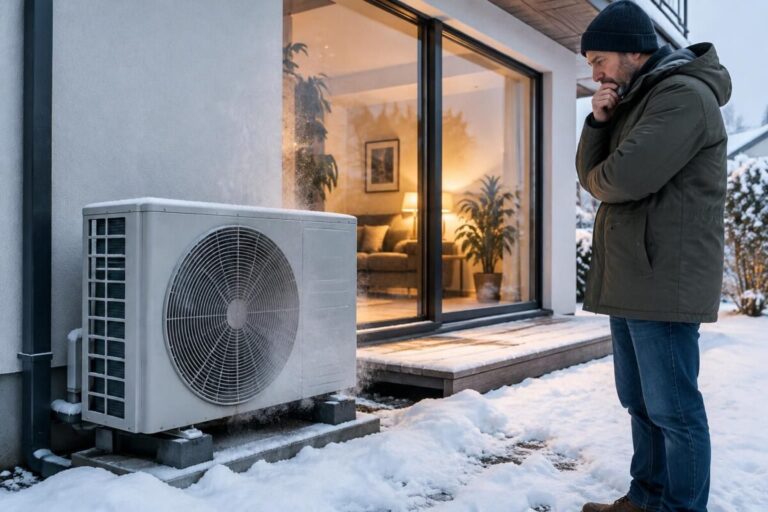
Eco-friendly heating: the comparison that changes everything
Hi everyone, it’s Benjamin. To lower your energy bill in the long term, compare running and installation costs: in a well-insulated home, a heat pump is often the most economical option, while wood can be a very attractive choice depending on the home. Heating accounts for a significant share of energy costs, but no system is right for everyone. In 2026, the right choice depends mainly on insulation, floor area, climate, and your budget.
WHAT TO DO FIRST
- Identify heat loss: windows, attics, and walls are often the first places to check.
- Review your bills for a full year to understand your actual energy consumption.
- Compare the total cost: purchase, installation, energy, and maintenance—not just the price of the equipment.
- Get several detailed quotes and check that the system’s capacity is suitable for your home.
- Check what grants are available before signing: the amount depends on your circumstances and the work being done.
Heating comparison: which system costs least to run?
A properly sized heat pump often uses less energy than direct electric heating. Its coefficient of performance can exceed 3 in favorable conditions: for every 1 kWh of electricity, it then delivers several kWh of heat. Actual performance varies, however, depending on the weather, heat emitters, and installation quality.
The table provides general guidelines. Prices depend on the home, region, and equipment selected; they are no substitute for a tailored quote.
| System | Indicative installation cost | Key points |
|---|---|---|
| Air-to-water heat pump | About €8,000 to €15,000 | Often economical to run; installation and maintenance must be factored in |
| Electric radiators | From a few hundred to a few thousand euros | Low initial investment; bills can be high in a poorly insulated home |
| Pellet stove or boiler | Varies depending on the appliance and heating system | Fuel is often competitively priced; storage and maintenance are required |
| Gas boiler | Varies depending on the existing installation | Convenient comfort; costs depend on gas prices and it produces fossil-fuel emissions |
| Solar heating | Often high, depending on the system | Can supplement a heating system, but is rarely sufficient on its own in winter |
An energy-efficient electric radiator is still a simple choice when you need to replace a few units, particularly in a well-insulated apartment. It does not produce more heat than a conventional electric radiator using the same amount of energy: its main advantage is better temperature control and more comfortable heat distribution.
Heat pumps, pellets, or electricity: the differences that matter
Heat pumps: efficient when the home is suitable
A heat pump is often a good fit for homes with a central heating system and adequate insulation. Depending on the model, it can also cool some homes in summer. However, incorrect sizing or unsuitable radiators can reduce its performance.
Before choosing, check the temperature required by your radiators, where the outdoor unit will be placed, and the noise level. These points to check before installing a heat pump can help you avoid an incomplete quote.
Wood and pellets: attractive when you have enough space
A wood stove or pellet boiler can provide economical heating if the fuel is available at a reasonable price. Newer appliances often have better efficiency than old stoves, but you need to plan for storage, fuel delivery, and cleaning.
A stove mainly heats the room it is in; in a house divided into separate rooms, the heat may not spread evenly. A pellet boiler connected to the heating system may better meet the needs of multiple rooms, but it requires a more substantial installation.
Electric heating: easy to install, but sensitive to insulation
Electric radiators are inexpensive to install and let you control each room separately. This flexibility is useful in a small home or for heating a room only occasionally. In a poorly insulated house, however, high heating needs can drive up the bill.
To compare options based on running costs, also see this guide to heating systems that really reduce your bill. A sound calculation always starts with your energy use, not a general promise.
Thermal insulation: the first step toward eco-friendly heating
Replacing your heating system without addressing heat loss can be like heating the outdoors. Good thermal insulation reduces heating needs, improves comfort, and often makes it possible to choose a less powerful appliance. It also makes a renewable-energy-based heating system a more viable eco-friendly option.
If your insulation is poor, start by identifying heat loss and prioritizing the necessary work before investing in a new appliance. This guide to which heating system to choose when insulation is inadequate can help you ask the right questions.
Choose based on your home: two real-world examples
If you have a house with central heating and adequate insulation… an air-to-water heat pump could be a good choice, especially if the existing system operates at a low temperature. Check the cost after grants and the expected savings for your climate zone.
If you rent an apartment or live in a small home… a well-controlled thermal-inertia radiator may be more practical, as it requires little work. For a house with storage space and a suitable flue, a pellet stove can also supplement the existing heating system.
Three steps to finding economical heating
- Step 1 — Assess your home. Note the floor area, insulation, current system, and rooms that are actually heated. An assessment or thermal survey can help clarify your priorities.
- Step 2 — Compare the full costs. Ask for quotes that specify the equipment, installation, maintenance, and estimated energy use. Be wary of claimed savings that do not include the assumptions behind the calculation.
- Step 3 — Check grants and settings. Look into available programs, then schedule your heating around your routine. Regular maintenance and thermostats help prevent unnecessary heating.
For energy-efficiency renovations, MaPrimeRénov’, energy savings certificates, or an interest-free eco-loan may help with the cost, depending on the current rules and household eligibility. Confirm the conditions before signing: an estimated grant is not automatically an approved grant.
What affects your bill
An efficient system cannot make up for poor controls. Slightly lowering the temperature in rooms you use less, closing the shutters at night, and keeping radiators clear are simple steps that improve comfort without major work.
A common mistake is choosing an oversized appliance “to be on the safe side.” It may cycle on and off more often, cost more to buy, and operate less efficiently. The system’s capacity should be calculated based on your home’s actual needs.
It is also worth checking the risks of an inadequately specified heating quote: ask for details about the system’s capacity, additional work, and warranties. A clear quote makes it easier to compare options effectively.
Which eco-friendly heating option should you choose?
For a well-insulated house, a heat pump is often the most energy-efficient option to run, but its upfront cost is still high. Wood can be an attractive choice if you can manage the fuel and maintenance; electric heating remains practical in small spaces with limited heating needs.
Solar heating can supplement a system, but its output varies with the season and the amount of sunshine. The most cost-effective choice is therefore not a single technology, but the right match between your home, your habits, and your available budget.
Which heating system is cheapest to run?
A heat pump is often very economical in a well-insulated home with a suitable installation. Its actual efficiency varies depending on the outdoor temperature, heat emitters, and installation quality.
Which heating system should you choose as a renter?
Modern electric radiators with thermostats can be practical because they require little work. Their running costs depend heavily on insulation and temperature control.
Is wood heating economical?
Wood and pellets are often competitively priced, but you need to factor in the cost of fuel, storage, maintenance, and the appliance’s efficiency.
What grants can help pay for a more efficient heating system?
MaPrimeRénov’, energy savings certificates, and an interest-free eco-loan may help fund certain projects, subject to conditions. Check the rules and your eligibility before signing.
Thanks for staying with me until the end; Benjamin