
Eco-friendly heating: the best system for your budget
Hi, it’s Benjamin.
On a tight budget, electric radiators are the cheapest to install; with more to spend, a heat pump often offers a better balance between comfort and energy savings.
The best heating system also depends on your insulation, floor area and local energy prices. Here are some simple guidelines to help you choose without focusing solely on the purchase price.
What to do right away
- Work out your total budget, including installation and maintenance, not just the equipment.
- Check your insulation: poorly insulated attic space can wipe out some of the expected savings.
- Compare at least two quotes that itemize the equipment, installation and any additional work.
- Choose a system suited to your home: a stove won’t always heat every room effectively.
- Ask what grants or rebates you’re eligible for before signing, as the criteria vary depending on the work and your situation.
To avoid paying too much to run your system, you can also check out these tips for reducing your heating bill and this guide to choosing heating that suits your insulation.
Which budget-friendly heating system suits your budget?
If your budget is tight, electric storage heaters or well-adjusted appliances may be suitable, especially in a compact, well-insulated home. Installation costs are moderate, but your bill depends heavily on electricity prices and heat loss.
With a mid-range budget, wood heating can be a good option if you have a suitable flue and space for storage. A stove heats the room it’s in efficiently, but it doesn’t always replace a central heating system in a multi-story home.
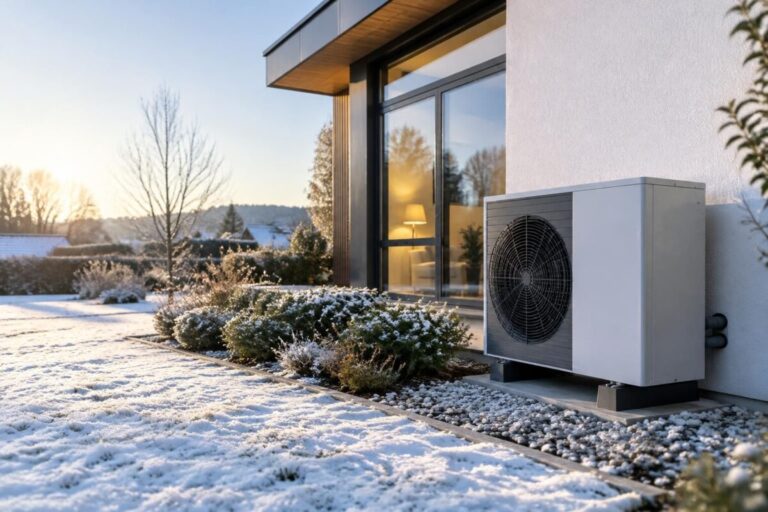
If you can invest more, a heat pump can reduce energy use compared with direct electric heating. However, its efficiency depends on the climate, proper sizing and insulation; a professional should check whether it’s compatible with your heat emitters.
Compare installation costs and running costs
The ranges below are rough estimates for typical residential installations. The floor area, existing equipment and work required can significantly affect the quote.
| System | Indicative installation budget | Key points |
|---|---|---|
| Electric radiators | About €300 to €1,000 per installed unit | Low upfront investment, but expensive to run if the home is poorly insulated. |
| Wood or pellet stove | About €2,000 to €8,000 | A good option if fuel is readily available and the heat can circulate well. |
| Air-to-air heat pump | About €3,000 to €10,000 | May suit a well-laid-out home; it doesn’t produce domestic hot water. |
| Air-to-water heat pump | About €10,000 to €18,000 | Can supply radiators or underfloor heating, provided the system is compatible. |
| Condensing boiler | About €4,000 to €8,000 | Worth considering, in particular, as a replacement for an existing boiler, subject to applicable regulations. |
| Solar heating | About €5,000 to €12,000 for a solar thermal system | Generally works alongside a main heating system. |
These figures don’t predict your annual bill: it varies with the climate, your habits and the level of insulation. To make a fair comparison, ask for an estimate of energy use and maintenance costs over several years.
If your budget is limited or you can invest
If you need to keep immediate costs down, keep your electric radiators if your home is small and well insulated, then improve their controls with thermostats and a timer. Replacing all the units without addressing heat loss could be costly for limited benefit.
If you can fund more substantial work, have a heat pump assessed, especially if your home already has a compatible central heating system. Solar heating can also complement the system, but you’ll need a backup system for cold or overcast periods.
A practical example: in a poorly insulated 100 m² house, replacing the electric convector heaters with a heat pump won’t solve the heat loss. By insulating the attic and sealing air leaks first, the household can reduce its heating needs and install a less powerful system.
A three-step process for choosing
- Assess your home’s needs. Note the floor area, insulation, current system and rooms that are difficult to heat.
- Compare the total cost. Compare installation costs, maintenance, fuel or electricity costs, and the projected energy savings.
- Get the system sizing checked. Before signing the quote, ask a professional to check the required capacity and any preliminary work.
A common pitfall is choosing the equipment that promises the biggest savings without checking whether it’s right for your home. A properly sized appliance in a better-insulated home is often more cost-effective than an expensive system installed too soon.
Frequently asked questions about cost-effective heating
What is the cheapest heating system to install?
Electric radiators are generally among the least expensive options to install, especially if the home is already equipped with them. However, running costs can rise in a poorly insulated house.
Is a heat pump cost-effective in every home?
No. Its cost-effectiveness depends in particular on insulation, climate, sizing and compatibility with the heat distribution system. An assessment of the home can help evaluate the project.
Can wood heating heat an entire house?
A stove heats the room it’s installed in efficiently, but the heat doesn’t always spread evenly. The layout of the home and whether there is a supplementary heating system should be taken into account.
Is solar heating enough in winter?
Solar thermal covers some of your heating needs, but it’s generally paired with a backup heating system. Its effectiveness depends on sunlight, the installation and household energy use.
Thanks for stopping by! See you soon for a new article. — Benjamin