Eco-friendly heating: which system keeps you comfortable?
Hi everyone, it’s Benjamin. To stay comfortable without heating unnecessarily, program a programmable thermostat to comfort mode when you’re home, then to eco mode at night or when you’re away for a few hours; in a well-insulated home, a properly sized heat pump is often an efficient choice. The right setting also depends on your home and your habits. The goal is simple: stay warm without driving up energy use.
WHAT TO DO FIRST
- Set living areas to around 19 °C when you’re using them.
- Aim for around 16 to 17 °C in bedrooms, depending on how sensitive you are to the cold.
- Use eco mode at night and when you’re away for a few hours.
- Use frost-protection mode for an extended absence, not just a weekend away.
- Check the insulation and draughts before replacing your heating system.
Which energy-efficient heating system best maintains comfort?
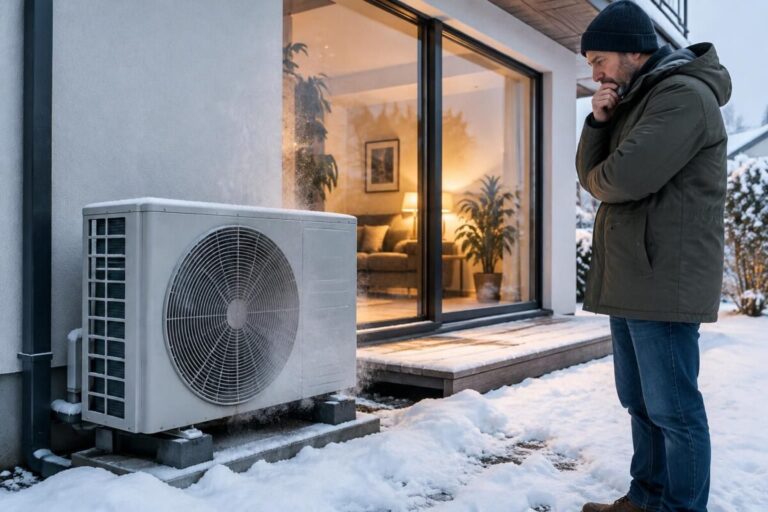
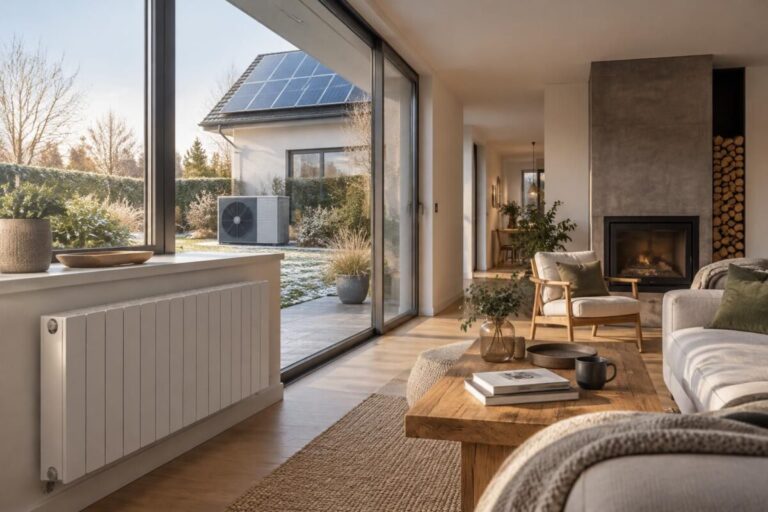
In a properly insulated home with a water-based radiator system, an air-to-water heat pump can provide consistent warmth and reduce energy use compared with an old direct electric heating system. However, its efficiency depends on the climate, the temperature required by the radiators, and the quality of the installation.
In a poorly insulated home, replacing the heating system without addressing heat loss may lead to disappointment. Energy-efficient heating often starts with simple steps: reducing air leaks, adjusting the temperature room by room, and avoiding heating unoccupied spaces.
The heating mode matters as much as the system
Comfort mode maintains the selected temperature while you’re at home. Eco mode generally lowers the setpoint by a few degrees; this is often enough to limit energy costs without making the home uncomfortable when you return.
Frost-protection mode maintains a minimum temperature, often around 7 °C, depending on the system. It’s suitable for long absences, but the home will then take longer to reach a comfortable temperature again. For a night or a day away, eco mode is generally more suitable.
The right settings for thermal comfort
In most living areas, a setpoint close to 19 °C is a useful guide. The bathroom can be heated more just before you use it, while a bedroom is often comfortable at around 16 to 17 °C.
How warm a room feels doesn’t depend only on the number displayed. Cold walls, a poorly sealed window, or a radiator hidden behind furniture can reduce thermal comfort, even if the thermostat shows the right temperature.
| Situation | Recommended setting | Why |
|---|---|---|
| At home in the living areas | Comfort mode, around 19 °C | Maintain comfortable warmth without overheating |
| At night or away for a few hours | Eco mode, a few degrees lower | Reduce heating when the rooms are used less |
| Extended absence | Frost-protection mode, depending on the system | Reduce the risk of the home freezing |
If you feel cold despite having the right setpoint, first check the window seals and make sure there’s clear space around the radiators. To spot other common mistakes, read these tips before requesting a heating quote.
Choose a heating system that suits your home
If your home is well insulated and has a water-based central heating system, a heat pump could be a suitable option, provided it’s sized correctly. If you already have electric radiators and a small, well-insulated home, a low-consumption radiator with room-by-room programming may be enough without undertaking major work.
If you have convenient access to fuel and are willing to load and maintain the system, wood heating can also complement your setup. However, you need to choose a suitable appliance and use dry fuel; improper use can worsen air quality.
Two real-life scenarios to guide your choice
If it’s an older house with poor insulation, start by addressing the main sources of heat loss, particularly the attic and windows. Then, have the compatibility of the proposed system with the existing radiators checked: a heat pump won’t deliver the same results in every building.
If it’s a well-insulated apartment with electric heating, first improve the programming and adjust each room according to how it’s used. A new system isn’t always necessary to save energy and maintain a more stable temperature.
A three-step method to adjust or replace your heating system
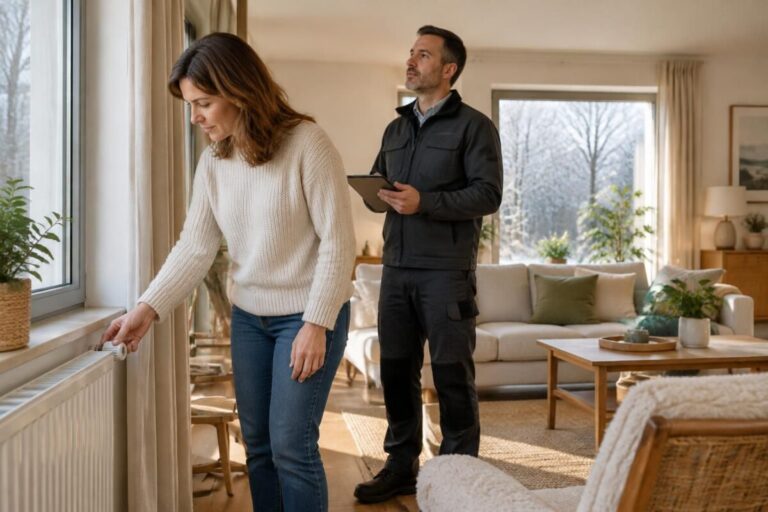
- Step 1: Assess your home. Identify cold rooms, draughts, and the times when heating is actually needed. Better insulation reduces heating needs even before you choose equipment.
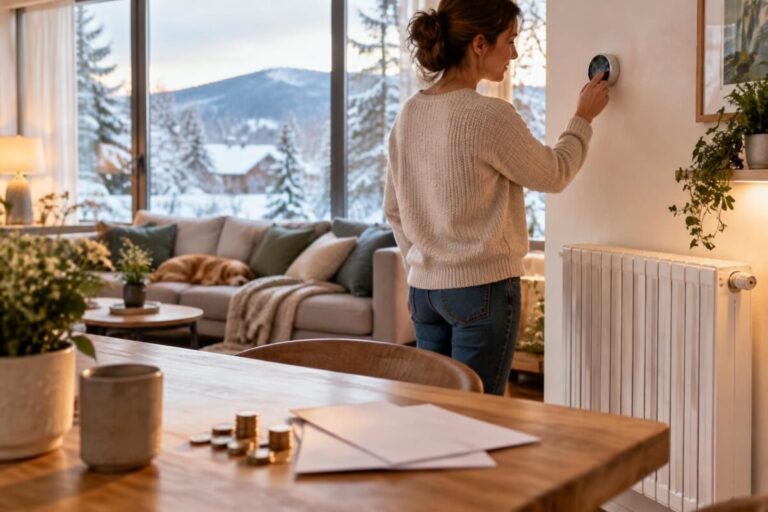
- Step 2: Program the temperatures. Use comfort mode when you’re at home and eco mode at night or when you’re away for a short time. A programmable thermostat can automate these time periods.
- Step 3: Compare suitable options. Ask for a system sized according to your insulation, heat emitters, and local climate. Compare installation costs, maintenance, and running costs—not just the listed price.
A common mistake is to turn the heating up to the maximum when you get home to warm the place up faster. This doesn’t necessarily heat the room more quickly; it’s better to program a gradual increase and keep the radiators unobstructed.
To compare options without focusing only on the purchase price, you can read this comparison of energy-efficient heating systems. EnergyRenovationHub helps make energy renovation choices simpler, clearer, and more cost-effective.
Practical questions about energy-efficient heating
Does eco mode use less energy than comfort mode?
Generally, yes: it lowers the temperature setpoint while you sleep or are away for a short time. The savings depend on the system, the home, and how long the temperature is lowered.
Should you turn the heating off completely during the day?
For a short absence, lowering the temperature in eco mode is often preferable to turning the heating off completely. It limits how much the home cools down and makes it easier to return to a comfortable temperature.
Which heating system should you choose for a well-insulated house?
A heat pump may be suitable if the home and heat emitters are compatible. In a small home, programmable electric radiators may also be suitable; the choice depends on the building and the overall cost.
What temperature should you set a bedroom to?
A temperature of around 16 to 17 °C is often suitable, but you can adjust it according to your comfort and sensitivity to the cold.
Thanks for staying with me this far; Benjamin