Enhanced insulation: Is a heat pump finally becoming cost-effective?
Hello everyone, it’s Benjamin. Yes, improved insulation can make a heat pump more cost-effective, especially if it reduces heating needs before you choose a model. Insulation limits heat loss; the heat pump can then operate at a lower temperature and use less electricity. But the outcome also depends on the climate, radiators, installation cost, and available financial assistance.
WHAT TO DO FIRST
- Identify heat loss using the energy performance certificate and, if possible, a heat-loss assessment.
- Check your radiators: their ability to heat your home using cooler water affects efficiency.
- Ask for sizing after the work, not just based on the home’s current condition.
- Compare the net cost after financial assistance, maintenance, and any additional work.
- Ask for an energy-use estimate tailored to your home, rather than a standard promise of savings.
Improved insulation and heat pumps: why the combination can pay off
Energy savings depend on more than the efficiency rating listed on the heat pump’s spec sheet. They depend on actual energy use, the cost of the energy being replaced, the installation cost after financial assistance, and how long you plan to live in the home.
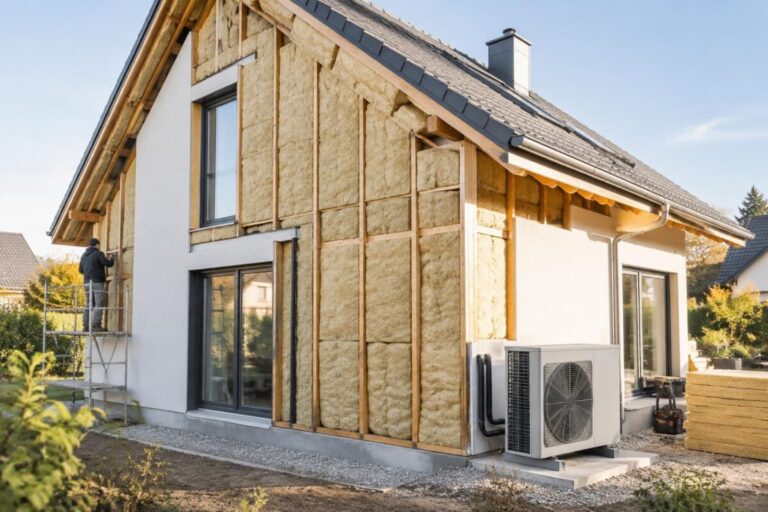
When a home loses less heat, the heat pump needs to provide less energy to maintain a comfortable temperature. It can often operate using cooler water, which improves its efficiency and limits repeated starts. For some projects, insulating the attic before choosing the heat pump’s capacity can also help you avoid an oversized and more expensive unit.
Be wary of figures presented as universal: heating savings vary considerably depending on the home, the weather, and the existing system. The right calculation compares bills and quotes that reflect your specific circumstances, not an appealing estimate with no detailed assumptions.
Calculate payback based on the net cost
To estimate the payback period, compare the cost of the thermal renovation and heat pump, minus any financial assistance you’re eligible for, with the heating expenses you’ll avoid. Also include maintenance and estimated electricity use.
A heat pump that costs a lot to install isn’t automatically a bad choice, just as an inexpensive model isn’t necessarily a good deal. What matters is the balance between reduced heating needs, installation quality, and the heating system being replaced.
When insulation really makes a difference
In a poorly insulated home, the heat pump may have to deliver heat at high output during cold spells. Its actual efficiency may then drop, especially if the radiators require very hot water. Improving the insulation before installation helps reduce this constraint, but the work should be prioritized based on the heat loss identified.
If it’s a home with an F or G rating and a poorly insulated attic, start by assessing work on the building envelope. If it’s a well-insulated home occupied year-round and heated with oil or direct electric heating, a properly sized heat pump may offer greater potential savings.
Financial assistance can reduce the expense, but the amount depends on the household’s circumstances, the home, and the rules in effect. Check the requirements before signing: an estimate given over the phone is no substitute for written confirmation for your application.
When a heat pump may disappoint
A heat pump isn’t equally suitable for every home. In a poorly insulated home, a rarely occupied second home, or a house with high-temperature radiators that are difficult to replace, the savings may not offset the installation cost within a reasonable timeframe.
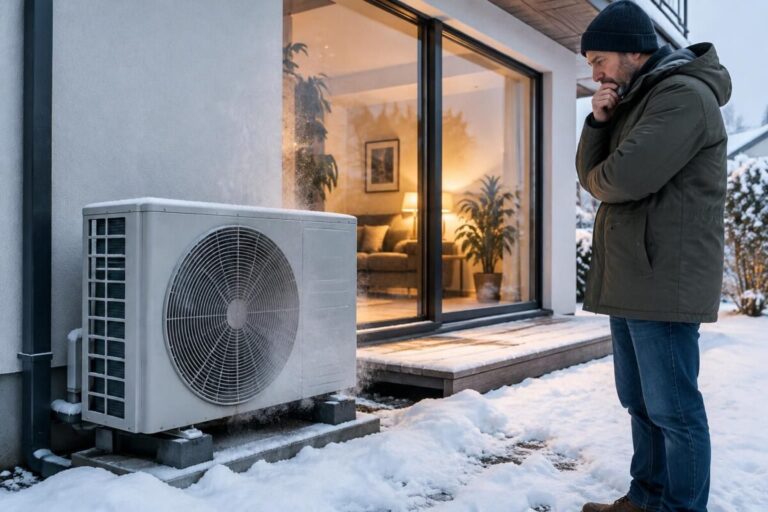
The climate matters too. In areas with harsh winters, a standard model may become less efficient when heating needs are at their highest. A cold-climate unit or a supplementary heating system may be appropriate, but its price and usage need to be included in the calculation.
| Situation | Point to consider | Priority before deciding |
|---|---|---|
| Very poorly insulated home | High heating demand and potentially reduced efficiency | Assess the insulation and heat loss |
| Rarely occupied second home | Limited use to recoup the cost of the equipment | Compare with a flexible solution suited to how it’s used |
| High-temperature cast-iron radiators | Very hot water can reduce efficiency | Check their compatibility and actual performance |
| Very cold winters | A specific model or supplementary heating may be needed | Ask for performance figures at different outdoor temperatures |
| Very tight budget | Risk of substandard installation or sizing | Compare options rather than choosing the cheapest quote |
A common pitfall is requesting a heat pump quote before deciding which insulation work will be carried out. The installer may then size the unit for current needs, leaving the system oversized once the home is insulated. Proper sizing based on the post-renovation home often prevents this mismatch.
Three steps to find out if your project will pay off
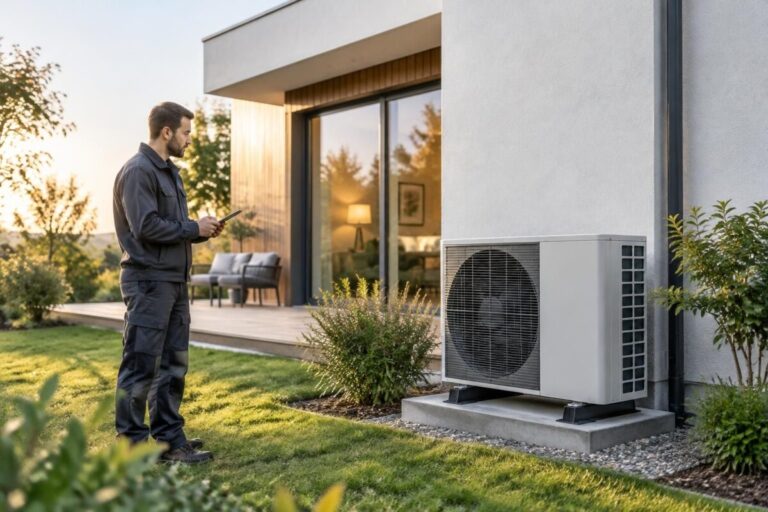
- Step 1: establish the home’s actual condition. Gather the energy performance certificate, previous bills, and information about the attic, walls, windows, and radiators. A technical inspection can help identify heat loss that documents don’t always reveal.
- Step 2: compare the scenarios. Request a quote for the highest-priority insulation work, then for a heat pump sized with that work in mind. Ask them to specify the flow temperature, estimated electricity use, and any need for supplementary heating.
- Step 3: calculate the net cost and realistic savings. Include confirmed financial assistance, maintenance, and energy costs. If the quote doesn’t explain its assumptions, ask for clarification before committing.
To explore the effect of solar power on heating, also see this article on combining solar panels with a heat pump. And for a realistic view of costs, this guide explains how much a heat pump can really save you.
Key points to check before signing
A heat pump is often more worthwhile in a well-insulated home occupied year-round, with suitable heat emitters and an expensive heating system to replace. However, this doesn’t guarantee savings: installation quality, settings, and the weather also affect energy performance.
If your budget is limited, it may be better to proceed in stages and tackle the work that will reduce heat loss the most first. A well-prepared decision protects both your comfort and your budget, rather than relying on a promise of savings that supposedly applies to everyone.
Should you insulate before installing a heat pump?
This is often preferable if the home loses a lot of heat. Insulation reduces heating needs and makes it possible to size the heat pump based on the renovated home. However, the exact order depends on work already completed and the condition of the heating system.
Is a heat pump cost-effective in a home rated F or G?
It may disappoint if heat loss remains high. It’s wise to assess the insulation, radiators, and heating needs first, then compare costed scenarios.
Which factors have the greatest impact on payback?
The net cost after financial assistance, the energy source being replaced, actual efficiency, climate, how the home is used, and the quality of the sizing all determine the payback period.
How can you avoid an oversized heat pump after insulation work?
Ask for a heat-loss calculation based on the planned work and a justified system size. The quote should also specify which heat emitters were considered and the estimated operating conditions.
Thanks for staying with me until the end; Benjamin