
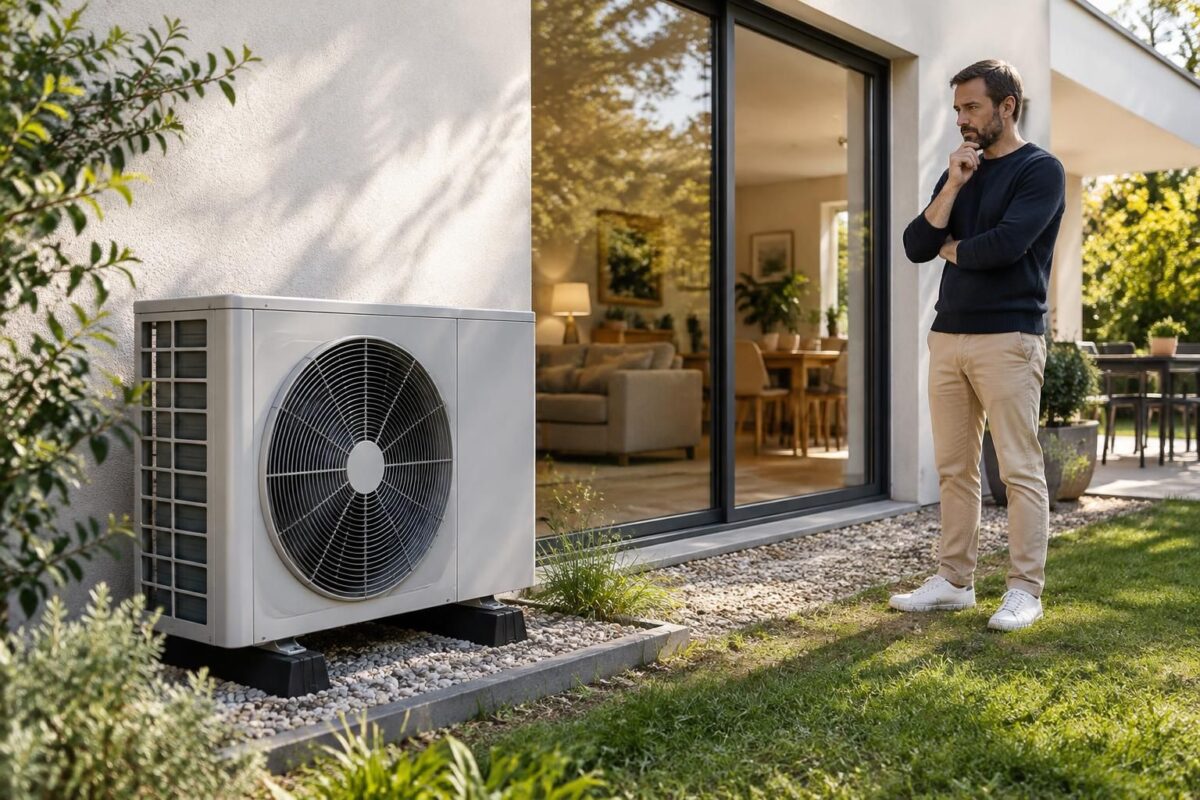
Heat pump: the right choice or an expense
Hi, Benjamin here.
A heat pump is a good choice if your home is well insulated and the system is properly sized; otherwise, it can become an expense that is difficult to recoup.
The installation cost alone is not enough to judge whether it is worthwhile. You also need to consider electricity consumption, potential energy savings and the expected level of thermal comfort.
Here are the checks that can help you decide without being swayed by promises of heating that is too cheap to be true.
What to do right away
- Have your home’s insulation and heat loss assessed.
- Ask for sizing based on the floor area, climate and actual needs.
- Compare the total cost, maintenance expenses and projected consumption.
- Check compatibility with your radiators or underfloor heating.
- Look into the financial assistance available before signing a quote.
To compare criteria that are often overlooked, read this comparison of the points to check, then look at the types of homes where it is most likely to be cost-effective.
Heat pump or expense: the home makes the difference
A heat pump draws heat from the air, ground or water to heat your home. Its energy performance depends in particular on the outdoor temperature, the quality of the installation and the amount of heat the home requires.
In a well-insulated home with underfloor heating or suitable radiators, the unit can provide consistent heating while keeping electricity consumption under control. In a poorly insulated home, it often has to run more and may require a backup heating system: the expected bill then falls short of optimistic projections.
Compare installation costs and energy savings
An air-to-water system can cost several thousand euros to more than 15,000 euros before financial assistance, depending on the equipment, the work required and the home’s layout. Financial assistance can reduce the amount you have to pay, but it does not automatically make the project cost-effective.
The right calculation is to compare the total cost and your current heating expenses with the projected costs after the work. The result varies depending on energy prices, climate, maintenance and heating habits: no annual savings can be guaranteed without an assessment of the home.
| Point to compare | Favorable situation | Reason for caution |
|---|---|---|
| Insulation | Home already insulated or insulation work planned | Significant heat loss that has not been addressed |
| Heat emitters | Underfloor heating or suitable radiators | System requires very hot water |
| Electricity consumption | Estimate consistent with household needs | Vague calculation or promise without assumptions |
| Cost-effectiveness | Costs, assistance and period of use compared | Decision based solely on financial assistance |
A quote should specify the selected capacity, the stated performance and the assumptions used to estimate consumption. If these details are missing, ask for an explanation before committing.
A real-life example: an insulated home versus an energy-hungry home
Imagine two homes of a similar size. The first has been insulated and has suitable heat emitters: a heat pump may provide consistent thermal comfort and reduce energy needs, depending on how it is used.
The second loses a lot of heat and needs high temperatures in its radiators. In this case, it is often better to address heat loss before replacing the heating system. The choice of equipment matters, but so does the condition of the building envelope.
The trap of an offer promising a quick return
An attractive estimate may leave out backup electric heating, adaptation work or maintenance. These costs affect both your budget and the solution’s actual environmental impact.
Ask for several detailed quotes and compare the assumptions, not just the final amount. A transparent offer explains the performance figures used and does not present financial assistance as guaranteed savings.
Three steps to deciding whether a heat pump is the right choice
- Assess your needs. Have the insulation, heat loss and temperature required by the heat emitters checked.
- Compare the options. Weigh the installation cost against projected electricity consumption, maintenance and financial assistance.
- Check whether it is cost-effective. Ask for a calculation tailored to your home and make sure the expected comfort level will still be satisfactory during cold spells.
A heat pump is therefore neither inherently an unnecessary expense nor an ideal solution for every home. It makes sense when the home, the equipment and the budget are assessed together.
Frequently asked questions about heat pumps
Is a heat pump suitable for an older home?
Yes, if the home’s needs are assessed and the heat emitters are compatible. Insufficient insulation or radiators that require a high temperature can reduce its performance.
Does financial assistance guarantee cost-effectiveness?
No. It can reduce the amount you have to pay, but cost-effectiveness also depends on consumption, energy prices, maintenance and the work required.
How can you avoid excessively high electricity consumption?
Have the unit sized according to actual heat loss, check that the heat emitters are compatible and ask for a detailed consumption estimate before signing.
Should you insulate before installing a heat pump?
If the home loses a lot of heat, improving its insulation can reduce heating needs and make it possible to choose equipment that is better suited to the home. An assessment can help determine the order of the work.
Thanks for stopping by! See you soon for another article. — Benjamin