Solar energy: Is a heat pump becoming more cost-effective?
Hello everyone, it’s Benjamin. Yes, pairing a heat pump with solar panels can improve energy savings, especially if the home is well insulated and energy use is managed during sunny hours. The combination reduces some of the electricity bought from the grid, but generally doesn’t make the home self-sufficient in winter. It all comes down to getting the sizing right and using solar electricity when it’s available.
WHAT TO DO FIRST
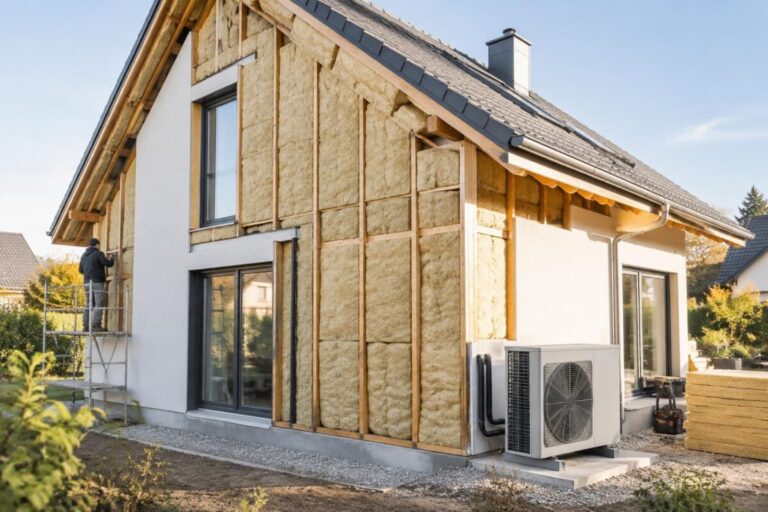
- Check your insulation before adding equipment: the less heat your home loses, the less your heat pump needs to run.
- Check your annual consumption on your bills, then identify the appliances that run during the day.
- Have the heat pump sizing checked and make sure it’s suitable for your radiators or underfloor heating.
- Ask for a solar estimate based on your roof, its orientation, shading, and your usage profile.
- Compare solar without a battery, with load management, and then with a battery before deciding on the installation cost.
Solar energy and heat pumps: when the combination becomes cost-effective
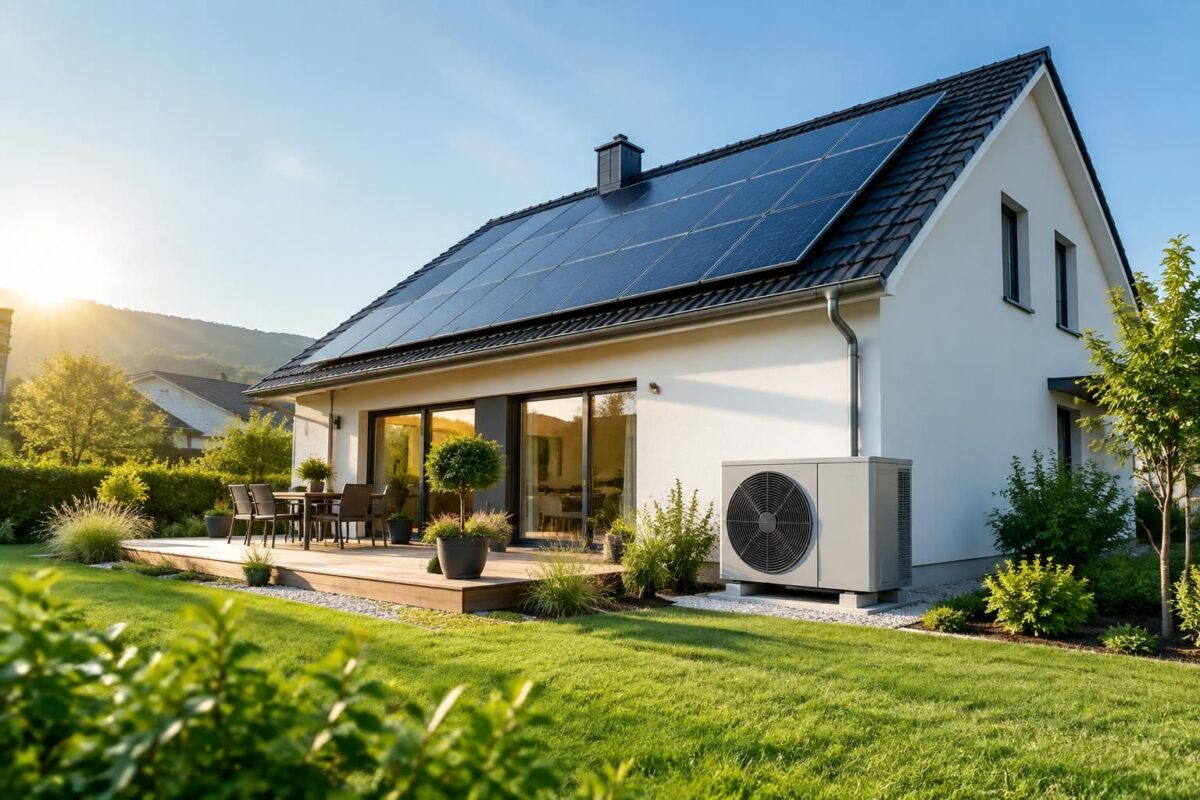
A heat pump uses electricity to capture heat from the air, ground, or water. Solar panels also generate electricity, mainly during the day. Combining them can therefore reduce electricity purchases from the grid and support the home’s energy transition.
But solar generation and heating needs don’t always coincide. Panels generate more electricity in spring and summer, while the heat pump uses the most when it’s cold, often in the evening or at night. The grid is therefore still needed during periods of low winter sunshine.
The useful question isn’t just “can the panels power the heat pump?” but rather: what share of the electricity generated will be used on-site, when it’s available? Self-consumption, and the energy savings that come with it, are what really matter in the calculation.
Energy savings: what changes with the seasons
As a rough guide, a 5 kWp system can generate around 4,500 to 6,500 kWh per year, depending on the region, orientation, tilt, and shading. This energy isn’t generated evenly: production is higher in sunnier months and lower in winter.
Imagine a well-insulated home with an air-to-water heat pump. In spring, some of the solar energy can power everyday appliances and help with heating when demand is moderate. In January, several overcast days may pass without enough generation to meet heating demand.
| Period | Solar generation | Heat pump demand | What this means |
|---|---|---|---|
| Winter | Low to moderate | Often high | The grid remains important for heating. |
| Spring and fall | Moderate to good | Moderate | A good time to run appliances whose use can be scheduled. |
| Summer | High | Low, except for hot water or cooling | Surplus electricity can power household appliances or be exported to the grid. |
In short, solar can meet some of the heat pump’s and home’s annual energy needs, but this contribution shouldn’t be confused with complete heating independence. Good results come from a well-integrated system, not from a solar panel disconnected from how you use energy.
Size the panels according to actual consumption
Panel capacity shouldn’t be chosen solely based on the heat pump’s capacity or the size of the home. You need to consider annual consumption, when people are home, the expected output from the roof, and your goal: to use as much of the electricity as possible on-site or to sell some of the surplus.
For many residential projects, 3 kWp can help limit surplus electricity, while 6 kWp provides more generation for a household with higher consumption. A 9 kWp system needs careful assessment: if the home is empty during the day and no appliances can be scheduled to run then, a large share of the electricity may be exported rather than used on-site.
An example helps illustrate the calculation. For a home consuming around 8,000 kWh per year, with solar generation of about 5,400 to 7,800 kWh for a 6 kWp system depending on the location and conditions, a self-consumption rate of 35% would mean around 1,900 to 2,700 kWh used directly. At an electricity price of around €0.19 to €0.20/kWh, that represents roughly €360 to €540 in avoided electricity purchases per year, excluding price changes, fixed charges, and any income from selling surplus electricity.
This scenario is only indicative: a home occupied during the day or equipped with a programmable water heater may achieve better results. Conversely, a shaded roof or consumption concentrated late in the evening often reduces the savings. To better assess the combination, see the conditions for achieving real savings with solar energy and a heat pump.
Load management, batteries, and return on investment
Even simple load management can improve self-consumption. For example, you can schedule the water heater or washing machine to run during the day, or adjust the heat pump’s operation in the shoulder seasons without overheating the home.
One often-overlooked detail: shifting when you use energy doesn’t necessarily improve comfort. The goal is to use solar surplus to meet a real need, not to heat the home or water unnecessarily. An energy management system is especially useful if several appliances can be controlled.
A battery stores some of the surplus for later use, but it increases the installation cost and involves energy losses. It doesn’t solve the mismatch between highly productive summer months and long cold periods. Before buying one, compare the options of going without a battery, managing appliance use, and adding storage.
The return on investment also depends on the heat pump itself. A poorly sized pump or one installed in a home that loses a lot of heat may use more energy than expected. If you’re renovating an older home, start by checking whether a heat pump is suitable for an older home.
Two scenarios to help you choose the right order for your work
If your home is well insulated, the roof is minimally shaded, and appliances run during the day, combining solar and a heat pump can deliver worthwhile energy savings. Size the heating system first, then adjust the panels to match actual consumption.
If the home is poorly insulated, the roof is shaded, or the heat pump mostly runs at night, solar probably shouldn’t be your first investment. Reducing heat loss and correcting poor sizing can deliver more immediate savings. Negative opinions about heat pumps sometimes stem from equipment that isn’t suited to the home: this guide explains the issue of heat pump sizing problems.
A simple three-step process
- Step 1 — Reduce demand. Check the insulation, heat emitters, and system settings before starting a new project.
- Step 2 — Measure energy use. Record annual electricity consumption and identify which appliances you can run during the day.
- Step 3 — Compare complete scenarios. Get several estimates with appropriately sized solar capacity, load management, and a possible battery, then check the grants and rates available when you undertake the project.
This approach helps you avoid paying for unnecessary capacity or storage that doesn’t fit your habits. A cost-effective project starts with a clear understanding of your needs.
Practical questions about the cost-effectiveness of solar with a heat pump
Can solar panels power a heat pump in winter?
They can help power it during sunny periods, but winter generation is often limited and variable. The grid is generally still needed, particularly in the evening, at night, and during several overcast days.
What solar capacity should I choose with a heat pump?
Start with annual consumption, usage times, the roof, and your self-consumption goals. Systems of 3, 6, or 9 kWp may be suitable depending on the situation; the heat pump’s capacity alone isn’t enough to decide.
Does a battery always improve energy savings?
No. It can increase the share of electricity used on-site, but its cost, losses, and lifespan need to be included in the calculation. It’s often best to compare load management first.
Should I install the heat pump or the panels first?
It’s generally best to reduce the home’s energy needs first, then size the heat pump correctly. The solar capacity can then be chosen based on actual consumption.
Thanks for staying with me this far; Benjamin